BodyPump: what this workout is all about
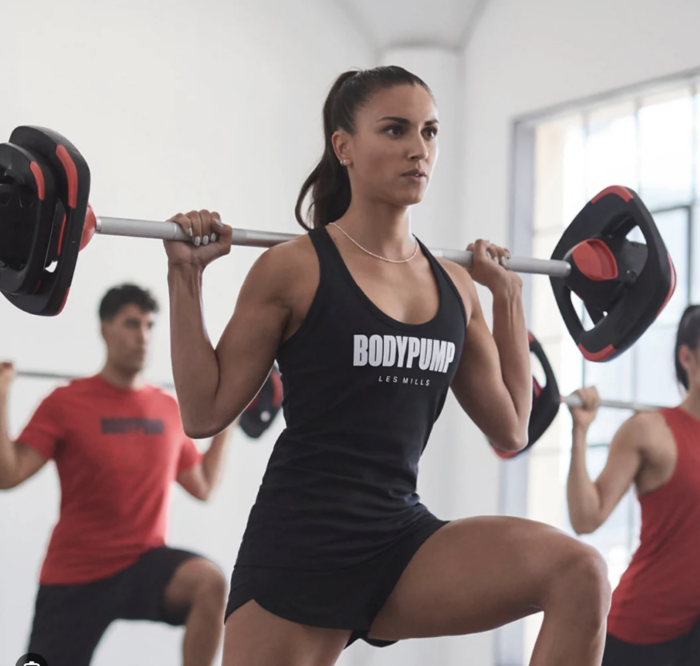
BodyPump is a group workout that combines a barbell, music and a clear structure to make strength training straightforward even for beginners. You don’t need to feel confident in the gym beforehand: you choose your own weights, and the exercises work through your whole body in a set order.
Why is BodyPump so popular?
Many people want to get stronger, but getting started among the gym’s machines and free weights can feel confusing. BodyPump takes that anxiety away. The class follows a planned structure, an instructor guides you, and after just a few sessions, you know what to expect.
The program has its roots in the Les Mills training system, which began in New Zealand. Les Mills is more than just a workout name: it’s an international system in which class structure, music and movements are put together according to a clear set of principles. That’s one reason people keep coming back: the class isn’t a random mix of exercises.
The Les Mills system includes BODYATTACK™, BODYBALANCE™, BODYCOMBAT™, BODYJAM™, BODYPUMP™, BODYSTEP™, BODYVIVE™, RPM™, CXWORX™, SH’BAM™, LES MILLS GRIT™ PLYO, LES MILLS GRIT™ STRENGTH and LES MILLS GRIT™ CARDIO. Within that lineup, BodyPump is the class for strength and muscular endurance.
The program changes every three months to keep the workout fresh. The principle stays the same, though: your whole body gets a workout, you can adjust the weight, and progress is easy to notice. Today, squats feel hard; a few weeks later, you’re adding a little more weight to the barbell. That’s a pretty good feeling.
What happens in a BodyPump class?
A BodyPump workout starts with a warm-up. This isn’t just a formality: it helps prepare your body for the work ahead. You’ll usually use a barbell from the start, but with a light weight and movements at an easy pace.
The class then moves on to the major muscle groups. Exercises work your thighs, chest, back, arms, glutes, shoulders and abs. You’ll see squats, rows, presses, flexion exercises and a variety of core exercises. The biceps and triceps mentioned in the original get their share of work too, although the class isn’t just about tiring out your arms.
The BodyPump barbell itself weighs 2 kg. The weight plates come in 1 kg, 2.5 kg and 5 kg. This means a cautious beginner and a more experienced exerciser can follow the same class routine. The difference lies in how much weight you put on the barbell and how closely you maintain proper technique.
The simple truth is that a barbell that’s too heavy quickly compromises your technique. If your squat form breaks down or your shoulders creep up toward your ears during a press, it’s sensible to reduce the weight. BodyPump isn’t a competition with the person next to you.
The class ends with stretching exercises. These help bring your heart rate down and signal to your body that the work is done for now. Stretching doesn’t have to be painful. Think of it as a gentle finish after all those repetitions.
What does BodyPump develop in your body?
BodyPump strengthens and shapes your body primarily through repetition. It isn’t traditional powerlifting, where you do a couple of very heavy repetitions and take long rests. Here, your muscles work for longer. That’s why muscular endurance comes up so often.
So what actually happens? Your muscles learn to keep working while fatigued. Squats put a training load on your legs, rows on your back, presses on your chest and shoulders, and core exercises on your abs. If you attend classes consistently, your movements become more assured, and everyday tasks may feel easier.
A BodyPump workout may also support fat burning because the class is fast-paced and engages many muscles. Still, it shouldn’t be sold as a miracle solution. Body composition also depends on what you eat, your sleep, stress and how often you’re actually active.
Practical tips before your first class
Keep the weights modest for your first class. That sounds boring, but it helps you walk down the stairs normally the next day. Pay particular attention to the instructor’s guidance during squats, deadlift-like movements and overhead presses.
- Start with lighter weight plates and learn the movements.
- Keep your knees and toes pointing in the same direction, especially during squats.
- Don’t snap your joints into a locked position.
- Drink water before and after class.
- Let the instructor know if a movement causes pain.
Body Pump suits people of different fitness levels, regardless of gender or age. It’s also suitable if you have no previous experience in the gym or in aerobics classes. The key is to start sensibly, rather than trying to prove yourself in one class.
Honestly, BodyPump’s greatest strength is its simplicity. You turn up, grab a barbell, choose your weight plates and follow the instructor. After a while, you’ll know when to add weight and when your body is asking for an easier day.
BodyPump FAQs
Is BodyPump suitable for a complete beginner?
Yes, if you choose light weights and follow the technique instructions. Your first class is about understanding how it works, rather than pushing yourself to the limit.
Does BodyPump build big muscles?
BodyPump primarily develops strength, muscle tone and muscular endurance. Building a very large amount of muscle mass usually requires a different strength training structure and more precise increases in training load.
How many times a week should you do BodyPump?
Start gently and see how your body recovers. If your muscles are very sore for several days, don’t jump straight into another tough class.
See how things work today: https://www.lesmills.com/us/workouts/bodypump
Author: Compiled by: Mo
Come and work out! ArtGym