
Taurine: an amino acid for stress relief and fitness
Taurine deficiency is one of those amino acids that rarely gets discussed, yet has surprisingly wide-ranging effects on the body. It helps relieve stress, improves sleep and supports physical performance. Let’s take a closer look at why this molecule matters and how to use it sensibly.
What taurine is and why it matters
The name comes from the Greek word tauros, meaning bull — the substance was first isolated from bull bile in the 19th century. Unlike conventional amino acids, taurine does not directly contribute to building proteins. Its main role is to protect cells: taurine stabilizes cell membranes, regulates mineral balance and helps calm nerve cell activity.
Your body can synthesize taurine, but the amounts often fall short of optimal levels. This is especially true if you train hard, get little sleep or eat a predominantly plant-based diet — plant foods contain virtually no taurine. Animal protein, particularly fish and seafood, is a rich source.
This is why taurine is called a conditionally essential amino acid. Healthy adults generally have enough to meet their basic needs, but additional taurine may be needed during growth, pregnancy and periods of high training load. For infants, taurine deficiency is actually essential — which is precisely why taurine is added to infant formula.
How taurine works in the body
The simple truth is that taurine acts throughout the body rather than in just one place. It is involved in forming bile acids, which are needed to digest fats. It supports heart muscle function and helps keep blood pressure stable. In the brain, it has an inhibitory effect — one reason taurine helps quiet your mind after exertion and makes it easier to fall asleep.
So what actually happens when taurine is in short supply? The central nervous system becomes more excitable, recovery takes longer and sleep quality declines. Long-term deficiency is also associated with poorer insulin sensitivity and accumulating fatigue. In sport, this means your body can no longer make full use of the energy you get from food or recover as expected between two workouts.
When it comes to the heart, studies have shown that taurine stabilizes heart rhythm and lowers blood pressure. There is no magic involved — it helps keep the system running smoothly, particularly when stress or intense training throws it off balance.
Taurine for training and recovery
Athletes are interested in taurine deficiency mainly for two reasons. First, intense training significantly depletes taurine stores in the muscles. Second, taking supplemental taurine before or after a workout appears to help keep muscle contractions smooth and reduces feelings of fatigue during longer sets.
In practice, this means greater peak force from fast-twitch muscle fibers and faster recovery between sessions. Endurance athletes have noticed that taurine combined with electrolytes helps prevent cramps toward the end of long workouts. It is no miracle cure, but it makes a small difference that adds up over time.
Stress relief is a topic in its own right. An evening dose of taurine with magnesium is a familiar bedtime combination for many Estonian athletes — taurine helps lower cortisol levels and makes it easier to drift off to sleep. This is especially useful when training volume is high and the days are long.
Where to get taurine
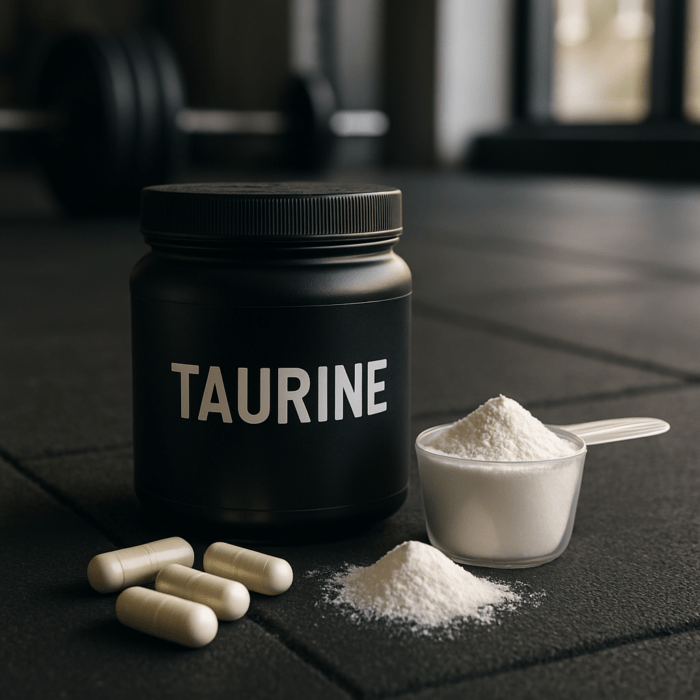
The main dietary sources of taurine are fish (cod, tuna), seafood (mussels, shrimp) and red meat. One serving of fish provides a substantial proportion of the recommended daily intake. As a supplement, taurine is sold in powder and capsule form — typical doses range from 500–2000 mg per day, split between a pre-workout dose and an evening dose.
FAQ: using taurine
Is taurine the same as the caffeine in energy drinks?
No. Energy drinks often contain both, but they work in opposite ways — caffeine stimulates the nervous system, while taurine deficiency tends to calm it. This combination is what makes the effects of an energy drink feel somewhat more balanced, although it does not justify the sugar load.
When should you take taurine?
About 30–60 minutes before a workout and/or in the evening to support sleep. It is well absorbed both with food and on an empty stomach.
Is taurine safe?
For healthy adults, up to 3 g per day is considered safe for long-term use. If you have heart or kidney disease, consult your doctor before taking a supplement.
Author: Peep Reinart
Find out more: Taurine on the Fitness.ee Marketplace
Come and train! ArtGym




