
Slow-digesting carbohydrates for bodybuilding
Slow-digesting carbohydrates are often underrated in a bodybuilder’s diet, even though they determine how well the body recovers and how steadily insulin is released. In this article, we look at why you need carbohydrates for heavy strength training in the first place, how glycemic index differs from glycemic load, and when fast sugars have a place.
Why slow-digesting carbohydrates matter for bodybuilders
At a low heart rate, your body mainly burns fat — when you are sitting, it burns almost nothing else. Once your effort exceeds 50% of VO2max, corresponding to a heart rate of 130-150 depending on your age and fitness, the proportion of energy coming from fat begins to fall. During intense effort, such as the final sets on the leg press, your body uses only muscle glycogen.
An hour of intense strength training burns around 500-600 kcal. Carbohydrates can be estimated to account for 350-450 kcal of that, or 90-110 grams. If you want to recover fully, your recovery drink must contain carbohydrates too. A typical recovery drink is 50-60% carbohydrate, meaning 100 g of powder provides around 40-60 g of carbohydrates. You need to get the rest from regular food immediately after your workout.
Measurements taken on a cycle ergometer have shown that when bodybuilders cycle for 20 minutes to exhaustion, their heart rate immediately rises above 100 beats per minute. They stop burning fat at an intensity where a recreational exerciser could still use fat for energy. This explains why people who do strength training use substantial amounts of muscle glycogen even during everyday activities, and why their diet needs to include carbohydrates alongside protein. That said, protein intake is usually so high that carbohydrates rarely account for more than 50% of total daily energy intake.
Slow-digesting carbohydrates and insulin
Carbohydrates matter for another reason too: they control insulin release. Insulin is a powerful anabolic hormone that, among other functions, allows muscle cells to take up amino acids and carbohydrates. For bodybuilders, steady insulin release is more important than sharp spikes.
Short-chain carbohydrates — table sugar, or sucrose; dextrose, or glucose; maltose, or malt sugar; and lactose, or milk sugar — are absorbed quickly and send blood sugar soaring. The sharper the rise, the more insulin the pancreas must release into the bloodstream to keep blood sugar from staying elevated for too long. If you do not eat soon enough after having a recovery drink, your blood sugar can drop so sharply that you start shaking and sweating and experience a bout of weakness. Slow-digesting carbohydrates and foods containing dietary fiber prevent this. A rapid rise in blood sugar and a large release of insulin also increase the storage of excess blood sugar as fat.
Glycemic index versus glycemic load
The glycemic index (GI) indicates how high blood sugar rises after you eat 50 grams of carbohydrates. It is measured half an hour after eating and compared with the response to glucose or white bread. When glucose is the reference, values up to 55 are low and those above 70 are high; when white bread is the reference, values below 65 are low and those above 90 are high. If blood sugar fluctuations trouble you, it is worth consulting GI tables.
In practice, things are more complicated. Dietary fat and protein slow sugar absorption, so GI alone has little relevance in a meal rich in meat or oil. Preparation also changes the value — heating potatoes and rice raises their GI.
A more precise measure is glycemic load (GL), which accounts for both GI and the total amount of carbohydrates in a serving: GI / 100 × carbohydrate content in grams. If your aim is to keep insulin levels consistently high to build muscle, GL is more informative — what matters is knowing how much sugar is in your blood and for how long, rather than simply how high it peaks.
Slow- or fast-digesting carbohydrates — when to choose each
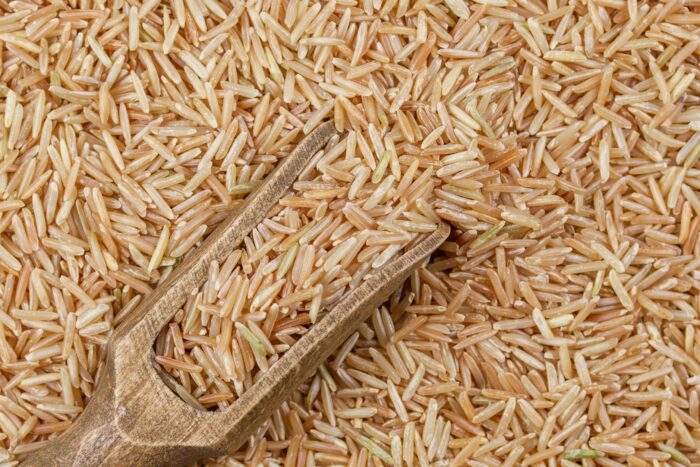
The answer depends on the situation. During endurance exercise, fast sugars work better, particularly glucose. Fast-digesting carbohydrates are also suitable if, for some reason, you want to raise your blood sugar sharply as a bodybuilder. At other times, most of your carbohydrates should come from slow-digesting sources: potatoes, rice, pasta, vegetables and root vegetables. Berries are also a good choice — they contain fast sugars, but only in small amounts. Caramel sweets and baked goods do not belong on this list.
DE values and maltodextrins
Years ago, there was much debate about the DE values of maltodextrins. DE compares a carbohydrate source with pure glucose and indirectly indicates how fast-digesting those carbohydrates are. Traditional maltodextrin has a DE of 18 — its sweetness is around 18% that of glucose. The rule is simple: the sweeter the source, the faster it digests; the less sweet it is, the slower it digests. Even rye bread becomes sweet as you chew it because its long chains break down into shorter ones. The same applies to bananas — an unripe banana has long carbohydrate chains and a low DE, while a ripe banana has shorter sugar chains and a high DE.
Slow-digesting carbohydrates for weight gain and weight loss
To gain mass, you need to increase your carbohydrate intake; to lose weight, you need to reduce it. The simple rule is that an energy surplus of 500 kcal a day adds around 500 g in a week, and the reverse also applies — eating 500 kcal below your daily needs leads to a loss of 500 g in a week. Slow-digesting carbohydrates keep hunger levels and insulin steady throughout this process.
FAQ
Do slow-digesting carbohydrates help you build more muscle than fast-digesting carbohydrates?
Muscle growth requires an energy surplus and enough protein. Slow-digesting sources keep insulin levels steadier, making them a better fit for most meals throughout the day than sugar spikes.
Should bodybuilders do any aerobic training at all?
You can, and even should, do some, but raising your heart rate too much uses energy needed for muscle development. Keep your aerobic training volume moderate.
Which carbohydrates should you choose immediately after a workout?
Immediately after a heavy set, a fast-digesting source, such as a recovery drink, may be suitable for quickly restoring blood sugar levels. Your next balanced meal, however, should consist of slow-digesting carbohydrates — potatoes, rice, pasta or vegetables.
Translated from Body magazine, author Timo Kosonen
Author: Greta
Come and train! ArtGym




