How to stop feeling hungry: why hunger returns and what to eat
Feeling hungry doesn’t always mean you need another meal right away. Often the previous meal was too light, too liquid, or your regular meal routine fell apart during the day.
If your stomach is empty again an hour after eating, look not only at the amount but also at what your plate is made of. The simple truth: feeling full is the result of protein, dietary fiber, fat, fluid and eating pace working together.
Why hunger comes back so quickly
Many people start the day with coffee and a quick bite. Then you get ravenous at lunchtime, crave something sweet in the afternoon and, in the evening, feel like the fridge is calling your name. That isn’t a character flaw. Your body asks for energy when it hasn’t had enough earlier.
Hunger can be made worse by a breakfast that is too small, too little sleep, stress, liquid calories and foods that give quick energy but don’t stay in the stomach for long. A sweet yogurt, a pastry or just a smoothie may do the job for a moment, but the cravings often return soon.
Training plays a part too. In that case, hunger may not be the problem itself but a sign that your meals don’t cover the training load. The question is how to eat so that you have enough energy and constant snacking doesn’t run your day.
Hunger and how to build your plate
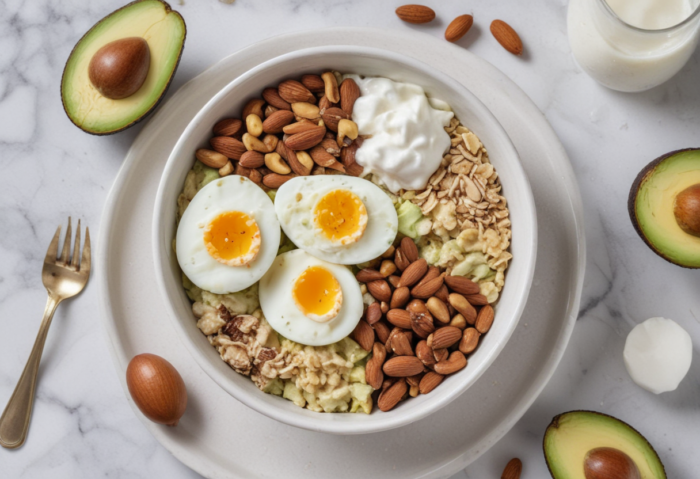
Start with protein. Chicken, fish, eggs, cottage cheese, Greek yogurt, tofu, beans and lentils help your stomach stay calm for longer. Protein doesn’t have to be a huge portion at every meal. What matters is that it’s really there.
Second, add dietary fiber. Rolled oats, buckwheat, whole-grain bread, vegetables, berries, beans, seeds and nuts slow down digestion and give the plate volume. If a meal is only rice and a small piece of meat, your stomach often empties faster than when there’s a large portion of salad or stewed vegetables next to it.
Third, don’t be afraid of healthy fats. Avocado, olive oil, salmon, nuts and seeds help you stay full. Fat is energy-dense, so you don’t need to overdo the amount. A handful of nuts already counts as a real addition, not a harmless bite of air.
So what actually happens? If a meal contains only fast-absorbing carbohydrates, it moves through your body faster and the appetite can return quickly. If the same meal also has protein, dietary fiber and a little fat, the result is usually calmer.
How to keep hunger in check day to day
Keep the gaps between meals reasonable. If you skip lunch and try to hold out until evening, it’s no surprise that your sense of moderation disappears later. For many people, three main meals and, if needed, one snack work well. For others, four smaller meals suit better. Both can work.
Drink water, but don’t use water as a substitute for food. Thirst can indeed sometimes feel like hunger, especially in summer or after a workout. Still, a glass of water doesn’t solve the situation where breakfast was simply too small.
Be mindful with liquid foods. A smoothie, a protein shake or a soup can be a good choice, but liquid alone doesn’t keep everyone’s stomach full for long. If you notice that you drink a meal and soon look for something more, try making the same food more solid: a bowl, a spoon, berries, rolled oats, seeds.
In winter, appetite can also increase because we spend less time outdoors and crave more comfort food. This is quite common in Estonia. Routine helps here: a warm lunch, enough protein and vegetables, instead of endless snacking alongside your tea.
Hunger: practical signs to watch
If you want to understand what affects you the most, watch three things for a week: when hunger appears, what you ate at the previous meal and how you slept. This gives you more information than one random bad day.
- If hunger comes quickly after breakfast, add protein and dietary fiber to it.
- If you feel like eating everything at once after a workout, plan a recovery meal in advance.
- If a sweet craving shows up every evening, check whether lunch was too small.
- If you snack out of boredom, tell physical hunger apart from habit.
Honestly, the solution doesn’t have to be complicated. Put a proper main meal on your plate, not just a quick bite. Eat more slowly. Add vegetables. Keep a sensible snack on hand, for example cottage cheese with berries, an egg and whole-grain bread, or beans in a salad.
If hunger is very strong, or comes together with fatigue, dizziness or rapid weight loss, it’s worth talking to a dietitian or nutrition coach, or your family doctor. Personalized advice is better than endless experimenting.
FAQ
Does feeling hungry mean I’m eating too little?
Sometimes it does, but not always. The cause can also be the composition of your food, too long a gap between meals, too little sleep or stress. Look at the pattern, not at one day.
Which snack keeps your stomach full for longer?
A good snack combines protein and dietary fiber. For example, cottage cheese with berries, whole-grain bread with egg or Greek yogurt with seeds works better than just a sugary bar.
Should I avoid fat if I want to eat less?
No, you don’t have to. A moderate amount of fat helps you stay full. Just keep an eye on the portion, because nuts, oils and avocado provide a lot of energy.
Author:Turg.Fitness.ee
Illustration: Võsu Mart
Come and train! ArtGym