
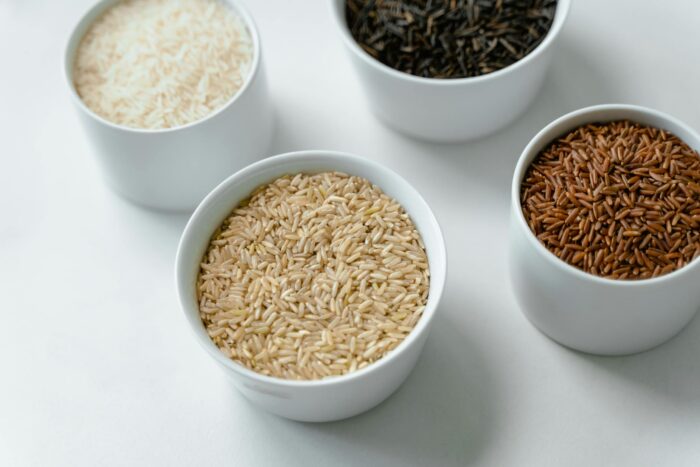
Brown rice: what athletes gain from it
Brown rice is a simple food, but on an athlete’s plate it does more than just fill you up. Here you’ll see clearly why it is often preferred to white rice, and when white rice can still be a sensible choice.
Why is brown rice even a topic?
For many people who train, rice is an everyday source of carbohydrates. It’s easy to cook and goes well with chicken, fish, eggs, vegetables and plant-based protein sources too. The question isn’t whether rice is good or bad. It’s more about what you get from that rice besides energy.
Athletes recommend brown rice over white mainly for one simple reason: brown rice contains more dietary fiber. White rice is more heavily processed. That makes it softer, quicker to cook and milder in taste, but some of its nutritional value is lost.
When rice is harvested from the rice field, each grain is surrounded by a delicate layer. That layer is exactly what makes brown rice the more nutrient-rich choice. In white rice it is removed during processing, leaving mainly the white interior. It sounds like a small difference, but on the plate and in digestion the gap can be quite noticeable.
Brown rice and nutrients for people who train
A simple truth: training doesn’t depend only on protein powder or a workout plan. The body also needs carbohydrates, minerals, vitamins and dietary fiber. Brown rice provides more of them than regular white rice.
According to the original comparison, whole-grain rice contains four times as much dietary fiber. It also has two times as much vitamin B2, 30% more vitamin B3 and more than three times as much vitamin B6 and E. These don’t make one food a miracle cure, but they help improve the bigger picture.
When it comes to minerals, the difference is just as noticeable. Brown rice contains more than two times as much potassium, magnesium and phosphorus. It also has more zinc and selenium. If you train regularly, sweat a lot and eat fairly similar foods day after day, small differences like these add up.
You don’t need to fear brown rice because of its fat. One cup of rice contains 1.17 grams of fat, while white rice has 0.2. There is a difference, but the amount is small and these are healthy fats. In terms of calories the picture isn’t dramatic: brown and white rice have roughly the same calorie content, 232 and 223 per cup respectively.
Both also contain fairly similar amounts of carbohydrates, about 50 per cup. So brown rice is not some secret low-carbohydrate food. It’s simply less processed and delivers more useful nutrients alongside the same energy package.
How to fit brown rice into your menu?
If you’re used to white rice, whole-grain rice can seem too strong, nutty or dry at first. That’s normal. The texture really is different. The solution isn’t to force yourself to eat something unpleasant, but to start gradually.
A good trick is to mix brown rice with white rice at first. Half and half, for example. That way your palate adjusts over time and the dish doesn’t feel too unfamiliar all at once. Another option is to use brown rice in dishes that already have more flavor: stews, stir-fries, bowls, chili or vegetable mixes.
Brown rice works especially well on days when you need to feel full for longer. For example, as a workday lunch or a pre-workout meal, if there is enough time between the meal and the workout. Right before a workout, a higher-fiber meal may feel heavier to some people. So what actually happens? Your stomach simply digests more slowly.
If your goal is to build muscle mass, don’t look only at the color of the rice. Look at the whole plate. Whole-grain rice provides the carbohydrate portion, but you also need protein and something fresh alongside it. If your goal is to lower your body weight, the higher dietary fiber content helps fill you up, but portion size still matters.
Brown rice or enriched white rice?
If you really dislike brown rice, you don’t have to force it down. In that case you can look for enriched white rice. With it, the manufacturer has added back some of the nutrients lost during processing.
There is one important catch, though. The amount of dietary fiber, i.e. the fiber amount mentioned in the old text, stays the same. That is exactly one of the main reasons brown rice moves ahead of white rice in many trainees’ diets.
Honestly, you don’t have to throw white rice out of your menu. On some days it even fits better, for example when you need an easier-to-digest carbohydrate. But if the daily choice is yours and the taste suits you, whole-grain rice gives you more substance in the same meal.
FAQ: brown rice in your training diet
Does brown rice help build muscle?
Brown rice won’t build muscle on its own. It provides carbohydrates and nutrients that support training and recovery. Muscle growth also requires enough protein, sleep and a consistent training load.
Is brown rice always better than white rice?
Brown rice is usually the more nutrient-rich choice, especially because of its dietary fiber and minerals. On the other hand, white rice may suit you better before a hard workout or when your stomach doesn’t tolerate higher-fiber food well.
How do you make brown rice taste better?
Cook it until properly soft, season it with salt and herbs, and mix it with vegetables or a sauce. If the taste is unfamiliar at first, start with a mix of part brown and part white rice.
Author: Mikk-Alvar Olle, transl. FLEX
Source: WHO – physical activity.
Come and train! ArtGym




