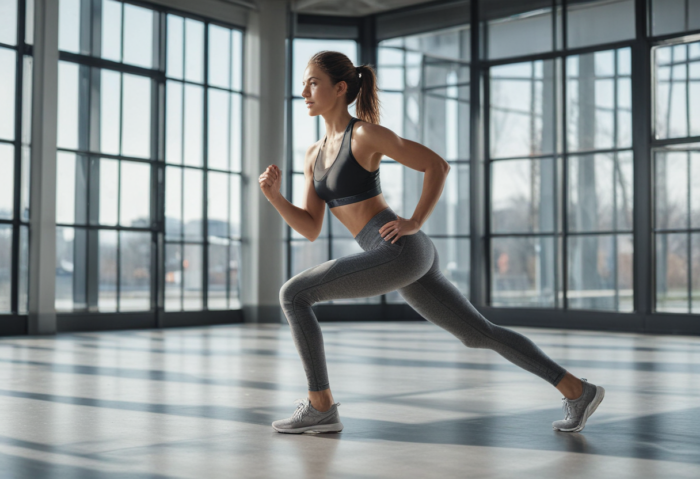
A slimmer lower body: 6 effective workouts
A slimmer lower body takes more than diet alone. It takes movement — walking, jumping and pedaling. Each type of training works a little differently: cycling targets your thigh muscles, while fencing targets your glutes. The following six workouts burn calories and build muscle tone right where you want it most.
Why your lower body responds faster to exercise
Your thighs and glutes are your body’s largest muscle groups. Working them uses significantly more energy than training your upper body. The benefits come in two ways at once: you burn calories during training, and the muscles themselves become denser even at rest.
The simple truth is that your body burns fat where it chooses, not where you want it to. Spot reduction is a myth. But combine cardio with strength exercises, and slimmer thighs and glutes will follow sooner or later.
Six workouts for a slimmer lower body
1. Running
Target areas: thighs and calves. Running 16–24 kilometers a week tones your quadriceps, hamstrings and calves. Add a couple of hills, and your run becomes strength training. Running uphill or on an incline demands energy just like a set of squats at the gym.
Running burns about 650 calories per hour. It also strengthens your heart, keeps your bones strong and, as high-intensity aerobic training, boosts your mood. If you’re a beginner, alternate running and walking: run for two minutes, walk for five minutes, and reduce your walking time as your endurance improves.
2. Funk and hip-hop classes
Target areas: thighs and glutes. Hip-hop and funk involve plenty of jumps, hops and circular movements — plus a vibe you won’t find in a regular aerobics class. A 60-minute class 3–4 times a week brings a noticeable change within a few weeks.
A class with a moderate training load burns about 400 calories, and the rhythmic music lifts your mood. If you’re a beginner, don’t worry about the choreography: follow the beat. After a couple of classes, the basic steps will come naturally, and you can join the advanced group.
3. Jumping rope
Target areas: thighs and calves. Jumping rope for 20 minutes three times a week keeps your glutes and calves toned. Add variations — low lunges and high knees — and you’ll work your glutes and abs at the same time.
20 minutes of jumping rope burns 200 calories and develops your sense of rhythm, speed and endurance. If you’re a beginner and can’t keep a steady pace, hold the rope in one hand and swing it beside you while you jump. You’ll improve your rhythm without tripping.
4. Fencing
Target area: glutes. Fencers have shapely bottoms because the glutes are a large muscle group that works with almost every movement. The en garde stance is essentially a deep squat — after a couple of seconds, you’ll feel your thighs burning.
Fencing burns approximately 390 calories per hour. It develops balance, speed, timing and coordination. Nothing is better for developing quick reflexes. If you’re a beginner, several sports clubs in Estonia offer fencing classes — get started by finding a suitable training group near you.
5. Spinning
Target areas: thighs, calves and glutes. Regular cycling primarily works your thighs, but spinning lets you adjust the resistance to simulate hills or do interval training. Those changes in resistance are what get your glutes working.
A class burns an average of 680 calories — and the sweat streaming down your back by the end of the workout makes that no secret. If you’re a beginner, wear padded cycling shorts and bring a water bottle and a small towel. The saddle will feel unfamiliar for the first couple of classes; that’s normal.
6. Water boxing, or aquatic kickboxing
Target areas: thighs and glutes. Water provides 12–15 times more resistance than air, so your muscles work in every direction — including on the return movement. Water reduces the impact on your joints, making this a good choice if your knees or back can’t tolerate running.
Water resistance makes aerobic exercise nearly 60% more effective. If you’re a beginner, practice the movements slowly and gradually increase your pace. Use your arms to keep your balance and wear water shoes to prevent slipping.
Practical tips for beginners
Don’t start everything at once. Choose two types of training — one dynamic activity (running or jumping rope) and one class (funk or spinning) — and do them three times a week for a month. Then see whether you want to add anything else.
Eat a light meal 1–2 hours before your workout. Afterward, your body needs protein and carbohydrates for recovery. And water — always water. During winter in Estonia, dehydration is sneakier than in summer because you don’t feel thirsty until later.
FAQs about getting a slimmer lower body
How soon will I see results?
The first changes — more energy, better endurance and clothes fitting a little better — come within 3–4 weeks. Visible changes in the shape of your thighs and glutes usually take 8–12 weeks of regular training.
Is cardio alone enough?
For slimming down, yes, but for muscle tone and shape, add one or two strength training workouts a week. Squats, lunges and glute bridges are a cost-free win for your lower body — you can do them at home without weights.
Do I need to feel hungry during workouts?
No. Consistently undereating while doing high-impact training slows your metabolism and breaks down muscle rather than fat. Eat a balanced, nutritious diet, avoid empty calories and let your body do the work.
Train your way to a slimmer body! ArtGym
Author: Translated by Liis Kutsar from MuscleFitness magazine