
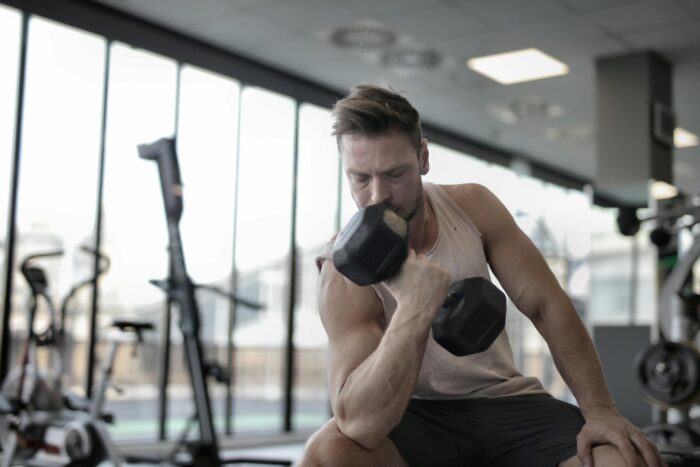
L-arginine: what does it do for your training?
L-arginine is an amino acid associated mainly with circulation, training feel and recovery. If your goal is a better pump in your workouts, greater work capacity and overall fitness, it’s worth understanding what this substance actually does and what it doesn’t.
Why does L-arginine matter at all?
Arginine is no mysterious magic powder. It is an amino acid from which active compounds can form in the body, such as agmatine and nitric oxide, or NO. It is mainly because of nitric oxide that L-arginine often comes up in talk about the gym, circulation and blood supply to the muscles.
The simple truth: a muscle works better when enough blood, oxygen and nutrients reach it. That doesn’t mean one supplement will do the work for you. Training, sleep and food still come first. But L-arginine can be part of that system, especially if you train regularly and want to support how your body functions.
An earlier description also cited studies conducted under controlled conditions, in which 2g of arginine given to athletes over 5 weeks was associated with strength gains, an increase in lean muscle mass, and a decrease in fat tissue and protein waste products. It’s worth reading this kind of information soberly: one number doesn’t replace the whole picture, but it hints at why arginine has been studied in sport at all.
How does L-arginine work in the body?
So what actually happens? When the body uses arginine, nitric oxide can form from it. NO helps relax and widen blood vessels. As a result, blood flow to the tissues may improve. For people who train, this often means a better feel in the muscle, especially during a high-rep set.
That’s where the word “pump” comes from. The muscle feels fuller and warmer, and seems to work with a better supply. That feeling isn’t the same as lasting muscle growth, but for many people it gives a better connection to the muscle during training. If you do, say, a chest, back or leg day, blood flow is a very clearly noticeable part of the workout.
Arginine is also described in connection with processes involved in the production of growth hormone and insulin. It has likewise been linked to the immune system, wound healing and the removal of waste products from the body. These are broader body processes, not a promise that one capsule will make you strong overnight.
L-arginine and training: what to expect?
The most realistic expectation is a better training feel. Some people notice the difference clearly, others hardly at all. It depends on your nutrition, training volume, circulation, sleep, and also on whether your body is already getting enough amino acids anyway.
If you eat little protein, L-arginine won’t save the whole picture. But if your menu is in order, your training is consistent and your recovery is more or less in place, arginine may offer a small extra boost. That kind of honest view is the most useful: not a miracle, just one tool.
- L-arginine strengthens the immune system.
- L-arginine takes part in the production of growth hormone.
- L-arginine takes part in the production of insulin.
- L-arginine cleanses the body of toxins.
- L-arginine widens blood vessels and improves circulation.
- L-arginine regulates blood pressure and cholesterol levels in the blood.
- L-arginine contributes to the formation of new blood vessels.
- L-arginine speeds up wound healing.
This list sounds impressive, but it shouldn’t be read as a promise of treatment. If you have concerns related to blood pressure, the heart, blood vessels or medications, talk to a doctor before using a supplement. This applies especially if you already use something that affects circulation or blood pressure.
Practical tips for arginine users
If you want to try L-arginine, start calmly. See how your stomach, your well-being and your training respond to it. Amino acids don’t suit everyone equally well, especially on an empty stomach.
From a training point of view, the most sensible approach is to judge the result over a couple of weeks. Don’t decide based on one day. On some days the pump is better simply because you slept well, ate carbohydrates and finished your warm-up. On another day, the same supplement can feel completely ordinary.
Honestly, the biggest mistake with arginine is expecting too much from it. If your training program is random and your protein stays low day after day, there’s no point hoping L-arginine will get you in shape. But if the basics are in place, it may help you get a little more out of your training.
FAQ: L-arginine and everyday fitness
Does L-arginine build muscle?
Indirectly, it may support training, because better circulation and training feel can help you perform higher-quality sets. Muscle growth, however, still comes from training, enough food and recovery.
Is arginine suitable before a workout?
Many people use it right before a workout, because the goal is better blood supply and a pump. How well it suits you is individual, so pay attention to how you feel and to your digestion.
Is L-arginine suitable for everyone?
Not necessarily. If you have a chronic illness, a blood pressure problem, a cardiovascular concern or use medications, ask a healthcare professional for advice before using it.
Author: Turg.Fitness.ee
Learn more: HERE
Come and train! ArtGym




