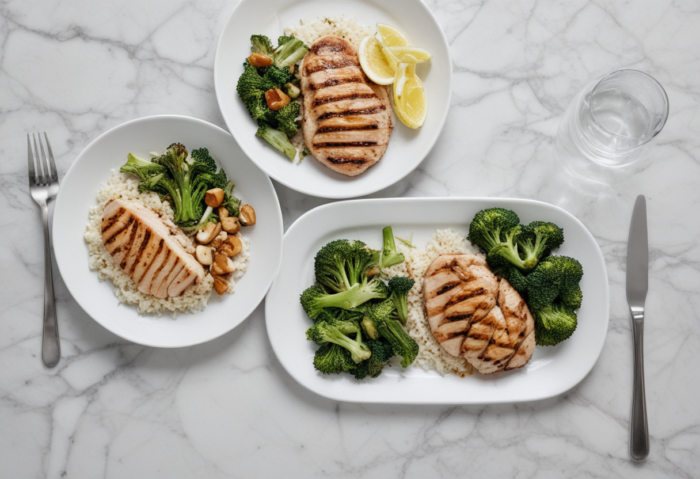
A question sometimes comes up about nutrition on training days and rest days: “Should you eat the same way every day, or eat less on rest days, and what about vitamins and other supplements?
It is encouraging to see young gym-goers carrying bottles of recovery drinks. For the most part, though, these are simply part of the gym image, much like training gloves. A recovery drink containing protein and carbohydrates is a good start for muscle building. For skinny youngsters, however, it probably remains something of an oddity. They have heard that a recovery drink is part of the routine, but at other times they only eat when they are ravenous. At worst, their only consideration when putting together a meal to stave off hunger may be satisfying a craving. The only difference in how they eat on rest days is that the recovery drink bottle sits in the kitchen cupboard, waiting for the next workout.
At the other extreme are gym fanatics who chatter away on internet forums about the importance of tiny nutritional details or the precise timing of supplements throughout the day. Some even set an alarm to wake them at night as a reminder to take their nighttime protein.
Differences in energy expenditure between training days and rest days
A gym workout increases energy expenditure, but not by a huge amount, and much depends on its intensity and duration. An hour-long gym workout burns around 200-700 kcal. To burn 700 kcal, you need to work almost without a break. With rest periods lasting several minutes, energy expenditure is around 300 kcal per hour. In terms of energy, that is the equivalent of one large sandwich with plenty of cheese or meat, or a protein bar weighing less than 100 grams. Calorie needs differ by 10-15% between a training day and a rest day, provided you do no other physical activity on the rest day.
If you are active in other ways on your day away from the gym, this can easily increase your rest day energy needs. When calculating those needs, you must account for the energy used in any additional activity, which can amount to 500-1000 kcal in team sports such as floorball.
You need to keep this in mind when planning your meals. For young people, time away from training may increase energy needs even more than a gym workout. Activities with friends often increase energy expenditure without them realizing it. This matters when trying to gain mass: the conditions needed for muscle growth must be met, which means consistently eating more energy than you expend. During a bulking phase, you should cut back on any strenuous, prolonged physical activity if your weight is not increasing.
During a fat-loss phase, on the other hand, any low-intensity activity is welcome. Skating, cycling around town and similar activities popular with young people fit the bill. Even an hour of shopping counts toward fat burning, just as Nordic walking does.
Your energy expenditure on a rest day is linked to the nature of your gym workout. Recovery from an anaerobic gym workout can take three days, during which energy expenditure is also somewhat higher. Recovery therefore slightly increases energy needs too.
Differences in protein needs between training days and rest days
Training increases your protein needs, primarily because it accelerates protein synthesis. For effective muscle growth, an increase in protein synthesis alone is not enough: protein must also be available. To prevent protein from being broken down for energy, you need to eat carbohydrates alongside it. Eating protein without a sufficiently large amount of carbohydrates at the same time is not sensible. Protein needs are higher on training days than on rest days, provided your other rest day activities are not the kind that increase protein requirements.
Differences in carbohydrate and fat needs between training days and rest days
Your fat and carbohydrate needs differ little, if at all, between training days and rest days. What matters is choosing high-quality sources of both. Fats should be liquid and plant-based, while carbohydrates should come from whole-grain foods and have a low GI. Candy and pastries have no place in a healthy athlete’s diet and should only be eaten occasionally.
Differences in vitamin and mineral needs between training days and rest days
When it comes to vitamins, additional antioxidants are justified on training days. You can even double your doses of vitamin C and vitamin E. Mineral needs do not increase on training days compared with rest days. If you use a multivitamin product, it should also contain the key minerals.
Omega-3 fatty acids
Omega-3 fatty acids are usually recommended for gym-goers because they reduce inflammation caused by training. Omega-3 products are generally taken every day. At the very least, however, it would be good to take them as a supplement on training days.
Creatine
Creatine is used in cycles or as a daily sports supplement. If you use creatine, you should take it regularly at 2-5 g per day. There is no reason to stop taking it on rest days if you already use it.
Amino acids
Amino acids such as branched-chain amino acids (L-leucine, isoleucine and valine) are certainly useful on training days, and less so on rest days. You can take a glutamine supplement on both training days and rest days if your aim is to strengthen your immune defenses. Arginine is useful on training days and can also be taken on rest days. Carnitine improves the transport of fats into the mitochondria. If you suspect that your body does not produce enough carnitine, you can take a supplement. Carnitine can be used daily.
CLA
CLA supplements are useful for keeping inflammation under control on training days. For fat burning, CLA should be taken in cycles, with daily use throughout each cycle.
Various stimulants
Medicinal products that stimulate bodily functions, such as ginseng and rhodiola, are suitable for daily use. Products claimed to have hormonal effects in the body are used on training days, while some are taken daily in cycles.
A note for those trying to gain mass
To ensure your calorie intake exceeds your energy expenditure, you should eat the same way on rest days as on training days. Eating properly on training days is not enough if you neglect your nutrition on rest days. Even if you take a longer break from training, lasting a week or two, you need to maintain a calorie surplus. Eating a surplus helps sustain muscle growth during breaks from training.
Nighttime eaters
You can also eat at night during a bulking phase, provided it does not disturb your sleep. Whether this offers any advantage, however, is not entirely clear.
Translated from Body magazine; Author: Timo Kosonen
Author: Greta
Come and train! ArtGym