
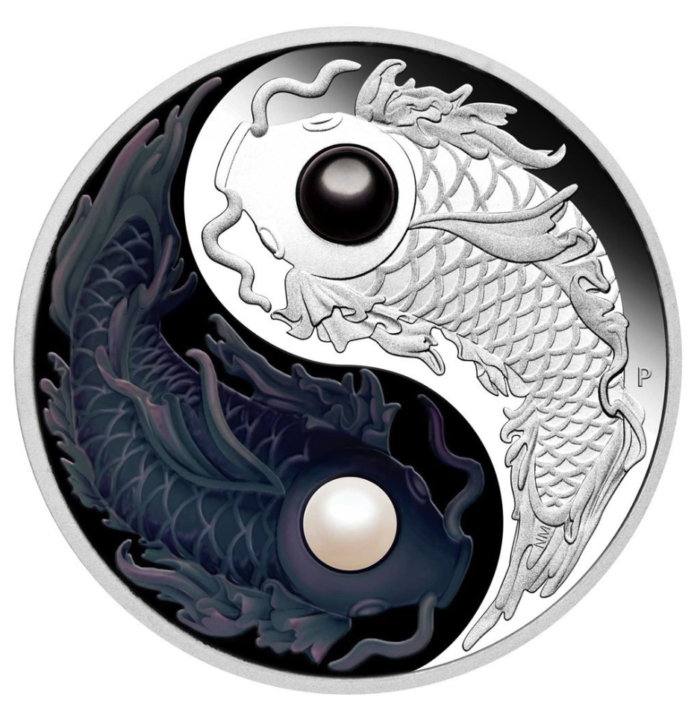
Yin and Yang in training and muscle growth
Yin and Yang isn’t just an ancient Eastern way of thinking. In training, it means something very practical: progress comes through opposites, not just through comfort and feeling good.
If you want to get stronger, you sometimes have to push until it’s hard. If you want to recover, you also have to know how to rest. A simple truth: the body doesn’t develop from doing alone, but from the alternation between work and recovery.
Why does Yin and Yang matter in training?
Yin and Yang theory is about opposites that don’t destroy each other but give each other meaning. Good becomes understandable through bad. Light only feels light once you know what heavy is. The same logic works in sport.
In training, we often want only the good side: more strength, better shape, feeling better and faster progress. But the body doesn’t hand these over for nothing. You have to invest. You have to put up with discomfort, fatigue and sometimes the boredom that comes with repetitive work.
Honestly, this is where many people get stuck. They want the result but not the process. Yet you can’t have one without the other. Regular workouts start paying off in results when effort and patience go hand in hand.
Yin and Yang in the body: breakdown and recovery
The human body is a continuous process. We expend, break down, recover and rebuild. Training is a small process within that larger one. Every hard set uses up energy and damages muscle tissue. It feels like a step backward.
But progress begins with exactly that step back. The body repairs what was damaged and, if conditions are good, builds a little extra. This is called supercompensation. Building muscle is the clearest example.
This is where anabolism and catabolism come in. Catabolism means breaking down, anabolism means building up. Neither gets you far on its own. If you only break down, you wear yourself out. If you only rest, you give the body no reason to get stronger.
So what actually happens? Training sends the body a signal. Rest and food give it the chance to respond to that signal. Work and rest are opposites, but progress is born from their cooperation.
How do opposites work in training?
Our movement is also based on opposites. Extension and flexion. Pulling and pressing. Tension and relaxation. Even simply standing upright requires opposing muscles to work together.
Try standing straight and start leaning slightly forward. At some point you feel the muscles on the back of your body holding you back from falling. If you lean backward, the muscles at the front start working harder. Balance isn’t a passive state but a constant correction.
In bodybuilding, the same principle is familiar from exercise selection. If you want to emphasize the outer thigh in squats or on the leg press, the feet are placed closer together. If the aim is to load the inner part more, a wider stance is used. In biceps curls, grip width changes how the training load feels: a wider grip shifts the emphasis toward the inner head of the biceps, a narrower grip toward the outer head.
Volume and intensity also move in opposite directions. The more weight you lift, the fewer repetitions you can usually manage. The longer a set you want to do, the lighter the weight has to be. Don’t treat this as a limitation, but as a tool.
Yin and Yang in a practical training plan
A good training plan doesn’t consist only of hard days. It also needs lighter days, rest and recovery. If every workout is a maximum effort, the maximum soon disappears.
The same applies to nutrition. Energy expenditure and the energy you get from food must match your goal. If you want to build muscle, the body can’t stay in a constant deficit. If you want to lose fat, you can’t keep eating more at the same time. Understanding opposites helps you make calmer decisions.
The body’s pH level is another example of the idea of balance. The pH of different fluids and of the internal environments of different organs varies: urine has one, blood another and stomach acid a third. In general terms, people talk about a balance between acidic and alkaline processes and about staying close to neutral, for example pH 7.0. What matters is not to buy into slogans, but to understand that the body is constantly seeking balance.
All in all, the same pattern shows up everywhere:
- Aerobic vs anaerobic
- Extension vs flexion
- Catabolic vs anabolic
- Slow-twitch vs fast-twitch muscle fibers
- Volume vs intensity
- Training (work) vs rest (recovery)
- Energy expenditure vs energy intake from food
- Carbohydrates vs fats
- Strength vs endurance
- Alkaline vs acidic internal environment of the body (pH)
- Body vs mind
And finally, at the level of life itself: the largest cell in the human body is the female egg cell, and one of the smallest is the sperm cell. Two extremes unite, and the result can be a new human being. Opposites are not just theory. They are inside us.
FAQ: Yin and Yang in training
Does every workout have to be hard?
No, it doesn’t. Hard training sends your body a strong signal, but progress also requires recovery. If you push all the time, the quality starts to drop.
How do I know whether my work and rest are balanced?
Look for simple signs: is your strength holding up, is your sleep normal, and is your drive to train still there? If all three get worse at the same time, your training load is probably too high.
Why do opposites help you progress better?
Because your body needs variety. Effort breaks down and tires; rest restores and builds. Both sides are necessary if the goal is to genuinely get stronger.
Heraclitus: “Illness makes health pleasant and evil makes goodness, hunger makes fullness sweet and weariness makes sleep.”
Author: Janar Rückenberg
Come and work out! ArtGym




