
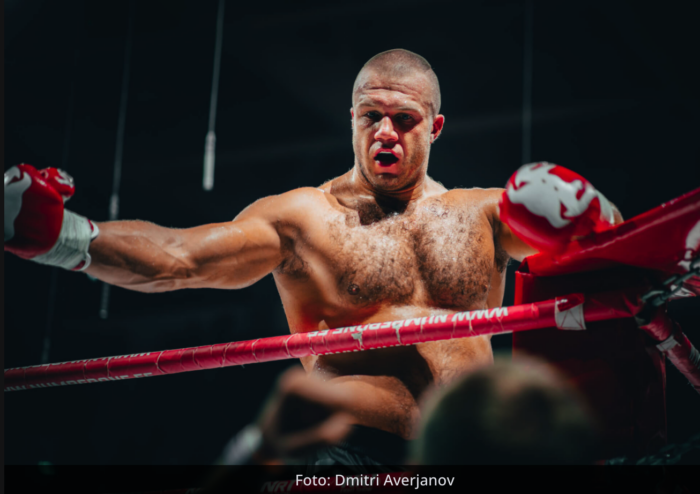
Uku Jürjendal: the path of a heavyweight fighter
Uku Jürjendal is a name in Estonian combat sports whose story begins with a simple childhood dream: to become the strongest fighter. The path didn’t start in the ring, but with athletics, home bag workouts and a first boxing gym.
This story sums up how a 30-year-old heavyweight, 192 cm tall and weighing 110 kg, trains, eats, recovers and keeps motivation high when the training load is already huge by ordinary standards.
Uku Jürjendal and the road to combat sports
Name: Uku Jürjendal
Age: 30
Height: 192 cm
Weight: 110 kg
Uku Jürjendal says plainly that the dream of becoming the strongest fighter was already there in childhood. A thought like that is not just a poster on the wall. It means years of repetition, discomfort and quite a few days when staying home would be easier.
Uku’s sports career began with athletics. At some point, 10 years ago, they decided to take on the old dream for real. The start was very simple: working alone at home on a heavy bag. From there came the first boxing session, and then Muay Thai and kickboxing sessions.
Honestly, it’s a pretty good reminder. Many people wait for the perfect club, equipment or training plan. Uku started where they could. A bag, determination and a first step.
Uku Jürjendal: biggest achievement and motivation
Uku names the gold medal in the super heavyweight division at the 2014 IFMA Muay Thai World Championships as their biggest achievement. This is no random medal on a shelf. In the super heavyweight division, strength, endurance, technique and nerve all count at once. A single weak spot shows up quickly in the ring.
What motivates them? Sport has always come first in Uku’s life. Thanks to sport, they don’t drink alcohol or ruin their health with other things. That sounds harsh, but in elite sport the choices are often quite black and white.
Uku also says they have always had a strong need for achievement. Life has shown that you get nowhere by making concessions. A simple truth: when the goal is big, comfort sometimes has to take a back seat.
The greatest motivation comes from within. When you see your efforts paying off, you get the feeling that you’re unstoppable. This is familiar to many who have trained for a long time: at first it’s hard, then the body starts to respond, and in the end the work itself becomes addictive.
How training and recovery work together
Uku trains twice a day, 6 days a week. The first workout is strength, cardio or conditioning. The second is sport-specific: technique, bag work or sparring. With a rhythm like that, recovery is not an extra luxury but part of the job.
To relax, Uku gets massages, goes to the sauna and swims as often as possible. To rest the mind, they watch an inspiring film or read a good book. This side is often overlooked by recreational athletes. Training breaks the body down a little; rest builds it back up.
So what actually happens if you skip recovery? At first you may not notice anything serious. Then sleep starts to get worse, your mood drops, your movements slow down and injuries come more easily. For a heavyweight the training load is even greater, because every jump, punch and step carries more mass.
Uku Jürjendal and the principles of nutrition
Because Uku Jürjendal is a heavyweight, weight is not a worry. In fact, the more the better. That doesn’t mean eating just anything, though. Uku doesn’t consume sugar, fried/deep-fried food, pork, etc.
Uku’s menu usually consists more or less of these foods: chicken, fish, beef, quark, cottage cheese, eggs, nuts, seeds, olive oil, peanut butter, coconut oil, rye, barley, buckwheat, oats, rice, potatoes, carrots, all kinds of root vegetables/salads and all kinds of fruit.
Uku doesn’t restrict how much they eat. They have 4 meals a day and eat until properly full. For a heavyweight this is logical: with this many workouts, you need fuel. At the same time, that fuel mostly comes from real food, not just from quick snacking.
Uku’s favorite food is grilled salmon. As supplements, they use protein, creatine, amino acids, a vitamin and mineral complex, fish oil, glucosamine, collagen protein, an isotonic drink during training, and magnesium before going to bed.
Practical tips for getting into better shape
Uku’s three recommendations are simple, but not always comfortable. Since Uku is, by their own account, a training fanatic, the first tip is to do more exercise. For Uku, it has always worked.
The second recommendation: eat fresh, real food. That means food you can understand even without a label. Meat, fish, eggs, quark, buckwheat, rice, potatoes, root vegetables, salads and fruit don’t need a long explanation.
The third point is an honest one: if you can’t be bothered or are unable to move enough, you need to start counting your daily calories. It’s not a punishment. It’s a way to find out what actually ends up on your plate.
As role models, Uku Jürjendal names Badr Hari, Mirco Crocop and Rico Verhoeven, as well as several other legendary heavyweight kickboxers. Names like these give direction, but you still have to do the work yourself.
Uku Jürjendal: FAQ
How did Uku Jürjendal get into combat sports?
Uku began their sports journey with athletics, but 10 years ago decided to make the childhood dream come true. First they trained at home on a heavy bag, then went to a boxing class, and from there moved on to Muay Thai and kickboxing.
What is their biggest achievement?
Their biggest achievement is the gold medal in the super heavyweight division at the 2014 IFMA Muay Thai World Championships.
What do they recommend for getting into better shape?
They recommend doing more exercise, eating fresh, real food and, if needed, starting to count your daily calories.
Author: Turg.Fitness.ee
Come and train! ArtGym




