
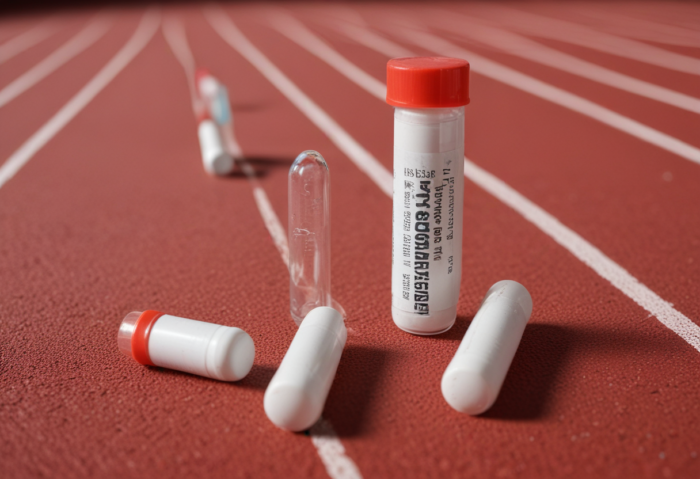
Athletes and the unfair edge of banned substances
Athletes compete not only for results but also for trust. When banned substances are in play, the problem doesn’t go away just because the result is better or the audience gets a bigger show.
The simple truth: doping breaks the agreement that sport rests on. This article distills the main ideas of the original piece into a clearer form and keeps the names, years and arguments the text was built on.
Why athletes and fair play go together
In 1992, David Fairchild, PhD, professor emeritus in the Department of Philosophy at Indiana University, put the principle bluntly: using banned substances is cheating, because it breaks the agreed rules. The idea needed no complicated language. If an athlete acts knowingly, voluntarily and deliberately to gain an edge in competition, it is no accident. It is a choice.
That is exactly what separates doping from ordinary training. Work done in the gym, sleep, nutrition and a skillful plan are all permitted ways to get better. Using banned substances, on the other hand, is an attempt to pull ahead of others by means the rules clearly forbid.
In 2001, Michael J. Beloff, an English lawyer, wrote about the same issue in terms of equal conditions. The point of sport is that success is determined by natural talent, speed, agility, strength, endurance and skills honed through training. If the result is decided more by a jar of testosterone than by the work done on the training track, the playing field is already tilted.
How the advantage of banned substances arises
Michael Dillingham, physiotherapist for the San Francisco 49ers football team, wrote in 2004 that the use of steroids and other banned substances is one big and powerful form of CHEATING. The reason is simple: steroids work. If they gave no advantage, athletes would not be tempted to use them.
So what actually happens? An honest athlete goes by the rules, while another adds a banned aid to the system. Both stand on the starting line, but their starting points are no longer the same. One plays by the agreement; the other exploits that agreement for personal gain.
In 2008, Richard Pound, former president of the World Anti-Doping Agency, stressed that no athlete takes substances to level the playing field. They are taken to gain an advantage. And once the thinking becomes “we” take 1000 mg, so “they” take 1500 mg or 2000 mg, and soon 2500 mg, the cycle doesn’t end in fairer sport. It leads to a race in which athletes compete at ever greater risk.
Pound’s point was harsh but clear: the end result is no longer a human sporting contest. It becomes a gathering of artificially built-up bodies, where the result no longer reflects athletic ability alone.
Athletes, morality and the pressure to keep quiet
Eric Walker, a former consultant for the Oakland A’s baseball team, looked at the topic from another angle. According to Walker, the choice of athletes who do not give in to temptation often goes unrecognized. They could also look for a shortcut, but they don’t, because they respect the rules and their own conscience.
That is an important point. When doping is discussed, the focus is often on those who get caught, on punishments and on records. Less is said about those who make the hard decision to stay clean even when a competitor may get ahead with banned substances. It is their choice that keeps the meaning of sport alive.
Rushworth M. Kidder, author of the book “How Good People Make Tough Choices”, said that steroids and their use are not morally neutral. They give the user an unfair advantage and harm the body. In Kidder’s view, a classically unequal contest begins when victory no longer comes from athleticism and sporting courage but from dishonesty.
What readers should take away from the banned-substances debate
Honestly, there is no need to look for a gray area where the rules are written in black and white. If a substance is banned, using it is not “smart preparation”. It is breaking the rules.
The closing section of the original article stressed the same point: steroids and other banned substances are illegal and unethical. Even for a professional athlete, the financial gain is not worth the risks that come with steroid use. On top of that, athletes are role models for young people, whether they like it or not.
That is why the use of banned substances must be condemned at every level. Not because sport should be weak or soft, but because a strong result must come from permitted work, not from hidden rule-breaking.
FAQ: athletes and banned substances
Does using banned substances always give an advantage?
The main argument of the original article is that the purpose of banned substances is to gain an advantage. When an athlete takes substances knowingly, they do it to improve their results, not just for no reason.
Why is doping unethical if everyone could do it?
Because “everyone could” doesn’t make a violation fair. When the rules ban a substance, using it forces honest athletes to choose between a health risk, breaking the rules or an unequal contest.
What does a level playing field mean in sport?
It means that competition should take place under the same rules. Talent, hard work, skill and better preparation may win, but not a banned substance that another athlete doesn’t use because of the rules.
Source
This piece is based on the material cited in the original article: ProCon’s summary of Sports and Drugs. Broken Associated Content references have been removed, but the substance of their ideas has been kept in the text.
Translated by Janar Rückenberg
Come work out! ArtGym




