
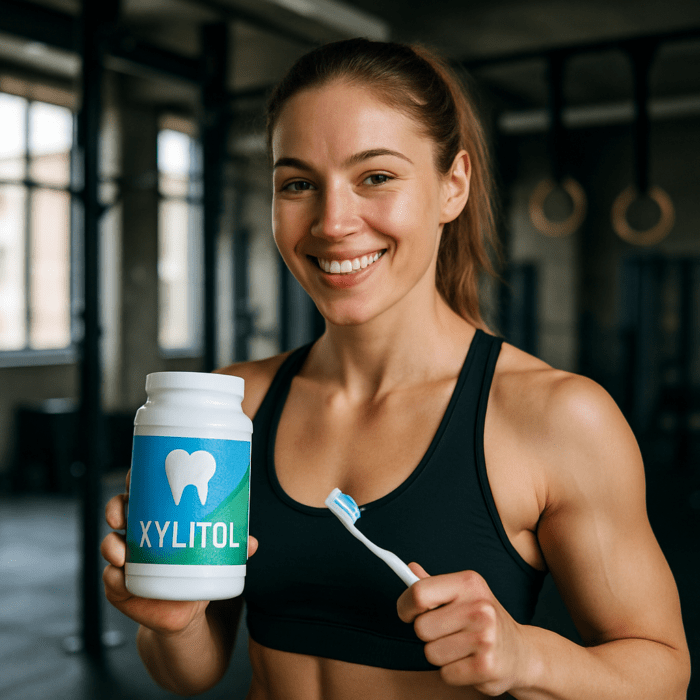
Xylitol helps keep your teeth in good shape at a time when training, frequent snacks and sports drinks put your mouth under more strain. It’s not just about a nice smile. A broken tooth or an infection can put your workouts on hold as surely as a sore knee.
If you eat several times a day, carry a bar with you or sip a sweet drink during your workout, your mouth gets constant new work. The simple truth: teeth need breaks to recover. Xylitol can be one practical helper, but it doesn’t replace your toothbrush or your dentist.
Why do teeth matter when you train?
In the gym we usually think about the back, squats, protein and recovery. Teeth, not so much. Yet the mouth is part of the same body. When there’s an infection in the mouth or a tooth that has gone untreated for a long time, the strain doesn’t stay in the mouth. It can affect how you feel, your sleep and your training routine.
An athlete’s daily schedule makes things more complicated. Instead of the usual three meals, a day can hold breakfast, a snack, a pre-workout bite, a post-workout drink and dinner. Every time sugar or a carbohydrate-rich snack reaches the mouth, bacteria start producing acids. This is called an acid attack.
One acid attack isn’t a big deal. The problem arises when they come one after another. The mouth doesn’t have time to recover, the tooth surface stays weaker and cavities have a better chance of forming. That’s exactly why teeth aren’t just a “hygiene issue”. They’re also a matter of training consistency.
How does xylitol work in the mouth?
Xylitol is a sweet substance that is also found in small amounts in fruits and vegetables. In appearance it resembles ordinary sugar: white, crystalline and sweet. The difference is that the cavity-promoting bacteria living in the mouth can’t get energy from xylitol the way they do from ordinary sugar.
So what actually happens? If bacteria can’t break xylitol down, the acid attack isn’t as strong. That means the tooth surface can recover better. Our northern neighbors in Finland, especially researchers at the University of Turku, have been studying xylitol’s effect on teeth for decades.
According to the data mentioned in the original text, regular use of xylitol may help reduce the number of cavity-causing microbes in the mouth. An amount of 5–14 grams per day was also cited there. This shouldn’t be taken as a recipe that suits everyone, but as a hint that the effect comes from regularity rather than from a single random lozenge a week.
How does xylitol fit into a trainee’s day?
The most logical moment is after a meal or a sweet drink. For example, if you drink a sports drink during training, eat a bar after your workout or have several small snacks over the workday, xylitol chewing gum or a lozenge can help your mouth return to a more neutral state faster.
That doesn’t mean you should chew something in a panic after every bite. Think more in terms of rhythm. When the gaps between meals are short and there are still several hours until you brush your teeth, a small xylitol lozenge is a practical solution.
When choosing a product, check the ingredients. The original text mentioned that products with a high share of xylitol, over 75% of the product’s weight, are considered effective. The more xylitol, the easier it is to tell how much you’re actually getting. If a lozenge is mainly made with another sweetener, the effect may not be the same.
Don’t forget the main job
Xylitol doesn’t fix a hole in a tooth. It doesn’t clear up an infection or replace floss. The main job is still simple: brush your teeth twice a day with fluoride toothpaste, clean between your teeth and get a check-up before pain forces you to. Frankly, that’s far more convenient than a break from training because of a dental infection.
What should you know about xylitol before using it?
Xylitol provides less energy than ordinary table sugar. The original text gave 2.4 kcal per gram. That is less, but not zero. If you keep track of your body weight or count calories, factor this in. Small amounts won’t change your day, but a large quantity of lozenges can start to matter.
For people with diabetes, xylitol is considered gentler than ordinary sugar because it affects blood sugar more slowly and to a lesser degree. That doesn’t mean it can be eaten without limit, though. If you have diabetes or another health problem, talk to your doctor or a nutrition adviser if needed.
Too much at once can upset your stomach. Some people get bloating or loose stools because gut bacteria are busy breaking xylitol down. Start gently. If your body reacts badly, reduce the amount.
In winter the mouth tends to dry out more, especially when you move between cold air and a warm hall. A dry mouth also makes teeth more vulnerable. Water, sensible gaps between meals and xylitol chewing gum after eating are simple things that don’t require a big system.
FAQ: xylitol and teeth
Does xylitol replace brushing your teeth?
No. Xylitol can support oral hygiene, especially after meals, but brushing, cleaning between your teeth and dental check-ups remain the most important things.
When is the most sensible time to take xylitol?
A practical time is after a meal, a sweet drink or a snack. That’s when the mouth has the most work to do, and xylitol helps you avoid a situation where your teeth take one new acid attack after another through the day.
Is xylitol suitable if you’re trying to lose weight?
Yes, as long as the amount stays reasonable. It provides less energy than ordinary sugar, but it still contains calories. When you’re trying to lose weight, what counts is the whole picture of your day.
Author:Turg.Fitness.ee
Come work out! ArtGym




