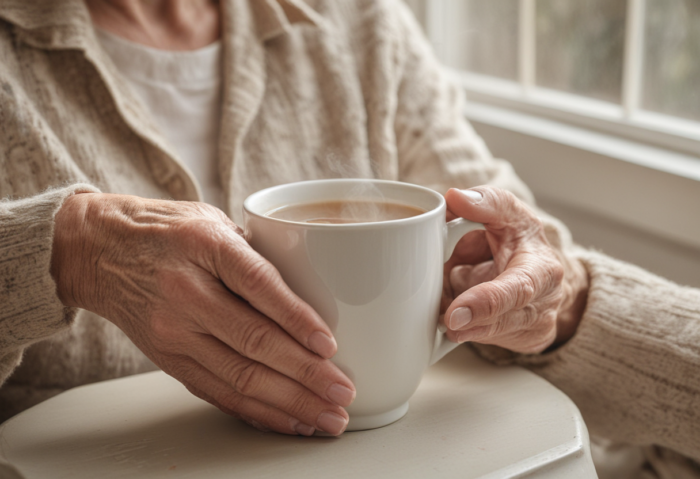
Revitalization, or how to live to be a hundred
The causes and the mechanism of aging remain a mystery to us. Many scientists have studied its course and developed a number of different theories, some of which are still debated or still being researched, so we won’t dwell on them – this book is clearly practical in orientation. Aging comes with physiological symptoms that are very easy to recognize. Even more importantly, they are also easy to check and/or change:
• dehydration,
• aging of the nervous system,
• bone thinning,
• aging of cartilage,
• loss of lean muscle mass, and
• aging of the heart and blood vessels.
Dehydration. Water makes up 70% of a small child’s body weight; in an elderly person it falls below 60%. Dehydration is linked to aging. A person with a higher water content looks younger, while someone who has lost fluid looks older. What women know very well from talk of skin hydration and moisturizing creams applies to the whole body. Water is an essential element for life and therefore for quality of life. A healthy adult needs to consume more than two liters of water a day. Water quality matters a great deal here – there is growing discussion of the regrettable situation that the use of unsuitable drinking water treatment methods has caused in many cities.
Water is one of the most important nutrients and is essential for life. Two thirds of our body is water. We can live for a long time without food, but without water we would die within a few days. A fluid loss of more than 2% can cause changes in the body’s thermoregulation. With a fluid loss of more than 3%, body functions and metabolism would become impaired, and a loss of more than 6% can cause death.
When fluid is lost, body temperature rises and, among other substances vital for life, potassium and sodium are lost along with the water. To maintain a proper fluid balance, sedentary people should drink an average of 1.5 liters of water a day. Physical activity raises these needs, because moving and sweating cause you to lose more water and salts, so you have to drink more – even 2–2.5 liters a day during intense physical activity.
These needs vary and depend on, for example, climate (naturally, fluid needs are higher at higher temperatures), type of physical activity (during longer and more intense activities our cells require more water), age, geographic location (altitude, pressure), sex, diet (whether you have eaten salty or blander foods), and so on.
Many people don’t know how big an impact water has on our health. People don’t take into account that water is one of the six basic nutrients. Water is thought of as some unimportant drink, when in fact it is irreplaceable.
There are many health and physical reasons why both children and adults need to drink water. Water makes up 60% of our body, and we have to maintain that amount of fluid so that our cells and organs function well. For example, the circulatory system carries blood, which is mostly water, and our cells, too, consist largely of water – which is why it is so important to replace the water we lose each day with fresh.
Our body also uses water to convert nutrients into energy, remove waste products, regulate body temperature, and supply the body with nutrients and oxygen. To function well, all of the body’s systems need water, from reproduction to energy production, not to mention toxin removal and thermoregulation.
Drinking enough water can also benefit your health in the longer term. Some scientists believe that proper fluid intake, and water in particular, helps prevent kidney stones, breast cancer, diseases of the colon and urinary tract, and also mitral valve prolapse. Among other things, drinking enough water may help reduce childhood overweight and protect the health of older people.
Water quality
Finding clean, clear drinking water is harder than we can imagine, and its quality should not be taken for granted anywhere in the world. Developing countries, outdated sewage systems, environmental pollution and the growing resistance of microorganisms to water treatment methods are among the most common problems. Contaminated water can be found anywhere, not just in big cities. The lack of safety in water consumption is a threat worldwide.
Much attention is paid to water contaminated by chemicals and metals, but the real problems are in fact infectious diseases. Many pathogens reach our homes through water pipes that haven’t been disinfected. At present, the only alternatives are bottled water and home water filtration systems, which are merely temporary solutions. Drinking contaminated water deprives our body of the chance to cleanse itself. Additional waste products accumulate in the body, and it uses more and more energy to process them.
Aging of the central nervous system
The central nervous system, like any other organ or tissue of the human body, undergoes a number of morphological and functional changes over time.
Morphological changes
Changes visible to the naked eye take place in nervous tissue, accompanied by:
• a drop in brain mass: between the ages of 20 and 90, brain mass decreases by 5–10%;
• a decrease in brain volume: this phenomenon is closely linked to dehydration, which, like the dehydration of other organs of the body, comes with growing older;
• a deepening of the longitudinal fissure of the brain.
Changes in tissues
Nerve cells die off continuously, irreversibly and unpredictably. In cell membranes, protein content falls while cholesterol and sphingomyelin build up, making the membranes stiffer and slowing the metabolic exchange across them. This degenerative process, which means the death of needed cells and a growing share of less important structures and substances, and which in fact slows the normal functioning of organs, resembles the processes that occur in muscles when lean muscle mass is lost, in which efficient protein tissue is replaced by inefficient connective tissue.
A sedentary lifestyle is not merely a physical phenomenon – it can also impair brain function. Dehydration and lack of movement produce an effect that is first put down to aging. All in all, brain training – reading, self-education hobbies, studying and the like – is the best known prophylaxis against impaired brain function.
Significant changes also occur in the cerebral vasculature: small atheromatous plaques form, which promote the development of microaneurysms.
Changes in function
• Transmission of nerve impulses: activity–passivity, i.e. action–relaxation.
• Damage to neurons.
At the functional level, nerve impulse transmission shows a progressive impairment of function, resulting from a decline in the enzymes that support the release of adrenergic substances (nerve impulse transmitters, so-called activating substances). This in turn affects the connections of the nervous system, influencing both the production of adrenaline and the number of receptors that respond to the compounds involved in transmitting nerve impulses, which decreases.
The result of all this is slower movement and worsening coordination problems, which are also the cause of many early symptoms of Parkinson’s disease and of the hand tremor typical of older people.
Fewer of the compounds that generate relaxing nerve impulses are released (serotonergic system) when the activity of the enzymes that produce serotonin from the amino acid L-tryptophan declines. There is also a loss of phospholipids in the myelin sheaths surrounding nerve fibers, and negative changes occur in nerve impulse transmission, affecting both the adrenergic (activity) and the cholinergic (relaxation) systems. When it comes to the changes described above, which we often regard as an inevitable and unavoidable consequence of aging, preventive treatment has two clear allies – nutrition and training, which this book also discusses.
The necessity of proper nutrition for maintaining good physical and mental health is obvious, but the benefits of some of the supplements listed below should not go unmentioned either:
• L-tyrosine: a natural amino acid precursor that is
used to synthesize the neurotransmitters (dopamine) that carry nerve impulses;
• L-tryptophan: a natural amino acid precursor from which serotonin, the neurotransmitter of the serotonergic system (relaxation), is produced;
• lecithin: a phospholipid found in soy, for example, which promotes the synthesis and release of acetylcholine and also helps restore and replace phospholipids in the myelin sheaths.
Read more in the book ”Revitalization, or How to Live to a Hundred”.
Muscle aging
• the number of muscle fibers does not decrease;
• the diameter of muscle fibers decreases (dehydration);
• connective tissue and fat tissue increase;
• in sum, muscle mass and strength decline – sarcopenia develops.
By measuring the features that characterize the function of bones, joints, muscles and the cardiovascular system, as well as the systems that control them, it is possible to assess biological age. By this measure, a person may turn out to be older than their chronological age (a prematurely aged person) or younger (a person who is aging properly and vitally). By following the right training, nutrition and lifestyle habits, these regressive processes can be slowed down and reversed.
The aging of the heart and blood vessels is mainly characterized by the following features:
• the elasticity of the blood vessel walls decreases;
• the diameter of the blood vessels decreases;
• the contractility of the heart muscle declines;
• the ability of the heart valves that direct blood flow to close properly is impaired.
All of the pathological and degenerative processes described above in turn cause elevated blood pressure, cardiac arrhythmia, circulatory disorders and, ultimately, infarction, ischemia and so on. These problems are undeniably linked to poor nutrition, which in turn is “supported” by a sedentary lifestyle, overweight caused by obesity, and stress.
All of these aging-promoting causes, or most of them, often occur together and interlinked, accelerating decline and bringing about premature aging.
Read more in the book ”Revitalization, or How to Live to a Hundred”.
Author: Revitalisatsioon
Come and train! ArtGym