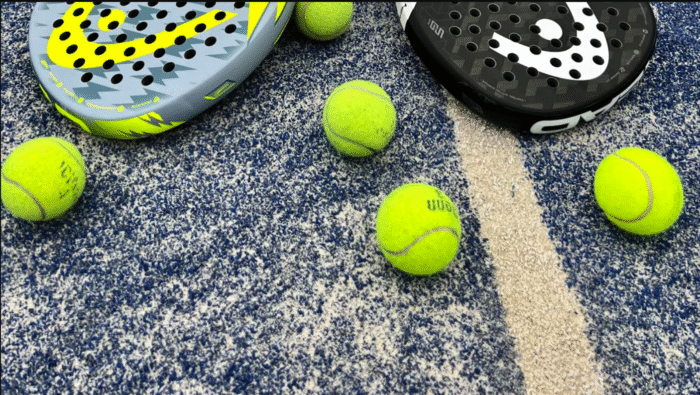
Padel racket: how to choose the right one
A padel racket can make the game easier or annoyingly hard. When your racket matches your hand, level and playing style, the ball travels more cleanly and your arm doesn’t tire as quickly.
The good news is that the right choice doesn’t always mean the most expensive model. At the start, control, a comfortable weight and how the racket feels in your hand matter far more than fancy buzzwords on the packaging.
Why does a padel racket affect your game so much?
Padel looks easy the first time: the walls help, the court is smaller than in tennis and points come quickly. Then you pick up a racket that is too heavy or too stiff, and suddenly everything feels frantic. The ball flies into the glass, your shots come late and your wrist starts to complain.
A racket doesn’t play for you. That’s worth saying honestly. But a suitable padel racket gives you more time to control the ball. As a beginner especially, you want a racket that forgives small mistakes. If you hit the ball slightly off-center, the whole shot shouldn’t fall apart straight away.
In Estonia, padel is played at very different levels. Some people play once a month with friends, others have several workouts a week. A good choice starts with an honest assessment of your own level.
Padel rackets for beginners, recreational players and advanced players
Beginners need control
If you’re just starting out, choose a round and rather light racket. A round shape usually means a larger sweet spot. Put simply: the ball goes more reliably where you want to send it, even if your shot isn’t clean yet.
A racket that’s too heavy may feel powerful at first, but it tires your arm. By the end of a match you start pushing shots instead of hitting them. If your wrist or elbow starts to hurt, that’s a sign the racket may not suit you.
Recreational players can look for balance
If you already play regularly, you can look at teardrop-shaped rackets. They often offer a good mix of control and strength. You can attack without completely losing feel in defense.
It’s worth trying several models here. The same weight can feel completely different on different rackets, because the balance point sits in a different place. One racket feels fast in your hand, another a little head-heavy.
Advanced players know what they want
If you already have a clear playing style, you can choose more boldly. A diamond-shaped racket gives you more strength behind the shot, but demands better technique. It’s not a bad choice, just not one for everyone.
So what actually happens? A more powerful racket punishes a late or inaccurate shot more. When you hit it well, it feels great. When you don’t, control disappears quickly.
How to choose a padel racket in the shop or when testing?
Don’t choose by looks alone. Pick the racket up and make a few movements. Does your arm move freely? Does the racket feel too heavy for your wrist? Does the handle sit naturally in your palm?
If you can, try the racket on court. Many padel centers and shops offer different models for testing. If your old racket is worn out or you want to level up, you can choose a new racket here, but before buying it’s still worth thinking about what kind of feel you’re looking for in your game.
The handle is a small thing until it starts getting in the way. If the handle is too thin, you squeeze the racket too hard, and then your forearm tires faster. An overgrip helps you adjust thickness and grip. If your palm sweats a lot, choose a grip tape that won’t turn slippery after the first game.
Look at the racket’s surface too. A smooth surface suits controlled play well. A rougher surface helps you put more spin on the ball, but spin doesn’t come from the surface alone. The technique has to be there as well.
Padel racket care: what to watch for
A racket lasts longer if you don’t throw it against the glass after a point or leave it in the cold car in winter. Estonian weather takes its toll on equipment. Moisture, cold and sudden temperature changes aren’t good for a racket.
After a game, wipe the racket down with a soft cloth. Keep it in a bag, not loose in the trunk. If you play several times a week, check your racket once a year: are there cracks along the edge, does the surface look tired, has the feel of the shot changed?
Protective tape is a simple and cheap way to extend your racket’s life. It won’t work miracles, but it helps the edge hold up when the racket hits the ground or a wall. A simple truth: the more carefully you look after your racket, the longer you can enjoy the same feel.
Men’s and women’s rackets are sometimes talked about as if they were completely different things. In reality, choose a racket by your hand, strength and playing style. Some players prefer a lighter model, some a more stable one. Gender doesn’t decide the choice here.
FAQ: padel racket
Does a more expensive padel racket make your game better?
Not automatically. A more expensive racket may be made from better materials, but if it’s too stiff or heavy for your level, you’ll play much worse with it.
How often should you replace your racket?
If you play regularly, check your racket at least once a year. Cracks, a poor feel on impact and visible wear are signs that it may make sense to get a new one.
Can you try a padel racket before buying it?
Yes, and it’s worth doing. Test at least two or three models on the same court, because just turning a racket over in your hands won’t give you the real feel of the game.
Come and work out! ArtGym