At a glance:
- Healthspan refers to the years you live in good health and can function independently, while lifespan is your entire life from birth to death.
- Worldwide, people spend an average of about 9 years living with illness and limitations — this is the gap between healthspan and lifespan (Garmany et al., 2021).
- Regular strength and endurance training, along with adequate protein intake, help reduce sarcopenia and delay the onset of disease until later in life.
- The goal is not simply to live longer, but to compress the period of illness as close to the end of life as possible (compression of morbidity).
What is healthspan, and how does it differ from lifespan?
The term healthspan refers to the years when you are healthy, independent and free from significant limitations caused by chronic disease. Lifespan, by contrast, simply measures the number of years from birth to death. While medicine has helped extend lifespan, the number of years spent in good health has not increased at the same pace — and this gap has made healthspan central to the discussion of longevity.
Globally, the gap between healthspan and lifespan is estimated to average about 9 years — the average time spent living with illness, pain or functional limitations (Garmany et al., 2021). The goal of healthy aging research is therefore not just to add years to life, but to add life to those years.
Why do healthspan and lifespan diverge?
As you age, biological changes — cellular damage, inflammation and a slowing metabolism — accumulate, increasing the risk of chronic disease. One of the most significant changes in practical terms is sarcopenia, the age-related decline in muscle mass and strength. The European working group EWGSOP2 established that a diagnosis of sarcopenia is based primarily on low muscle strength and confirmed by reduced muscle mass (Cruz-Jentoft et al., 2019). Loss of muscle strength is directly linked to falls, loss of independence and mortality risk.
Rheumatologist James Fries proposed what is known as the compression of morbidity hypothesis decades ago: if the onset of disease can be delayed by more than lifespan increases, the period spent living with illness becomes shorter (Fries, 1980). This is the central idea behind extending healthspan — compressing the period of illness as close to the end of life as possible.
How can you extend your healthspan?
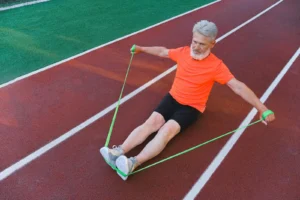
The intervention with the strongest evidence is regular physical activity that combines endurance and strength training. The World Health Organization recommends that adults get at least 150–300 minutes of moderate-intensity aerobic activity per week, along with muscle-strengthening training on two days a week — you can find detailed guidance in the WHO recommendations on physical activity. Strength training is particularly important for preventing sarcopenia, because you can build muscle strength at any age.
If you want to build up your exercise systematically, a structured approach helps — see Creating a training program: a complete guide to combine endurance and strength training into a balanced weekly routine.
The second pillar is nutrition, particularly adequate protein intake to preserve muscle and a nutrient-rich overall eating pattern. Appetite and nutrient absorption can decline with age, making a deliberate approach to nutrition more important. For an overview of additional support, see Supplements for athletes, although wholesome food and exercise always remain the foundation.
Can healthspan be measured?
Healthspan is measured through a set of functional indicators rather than a single number: muscle strength (such as grip strength), walking speed, balance, the absence of chronic disease and the ability to manage daily activities independently. Researchers emphasize that assessing healthy aging requires looking at function and quality of life, not just a list of diseases (Crimmins, 2015). In practice, this means you can track your healthspan by how well your body handles everyday tasks.
References
- Garmany A, Yamada S, Terzic A (2021). Longevity leap: mind the healthspan gap. npj Regenerative Medicine. PMID: 34795404
- Cruz-Jentoft AJ, et al. (2019). Sarcopenia: revised European consensus on definition and diagnosis (EWGSOP2). Age and Ageing. PMID: 30312372
- Fries JF (1980). Aging, natural death, and the compression of morbidity. New England Journal of Medicine. PMID: 7383070
- Crimmins EM (2015). Lifespan and Healthspan: Past, Present, and Promise. The Gerontologist. PMID: 26561272
Frequently asked questions
What is the difference between healthspan and lifespan?
Lifespan is your entire life from birth to death, while healthspan is the number of years you live in good health and can function independently. The aim of extending healthspan is to reduce the time spent living with illness at the end of life.
How large is the gap between healthspan and lifespan?
People are estimated to spend an average of about 9 years living with illness or functional limitations (Garmany et al., 2021). Narrowing this gap is a central goal of healthy aging.
What is the most effective way to extend healthspan?
The strongest evidence supports regular exercise that combines endurance and strength training, alongside adequate protein intake and a nutrient-rich diet.
Is strength training beneficial in older age too?
Yes. You can build muscle strength at any age, and strength training is one of the most important interventions for preventing sarcopenia, or age-related muscle loss (Cruz-Jentoft et al., 2019).
Come and work out! ArtGym