At a glance:
- Blue zones are five regions where people live considerably longer, healthier lives than average.
- They share a plant-rich diet, natural movement every day, strong social connections and a clear sense of purpose.
- No single “miracle solution” explains their longevity — it comes down to a combination of habits that can be adopted elsewhere.
- Maintaining muscle mass and eating in moderation are evidence-based cornerstones of healthy aging.
Blue zones are regions of the world where an exceptionally high proportion of people live in good health beyond a hundred years of age. In this overview, we explore what blue zones really teach us about longevity and healthy aging, and which habits have the strongest scientific support.
What are blue zones, and how were they discovered?
The term blue zones refers to five regions — Sardinia (Italy), Okinawa (Japan), Ikaria (Greece), Nicoya (Costa Rica) and Loma Linda (USA) — where the proportion of centenarians is significantly higher than usual. The first of these zones was identified in Sardinia, where researchers found an area of mountain villages with an unusually even ratio of male to female centenarians (Poulain et al., 2004). In later work, Buettner and Skemp (2016) brought together nine recurring factors in these regions — the so-called “Power 9” — including natural movement, a plant-rich diet, eating in moderation, a strong community and a clear sense of purpose.
It is important to emphasize that these are epidemiological observations: they show associations, not direct causation. That is precisely why each claim deserves critical scrutiny alongside the wider scientific evidence.
How do people in blue zones eat?
Plant foods dominate the diet in all of these regions: legumes, whole grains, vegetables and nuts, with meat eaten rarely and in small amounts. For example, the traditional Okinawan diet was historically low in calories but rich in nutrients, which has been linked to slower aging and a lower burden of chronic disease (Willcox et al., 2007).
This reinforces a simple idea: small daily choices matter more than individual “superfoods.” If you want to add variety to your diet, you will find practical ideas in What to do with nut butter and What to do with chia seeds — nuts and seeds fit well into this kind of plant-rich eating pattern. You can also keep up with developments in nutrition in the What’s new section to distinguish fads from evidence-based approaches.
How many years does a healthy lifestyle actually add?
One of the better-documented blue zones is the Seventh-day Adventist community in Loma Linda. A long-term study found that men with healthy lifestyles — a plant-rich diet, regular physical activity and no smoking — lived nearly seven years longer on average than the comparison group, while women lived about four years longer (Fraser & Shavlik, 2001). This shows that the effect is substantial, but comes from the combined influence of these habits rather than any single factor.
In its healthy aging framework, the World Health Organization likewise emphasizes that the number of years spent in good health depends largely on your living environment and daily habits — see the WHO Healthy Ageing resources. Working toward a longer life therefore calls for consistency rather than drastic steps. If you want to refresh your routine, you may also find inspiration in Let’s get modern.
Why are physical activity and muscle mass key to longevity?
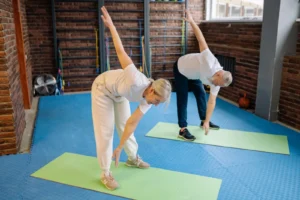
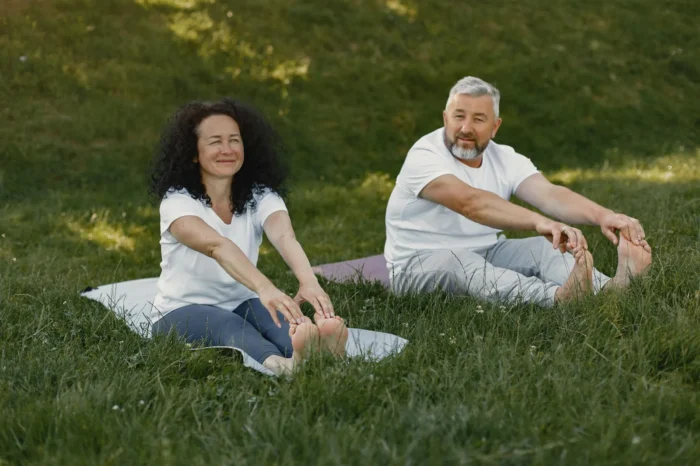
People in blue zones typically get their physical activity through natural movement throughout the day — gardening, walking and physical work around the home — rather than going to the gym. Maintaining muscle mass becomes especially important in later life because its loss, known as sarcopenia, increases the risk of falls and loss of independence. The European working group refined the diagnostic criteria for sarcopenia, emphasizing declining muscle strength as the main indicator (Cruz-Jentoft et al., 2019). Physical activity guidelines — including those from the ACSM — therefore recommend combining endurance training with strength exercises at least twice a week.
Ultimately, the secret of blue zones lies in a pattern of habits rather than any single food or workout: a plant-rich diet, daily physical activity, social connections and a sense of purpose. These principles can also be applied in Estonia.
References
- Poulain M, Pes GM, Grasland C, et al. (2004). Identification of a geographic area characterized by extreme longevity in the Sardinia island: the AKEA study. Experimental Gerontology. PMID: 15489066
- Buettner D, Skemp S (2016). Blue Zones: Lessons From the World’s Longest-Lived. American Journal of Lifestyle Medicine. PMID: 30202288
- Willcox BJ, Willcox DC, Todoriki H, et al. (2007). Caloric restriction, the traditional Okinawan diet, and healthy aging. Annals of the New York Academy of Sciences. PMID: 17986602
- Fraser GE, Shavlik DJ (2001). Ten years of life: Is it a matter of choice? Archives of Internal Medicine. PMID: 11448281
- Cruz-Jentoft AJ, Bahat G, Bauer J, et al. (2019). Sarcopenia: revised European consensus on definition and diagnosis (EWGSOP2). Age and Ageing. PMID: 30312372
Frequently asked questions
What are blue zones?
Blue zones are five regions around the world — Sardinia, Okinawa, Ikaria, Nicoya and Loma Linda — where people live longer, healthier lives than average.
Does a blue zones diet mean being vegetarian?
Not necessarily, but the diet is predominantly plant-based: legumes, whole grains, vegetables and nuts, with meat eaten rarely and in small amounts.
How many years can a healthy lifestyle add to your life?
In a study of Adventists in Loma Linda, men with healthy habits lived nearly seven years longer and women about four years longer (Fraser & Shavlik, 2001).
Can blue zones principles be applied in Estonia?
Yes. A plant-rich diet, natural movement every day, strength training to maintain muscle mass and strong social connections can all be adopted elsewhere.
Why is muscle mass important as you age?
The loss of muscle mass and strength, known as sarcopenia, increases the risk of falls and loss of independence, making strength training a cornerstone of healthy aging (Cruz-Jentoft et al., 2019).
Come work out! ArtGym