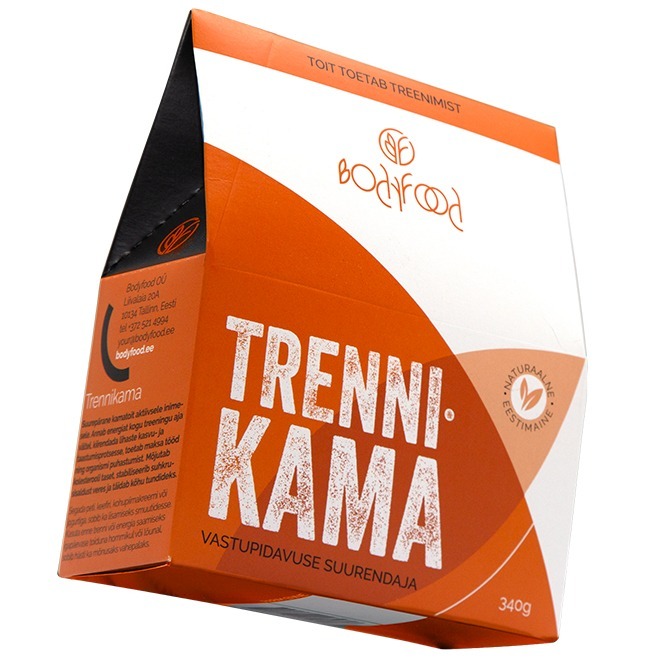
Training kama: what it does for people who train
Training kama is a good fit when you want something simple before a workout, but a regular heavy meal tends to sit badly in your stomach. Here you’ll find out when to use it, what to mix it with and what is really worth noticing in the ingredients.
Why do you need training kama at all?
Your stomach doesn’t want a big plate of food before exertion, but it’s no fun to move on an empty tank either.
That’s where training kama comes in. It’s a kama-style blend with added carbohydrates, plant-based ingredients and training-related substances such as creatine. The idea isn’t to turn one powder into a miracle cure. It’s simpler: to give your body a convenient snack before or after a workout that needs no stove and no lengthy preparation.
The original product was aimed at people who train under a heavy training load and at endurance athletes. That logic holds more broadly, too. If you run, cycle, do strength training or are more active while losing weight, quick extra food can help you put your day together better.
Honestly, no blend does the workout for you. But a well-chosen snack can save the situation where you head to the gym tired, eat too late afterward or grab the first random sweet thing.
How does training kama work in the body?
The base of training kama comes from familiar foods: rye kama, rye, barley, pea, oat and buckwheat. These give the blend a base reminiscent of the kama known from Estonian cuisine, not an unfamiliar lab drink. The ingredients also include maltodextrin, walnuts, cocoa, sunflower seeds, hemp flour, carrot, beetroot, blackcurrant, aronia, fermented fireweed, Chaga, Chlorella and MSM.
So what actually happens? Carbohydrates help meet your energy needs, especially before a longer or harder workout. Grains and seeds add dietary fiber and plant-based nutritional value. Nuts and seeds provide fats, which make the drink more nourishing. Creatine is a substance familiar to people who train, used to support strength and muscle work.
It’s important to keep your expectations realistic. If all your food through the day is haphazard, your sleep is poor and your training plan is muddled, training kama won’t fix that on its own. But if the basics are more or less in place, a blend like this can be a practical addition.
Before a workout
If several hours have passed since your last meal, mix a small portion into kefir, buttermilk or a smoothie. This works especially well before the gym, a bike ride or a longer walk. In winter, when it’s cold outside and your body wants more energy, such a snack can be surprisingly convenient.
After a workout
After a workout the goal is simple: eat something that helps you get back to your normal routine. If a proper meal only comes later, kama mixed into a drink can be a stopgap. It doesn’t have to replace lunch or dinner.
How do you start using training kama?
Start with a smaller amount. The original recommended use is 2 tablespoons of powder with 300-400 ml of kefir or buttermilk. You can add the same amount to a smoothie. If your stomach is sensitive, try 1 tablespoon first and see how you feel.
It also works well in porridge. Add 1 tablespoon to your morning porridge, stir it in or sprinkle it on top. The flavor stays kama-like, and it’s softer with cocoa and berries. If you like a thicker smoothie, use banana or berries. If you want a lighter drink, choose kefir or buttermilk.
A simple truth: don’t make the portion bigger just because the workout was hard. A larger amount doesn’t automatically mean better recovery. Look at your food for the whole day. Did you get enough protein? Are you drinking water? Are you sleeping properly? These questions matter more than a spoonful more or less.
If your goal is weight loss, use training kama more as a planned snack, not on top of everything else. If your goal is endurance or a tougher training block, it fits better before a workout or into the recovery window when you can’t have real food right away.
What should you look at in the ingredients?
The first thing is tolerance. The blend contains grains, walnuts and several plant-based additions. If you have an allergy or any ingredient doesn’t suit you, don’t play the hero. The same applies if a doctor has advised you to avoid a food group.
The second thing is where sugars and carbohydrates fit into your day. Maltodextrin is a fast carbohydrate. It can be useful around a workout, but there’s little point in it for snacking on the couch. Training food works best when it’s tied to actual exercise.
The third thing is taste and routine. The best supplementary food is the one you actually use. If you don’t like it with kefir, try a smoothie. If a smoothie is a chore, add it to porridge. If no option works for you, there’s no point forcing yourself.
Training kama suits best a person who wants a simple workout snack with an Estonian flavor. It’s not mandatory. It’s a tool. At the right moment, it can be very convenient.
FAQ: training kama
Is training kama suitable if you’re losing weight?
Yes, if it fits into your daily food intake. Use it as a snack or around a workout, not as extra calories on top of an already full menu.
Can you drink it during a workout?
You can, but for many people it works better before or after a workout. During a workout, go for a smaller amount and a thinner mix so your stomach doesn’t start to bother you.
Does training kama replace regular food?
It doesn’t have to. It makes more sense to take it as an addition for moments when a proper meal isn’t immediately at hand or when you need something lighter before a workout.
Learn more: Turg.Fitness.ee
Come work out! ArtGym