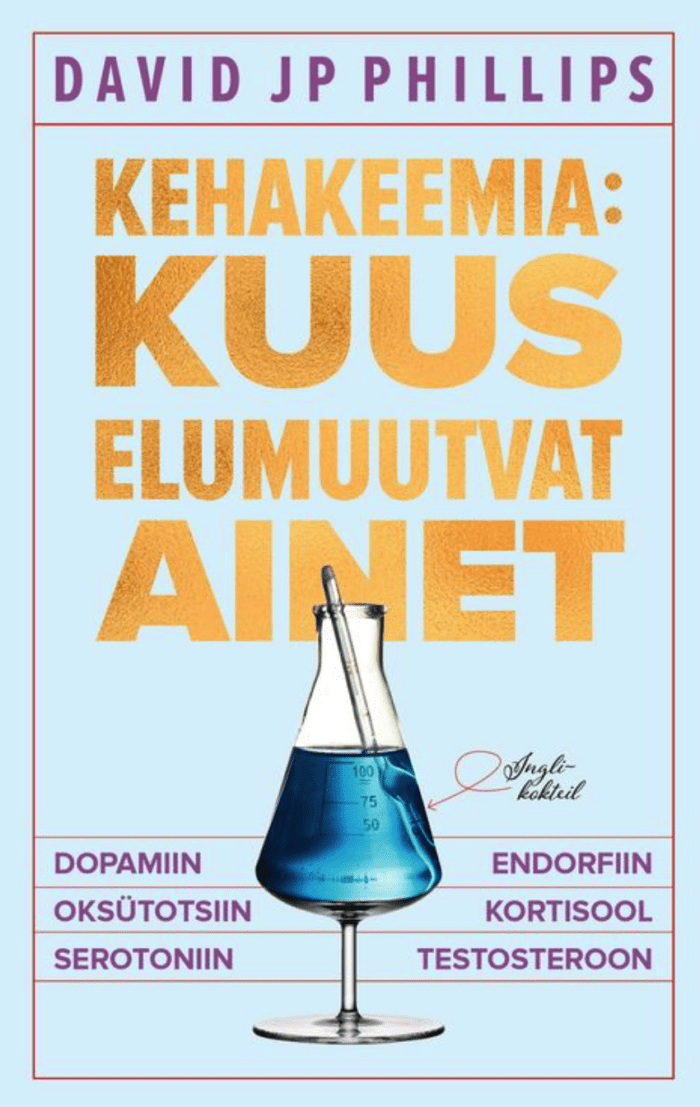
The book recommendation “Body Chemistry: Six Life-Changing Substances” is for anyone who wants to better understand why sleep, movement, food and stress have such a strong effect on how we feel. It isn’t a dry textbook but a plain-language book about how to steer your body’s chemistry more consciously.
Why this book recommendation matters
There are days when your gym bag is packed but the couch wins. Or an evening when you promised yourself one square of dark chocolate, yet end up looking at an empty wrapper and wondering: how did that happen? David JP Phillips’s “Body Chemistry” sets out to explain exactly such moments.
The book is about six substances that influence our mood, motivation, contentment and stress levels: dopamine, oxytocin, serotonin, cortisol, endorphins and testosterone. The author doesn’t turn them into a mystical magic wand. Rather, he shows how small everyday choices can shift how you feel quite a lot.
For Fitness.ee readers, this topic is familiar even without the technical vocabulary. If you feel calmer after a strength workout, hungrier after poor sleep or more impatient on a stressful workday, you’ve already experienced body chemistry. The question is whether you notice the pattern before it starts running you.
Book recommendation: what “Body Chemistry” teaches
Phillips uses the image of cocktails in the book. A feel-good cocktail can come from movement, a good conversation, gratitude, music or a night of truly full sleep. A bad cocktail can come from prolonged stress, endless phone scrolling, poor food and the guilt that piles on top of all of it.
A simple truth: your body can’t tell whether stress comes from real danger, a work email or from comparing yourself on Instagram to someone in stage condition. When tension lasts too long, it starts to affect sleep, appetite, your willingness to train and your recovery.
The book’s strong point is its readability. The author writes from his own experience and keeps the tone more practical than preachy. He also describes how, at 39, he realized that he had spent a large part of his adult life living with deep depression. This gives the book more personal weight, although readers should remember that no book alone can solve mental health problems.
If the topic interests you, you can also read reader feedback on Apollo’s review page. It shows how the book has affected people who don’t necessarily have a sports background but want to better understand their everyday well-being.
How this book recommendation connects to training
A good training plan isn’t made up of exercises alone. It also consists of sleep, meals, a daily schedule and the ability to hit the brakes at the right time. This is where “Body Chemistry” can be useful. It doesn’t teach squat technique or hand you a ready-made gym program, but it helps you understand why some programs never work in real life.
Motivation, for example, isn’t equally high all the time. When you’re chasing dopamine, it’s easy to look for a quick reward: sweets, chips, a new video, one more shopping cart. Training also gives a reward, but often a little later. At first you have to show up, change your clothes and do the first set. Only then does your body start to come along.
Honestly, for many people this is the hardest part. Not a lack of knowledge, but the start. The book helps you put names to such connections.
A practical book recommendation: who it suits
This book suits readers who want a self-development text but don’t want to drown in complicated scientific language. It also suits anyone who has realized that nutrition and training don’t live in separate boxes. If your sleep is poor, your stress is high and your day is full of random snacking, even the best training program won’t save the situation.
The book isn’t a good fit for those looking for a strict manual with exact doses, training volumes or clinical guidelines. It’s more of a mindset organizer. Read it, jot down a couple of ideas and try them out in your week. For example, put your phone away earlier in the evening, go for a walk after work or make your workout shorter but more consistent.
The author of “Body Chemistry: Six Life-Changing Substances” is David JP Phillips, and the Estonian translation is by Heidi Saar. If you like, you can find the book here: https://www.apollo.ee/kehakeemia-kuus-elumuutvat-ainet.html
FAQ
Is this book recommendation more for athletes or for general readers?
Both, really. Athletes will find ideas on recovery, motivation and stress. General readers get a simple look at why body and mood are so closely connected.
Does “Body Chemistry” replace the advice of a doctor or psychologist?
No. If a problem is serious or lasts a long time, you need to talk to a specialist. The book can help you notice your own habits, but it is not treatment or a diagnosis.
Is it worth reading the book before starting a new training program?
Yes, especially if you’ve started and given up several times before. It helps you think about what supports your motivation and what quietly eats away at it.
Come and work out! ArtGym