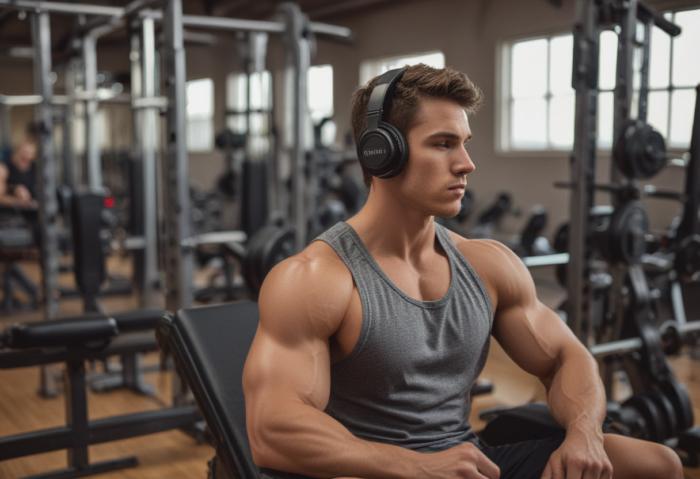
Classical music in the gym isn’t just a funny contrast to the clatter of barbells and the hum of treadmills. The right piece can help you settle down, hold your pace and make your training mentally clearer.
Why does classical music work in the gym?
In the gym, the usual soundtrack is rhythmic pop, rap or electronic music. That’s understandable. A fast beat gets you going and makes a hard set a bit more bearable. But not every workout has to feel like a nightclub warm-up.
Classical music works differently. It doesn’t always push you to move faster. Instead, it creates space where you can better notice your breathing, technique and body tension. This can be especially useful when you’re doing a calmer strength workout, mobility work, stretching or recovery training.
Honestly, Bach or Chopin won’t suit everyone alongside a squat personal record. For some people it’s too quiet, too solemn or simply boring. For others, that calm background is exactly what helps them work out without excess anxiety.
Classical music and training focus
A good workout isn’t just about sweating. Especially in the gym, what counts is how well you control the movement. When your mind wanders to work, your phone or the people around you, technique easily gets sloppy.
Calmer classical music can help bring your attention back. During a warm-up, technique sets with light weights or stretching, for example, slower music signals that there’s no rush. You can concentrate on whether your back stays still, whether your breathing is even and whether the movement comes from the right place.
That doesn’t mean your training has to turn sleepy, though. Classical music also has faster, more forceful and more dramatic passages. These can work well between heavier sets or for a moment when you want to pull yourself together but don’t want very aggressive sound in your headphones.
How to choose classical music for your workout?
A simple truth: choose your music by the part of the workout, not just by taste. The same piece that suits stretching can feel too soft during a deadlift set. And vice versa.
For the warm-up, choose a calm start
The goal of a warm-up is to get your body going, not to send yourself straight into the red. Calm, clear music fits here. It helps keep your movements under control and gives you time to feel your joints and muscles.
For strength sets, look for a clear rhythm
If you’re doing squats, presses or rows, a background that’s too floaty can sometimes get in the way. It’s better to pick a piece with a noticeable rhythm and building tension. It doesn’t have to be fast, but it should give the set a clear sense of a beginning and an end.
For stretching, let the tempo drop
At the end of a workout, classical music is especially at home. A slower tempo helps calm your breathing.
Practical listening tips
If you want to experiment, don’t start with a two-hour symphony. Make a 20–30 minute playlist and try it in one specific workout. That way you’ll find out whether the music genuinely supports you or is just an interesting idea.
Keep the volume reasonable. There’s already plenty of background noise in the gym: machines, plates, trainers’ instructions and other people moving around. If you turn the music up too loud, you lose some of your body awareness. That’s not always a good thing during a heavy set.
If you train in a public gym, use headphones. Not everyone will appreciate an opera or a piano concerto playing next to the bench press. In your own workout, though, feel free to experiment. Some people find calm, some find focus, and some simply get a change of pace.
So what actually happens? Classical music won’t make the barbell lighter or replace a good training plan. It can, however, change how a workout feels. You may be calmer, stay in rhythm better and notice your technique before a mistake creeps in.
Illustrative image: Kaupo Kikkas “The Well-Tempered Clavier” based on J.S. Bach
FAQ
Is classical music suitable for heavy strength training?
It is, if you choose a more forceful piece with a clearer rhythm. Very calm music can slow your tempo during a heavy set, but for some lifters it actually gives better concentration.
Can music improve your training results?
Indirectly, yes. If music helps you train more consistently, concentrate better or relieve stress, it can be beneficial. You shouldn’t expect miracle results from music alone.
When does classical music work best?
Mostly during warm-ups, technique exercises, mobility work and stretching. It also suits days when you want to train more calmly but still with focus.
Come and train! ArtGym