I’ve been drinking an espresso about half an hour before my workout for years, and the difference is noticeable: the bar feels lighter and I’m more motivated. There’s no mystery here, just the perfectly understandable effect of caffeine. But coffee isn’t a magic potion: the amount, the timing and your own tolerance determine whether it helps you or just sets your heart pounding.
Why coffee before a workout works at all
Caffeine blocks adenosine receptors in the brain. Adenosine is the molecule that builds up over the course of the day and makes you tired. When caffeine masks it, you feel fresher than you actually are. In addition, caffeine raises adrenaline levels: the body slips into a mild “fight or flight” mode, which in a workout means better strength and endurance.
Peak blood levels are reached about 30–45 minutes after drinking. So if you drink your coffee in the gym locker room, the effect arrives right around the end of your warm-up. It lasts a couple of hours.
What coffee gives you during training
- More strength on heavy sets. Studies show an average improvement of 2–5% in maximal strength: small, but real. In the bench press, that means the last rep comes up more easily.
- Longer endurance. In long cardio sessions and cycling workouts, the effect of caffeine is the most clearly measurable. Fatigue sets in later.
- Better focus. Thinking about technique in the squat or deadlift goes more smoothly when your head is clear.
- Less perceived pain. The muscle burn feels more bearable, which lets you push a little longer.
How much coffee is the right amount
In sports physiology, the amount typically discussed is 3–6 mg of caffeine per kilogram of body weight. For an 80-kilogram person, that comes to about 240–480 mg, or two to four cups of medium-strength coffee. For most people, one good espresso (~80 mg) already works very well, so it’s worth starting with a smaller amount.
Over 500 mg at once usually does more harm than good: your heart starts pounding, your hands shake and your technique suffers. And if you have a second cup in the afternoon at 17, your eyes may still be wide open at 2 a.m. One important rule: have your last coffee at least 6 hours before bedtime. Sleep quality matters more for muscle growth than any pre-workout drink.
Hydration and coffee: what’s true and what’s a myth
The old story that coffee dehydrates you doesn’t entirely hold up in light of newer data. A moderate amount of coffee gives you more fluid than it makes you urinate out. But that doesn’t mean a cup of coffee can replace a bottle of water. You sweat in training either way, and water is still the baseline need. Coffee is an add-on, not an alternative.
Who shouldn’t have coffee before a workout
For some people, caffeine causes anxiety, stomach trouble or a very fast pulse. If your heart already beats 90 at rest, a cup before a set of squats may not be the best idea. The same goes for high blood pressure, heart rhythm disorders or pregnancy, in which case it’s worth talking to a doctor.
It’s also worth keeping habit tolerance in mind. If you drink six cups a day, you won’t feel much effect from coffee before a workout, because your body has adapted. Some athletes do exactly that: they take “caffeine breaks” of a couple of weeks to bring their sensitivity back.
Does coffee replace pre-workout drinks?
The main active ingredient in most pre-workout powders sold in shops is caffeine anyway. Plain black coffee gives you the same effect, just without the artificial fragrances and flavorings. Unless you’re after a specific stimulant, espresso is a perfectly equivalent choice.
FAQ
Does coffee work better before cardio or strength training?
The effect is measurable in both, but in endurance disciplines, such as a long run, cycling or a track time trial, it is clearer and more consistent. In short strength sets, a lot also depends on how you feel that day.
Is it okay to have coffee fasted?
For many people, yes, but for some an empty stomach plus coffee causes heartburn or nausea. Try both options a couple of times, with a light meal or a banana and without, and choose whichever suits you better.
If I skip coffee, will my workout be worse?
In the short term it can be, especially if you’re a regular coffee drinker. After a couple of weeks without it, your body readjusts. Coffee is a tool, not necessarily a must-have basic.
Edited by: Arnold Tokko
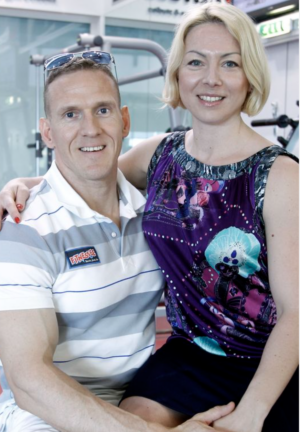
Illustrative photo: Ahti Läheb
Come work out! ArtGym