Coaching older adults in practice
Training older adults is a subject where good intentions alone aren’t enough. The book “Training with Older Adults” helps you understand how to make movement safe, manageable and genuinely useful for someone whose body no longer recovers the way it did when they were young.
Why does coaching older adults matter?
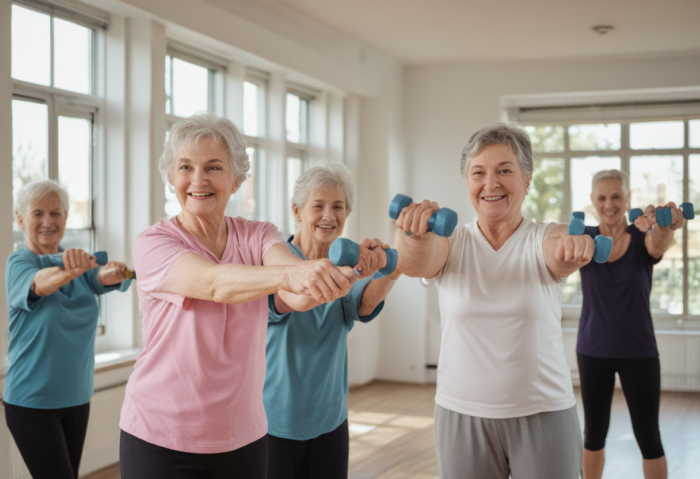
In later life, training isn’t just about “staying in shape”. It is often the difference between being able to climb the stairs on your own, carry a grocery bag, get up from a chair without help, or feel steadier on an icy winter sidewalk. It is in small everyday moments like these that the effect of movement shows most clearly.
The book’s strength is that it doesn’t treat older adults as one big group. One person may have excellent endurance, another is held back by a painful joint, and a third needs to start almost from zero. That is why a coach has to notice a person’s health status and previous experience with physical activity, as well as what really motivates them.
A simple truth: training that is too hard frightens people and can do harm, but training that is too easy won’t take anyone forward. A good coach finds the right path between the two. That takes knowledge of the physiology of aging, choice of training load, communication and goal setting.
How does coaching older adults work?
The book is built around four major parts. Part I gives an overview of the physiological aspects of aging and the field of gerokinesiology. This is important background, because a coach has to understand why strength, balance, mobility and recovery change over time.
Part II covers health screening before training, evaluating a program’s effectiveness, giving feedback, and setting short- and long-term goals. It sounds dry, but in practice it is very down to earth. When someone comes to training after a long break, the first question can’t be “how many repetitions can you do?” You first need to understand where they are starting from.
Part III focuses on developing effective and safe training programs and methods. This is where theory becomes practical: which exercise is suitable, how to increase the training load, when to slow the tempo down, and how to keep training from turning into a random string of exercises.
Part IV takes the reader to teaching, motivation, communication and management methods. When people talk about training, this side sometimes falls into the background, even though it is actually the key. An older trainee needs clear instruction, a calm pace and the feeling that their needs are being taken into account.
Training starts with assessment
Before writing a program, it’s worth asking: what does this person want to get back in their body? Some want better balance, others want to move with less pain, and some simply long for the courage to walk into the gym again. Once the goal is clear, the training becomes much more precise too.
Training load has to be understandable
With older adults, safe training doesn’t mean soft, toothless training. Strength, balance, mobility and endurance can be developed at any age. The question is how to choose the starting level and how to measure progress so that the person feels development, not fear.
Practical tips for coaches and readers
If you work with older adults, don’t start with a complicated program. Start with a clear conversation. What makes movement difficult? What is their previous experience? Are they afraid of falling, of pain, or of not being able to keep up with others? These answers give a coach more information than a pretty table on paper.
A good program is one that the person actually does. That means manageable exercises, logical progression and enough repetition for the movement to become more secure. It is especially important to explain why something is being done. When trainees understand that a balance exercise helps them move more safely, or that a strength exercise makes getting up from a chair easier, their motivation is much stronger.
The book suits beginner coaches, instructors and students. It is also useful for personal trainers, activity leaders, care assistants, therapeutic recreation specialists and group training instructors who already work with older people.
This isn’t only a book for professionals. It can also help readers who want to understand how to stay in good shape, active and capable for as long as possible. Honestly, this is a subject that eventually touches every family.
FAQ: coaching older adults
Who is this book for?
The book suits coaches, instructors, students and assistants who want to better understand movement in older adults. It is also suitable for anyone who wants to train smarter themselves.
Does strength training make sense in later life?
Yes, if the training load is chosen wisely and takes the person’s condition into account. Strength training can help make everyday activities easier, but the instruction has to be clear and the progression carefully built up.
Why is the coach’s role so important?
A coach helps choose a suitable training load, monitors technique, gives feedback and keeps the training purposeful. With older adults this is especially important, because starting points can be very different.
Come and train! ArtGym