IFBB is a name that gets used very loosely in the world of bodybuilding and fitness. That is exactly why athletes, coaches and journalists should understand who actually runs the sport and who is simply selling a stage, a membership card and a show experience.
Why does the IFBB confusion matter?
In bodybuilding, the question isn’t only who looks best on stage. It’s also under which rules the competition is run, who enforces those rules, and whether the athlete’s health is genuinely protected.
The IFBB, or International Federation of Bodybuilding and Fitness, is an international non-profit sports organization. Its members are national federations, not one person’s private companies. In Estonia, the Estonian Bodybuilding and Fitness Federation belongs to this system.
This difference sounds dry, but in practice it’s a big one. When a federation operates as a sports organization, there are statutes, congresses, committees, rules and accountability. When an event is run by a commercial company, decision-making can move into a much narrower circle. The simple truth: sport and entertainment are not the same thing, even if both take place on a stage under the spotlights.
How does the IFBB system work?
The IFBB is connected through national federations. Many member countries belong to their country’s Olympic committee system, and IFBB competitions are based on anti-doping rules. The original text also stressed the IFBB’s ties to the framework of SportAccord, the International World Games Association and WADA. The point is simple: bodybuilding is treated as a sport with rules and oversight.
Decisions aren’t made at one person’s whim. The IFBB’s highest body is the congress. In 2018 in Benidorm, for example, representatives of 94 countries were present, according to the original article. That doesn’t mean every decision always pleases everyone. It does mean that decisions have an official framework and a line of accountability.
For an athlete, this matters for a very down-to-earth reason. When you choose where to compete, you also choose a system. Do you compete under a federation’s rules? Is it clear who appoints the judges? Are the rules on banned substances only on paper, or are they genuinely part of the competition culture?
NPC, pro leagues and the dispute over the name
The central concern of the original article was the confusion around the NPC and the IFBB name. The NPC was very influential in the US bodybuilding system, but according to the original account, its IFBB membership ended because of rule violations. After that, a name remained in use on the US market that confused many athletes and spectators.
So what actually happens when two different systems use a similar name? The average enthusiast sees a familiar abbreviation on a poster and assumes it’s the same international sports organization. A coach may hear an athlete say: “But that’s IFBB too.” A journalist may write a story in such a way that the reader can’t tell which organization’s competition is being discussed.
This is where you need to be precise. The official system of the International Federation of Bodybuilding and Fitness is not the same thing as a commercial pro league or a separately organized show. In the US, IFBB Physique America has been presented as the official IFBB member, and according to the original article, it was used to try to sort out this confusion.
What should an athlete check before a competition?
Before registering, it’s worth asking a couple of boring but very necessary questions. Who is the organizer? Is it a competition on a national federation’s calendar? What are the doping rules? Who appoints the judges? Do the results go into the official sports system, or is it a stage show whose main purpose is tickets, entry fees and visibility?
Honestly, a show is not a sin in itself. Plenty of people want to perform on stage, show off their condition and get photos. The problem arises when a show is sold as sport but the sporting principles are weak or missing. Then the athlete pays for a system that may not protect their development or their health.
In Estonia this is especially important because the community is small. One confusing headline or social media post spreads fast. When a journalist carelessly sets the IFBB against some commercial league, it gives the impression that these are two equivalent sports structures. The original article’s position was clear: it shouldn’t be presented that way.
The IFBB and the media: how to be more precise
In the media, it would be better to avoid the vague word “league” unless the reader is told what stands behind it. Are we talking about the international system of federations? A competition series run by a private company? A pro show? These aren’t minor details; they change the meaning of the whole story.
It’s also worth being careful with claims that the world simply has two or three “big bodybuilding leagues”. A sentence like that sounds convenient, but it gives the impression that all the systems are built on the same principle. They aren’t. On one side is a sports organization with national federations and rules. On the other side there may be brands, stages and business models.
For an athlete, precise language matters for more than a reputation dispute. It helps you decide where to put your money, time and health. If your goal is to take part in official sport, you need to look for the official sports system. If your goal is to perform and be seen, a commercial stage may offer that, but it shouldn’t be described as the same thing.
FAQ: IFBB and choosing a competition
Is IFBB the same as any pro competition that uses the IFBB name?
Not necessarily. The use of the name alone has caused a lot of confusion. Always check whether a competition belongs to an official national federation and the international IFBB system.
Why should a recreational competitor care at all?
Because how a competition is organized affects the rules, the judging, doping control and your own health risks. A recreational competitor doesn’t need to know every legal detail, but should understand whose system they are entering.
How can a journalist avoid the confusion?
By naming the exact organization instead of using one general label for all bodybuilding competitions. If it is a commercial event, that is how it should be described.
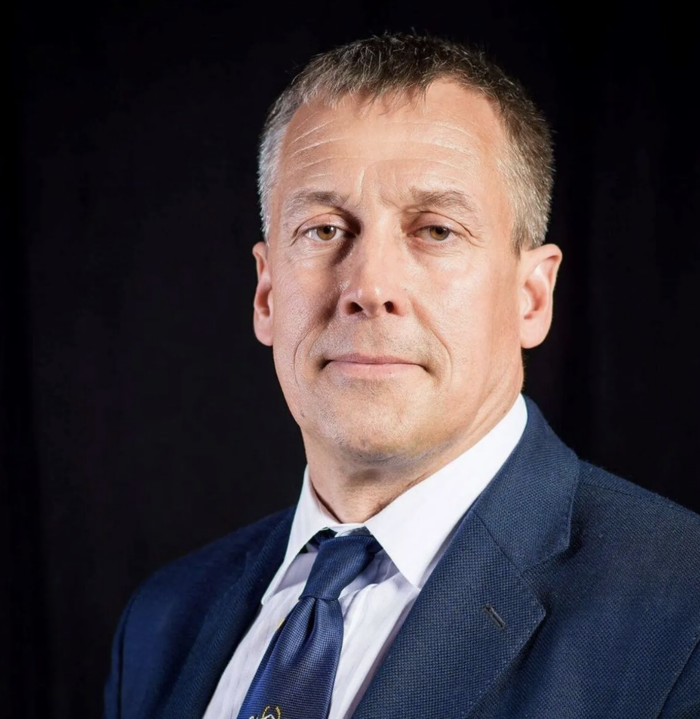
Ergo Metsla
President of the Estonian Bodybuilding and Fitness Federation
Come and train! ArtGym