Kickboxing: training, technique and benefits
Kickboxing is a dynamic combat sport that brings punches and kicks together, working your whole body in one workout. It suits beginners and experienced participants alike.
Kickboxing: what exactly is it?
Put simply, kickboxing is boxing with kicks. Training is more varied than in traditional boxing because it involves both punches and kicks. That means your whole body works — rather than just your upper body, as in regular boxing.
Kickboxing has several disciplines:
- Full contact — strikes are delivered with full force, with the aim of scoring points or securing a knockout. This is the discipline for professional athletes.
- Semi-contact — strikes are controlled, and points are awarded for technique. A favorite among recreational participants and young people.
- Light contact — the emphasis is on technique and speed rather than strength. Ideal for beginners.
- K1 — an international format that allows boxing techniques and kicking techniques from kickboxing and muay thai. An exciting competitive format that is also popular with spectators.
Muay thai (also known in Estonia as Thai boxing) is closely related to kickboxing. Alongside punches and kicks, it allows knee and elbow strikes and clinching techniques. Many training clubs in Estonia offer both disciplines on the same daily schedule.
The structure of a kickboxing workout
What actually happens in a kickboxing workout? A typical class lasts 60–90 minutes and is divided into three parts.
Warm-up (10–15 minutes) — jumping rope, light jogging and dynamic stretches. This prepares your joints and muscles for the training load in the main part of the workout.
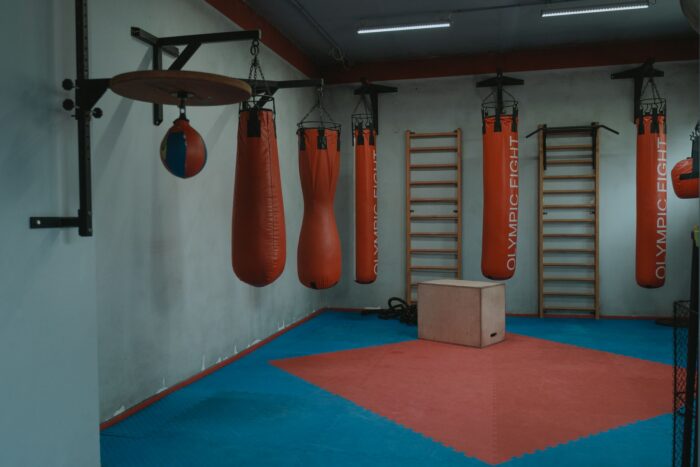
Main workout (35–50 minutes) — you practice striking combinations in several ways: working on a punching bag, doing pad work with a partner or taking part in controlled sparring. Your coach teaches you the correct sequence of strikes, body positioning and defense. At first, remembering which hand goes first may seem tricky — but after a few weeks, it becomes automatic.
Post-workout stretching (5–10 minutes) — static stretches. It is especially important to stretch your quadriceps and hamstrings, which work hard during kicks.
Regular kickboxing training improves coordination, reaction speed and overall endurance. Many recreational participants report a reduction in body weight and improved performance after just a few months — without having to combine different types of training.
Practical tips for beginners
The truth is, you do not need specialist equipment or previous experience to start kickboxing. Comfortable workout clothes and athletic shoes are enough for your first few classes. Boxing gloves, hand wraps and shin guards come later — your coach will tell you when to get them.
- Look for a gym with a separate beginners’ group so you do not have to measure yourself against experienced athletes straight away.
- Learn the correct stance and hand position for your guard first. These two skills prevent most beginner injuries.
- Do not hit the bag with full force until your coach has approved your striking technique — bad habits develop quickly and are difficult to change later.
- Recommended training frequency when starting out: 2–3 times a week. Your body needs recovery time between workouts.
- Drink enough water before your workout — kickboxing is an intense sport that makes you sweat heavily.
Kickboxing also has clear value for self-defense. Knowing how to judge distance and defend yourself against strikes gives you confidence in everyday life — even if you hope you will never have to use those skills.
Kickboxing has a long tradition in Estonia. Dmitri Vorobjev — head coach of the Estonian national kickboxing team, multiple Estonian champion, 2003 kickboxing world champion and Estonia’s athlete of the year in 2003, with 15 years of training experience — is one of the people who have built a strong foundation for the sport in Estonia. He has attended numerous international seminars in kickboxing, muay thai and daido juku. One of his earlier training venues was RevalSport sports club in central Tallinn: RevalSport.
FAQ — kickboxing for beginners
Can you start kickboxing from scratch, with no previous experience?
Yes. Beginners’ groups start with basic techniques and gradually pick up the pace. Your coach takes everyone’s ability into account, and safety is a priority.
How many calories does kickboxing burn?
An intense class burns approximately 400–600 kcal, depending on your body weight and the intensity of the workout. This makes kickboxing one of the most effective sports for burning calories.
What is the difference between kickboxing and muay thai?
Muay thai allows knee and elbow strikes and clinching techniques in addition to kicks. Kickboxing has simpler rules, while muay thai offers more variety. Both, however, develop your whole body and are excellent choices for recreational athletes.
Author: Turg.Fitness.ee
Come and train! ArtGym