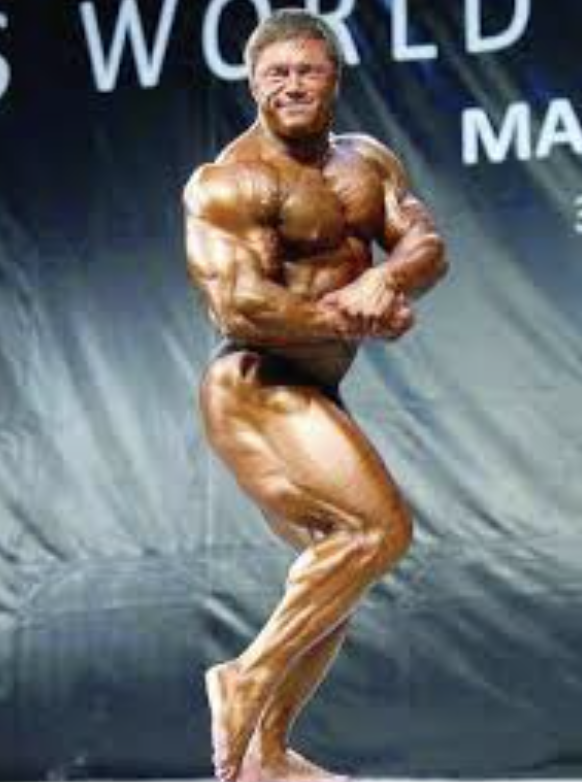
IFBB amateur world championships 2002
The 2002 IFBB amateur world championships in Cairo are remembered both for their huge number of competitors and for their rather chaotic organization. For Estonia, a key moment was Ott KIIVIKAS competing in the up to 90 kg class, where the standard was among the highest of the whole event.
IFBB amateur world championships in Cairo
The 56th IFBB men’s amateur world bodybuilding championships and the IFBB international congress took place in the Egyptian capital, Cairo, on 23-28 October. The event was organized by the Egyptian Bodybuilding Federation, which at the time was regarded as one of the most active forces in the world when it came to developing and promoting bodybuilding.
In Egypt, bodybuilding was clearly a sport with a large following. The state’s support showed it too: the Central Bank of Egypt issued special silver coins for the championships, which the Egyptian Government and the Egyptian Bodybuilding Federation presented to the delegations as keepsakes.
In terms of participation, the event was exceptional. 191 bodybuilders from 68 countries registered, and 179 athletes ultimately made it onto the stage. At the same time, the event is also remembered for its muddled organization. Cairo’s traffic, in a city of 15 million people, slow paperwork and constant delays wore on the nerves of athletes and delegations alike.
How did the IFBB amateur world championships unfold?
Estonia was represented in the up to 90 kg weight class, also known as light heavyweight, by Ott KIIVIKAS of the Reval Sports Club. His class was one of the most crowded of the championships: 36 bodybuilders were on stage, and the overall standard was high and even. The Estonian athlete did not make the semifinal, that is, the top 15.
In the up to 65 kg class, 17 athletes took the stage. Two names stood out immediately: Brazil’s Jose Carlos SANTOS, a multiple world champion, and the Egyptian crowd favorite Anwar El AMMAWI. The win ultimately went to the Brazilian. A offended AMMAWI initially refused to accept his medal, but the strong reaction of the Egyptian fans brought him back onto the stage after all.
In the up to 70 kg class, 32 men competed. Egypt’s own representative received enormous support from the crowd and his free posing routine ran longer than usual, but a place in the final did not bring a win. The world champion title went to Slovakia’s Igor KOCIS.
Up to 75 kg was the most crowded class: 39 competitors barely fit on the stage in two rows. Egypt’s Yossir SAYED quickly emerged as the favorite. His win set off a real party in the hall. The crowd chanted and sang the Egyptian national anthem, photographers and TV crews climbed onto the stage, and the winner’s family also found themselves at the center of attention. Frankly, it felt as if the classes waiting backstage had been completely forgotten for a while.
The up to 80 kg class had 35 competitors. It was considered the weaker class in terms of overall standard, but there was no shortage of drama here either. An Egyptian competitor made the top 6 and stretched his free posing routine so long that the judges had to send him off the stage after he had exceeded the time limit several times over. A one-two finish went to Ukraine: gold to Alexander BILOUS and silver to Vassili REMIZOV.
In the up to 90 kg class, there was a clear ruler: Stefan OROSZ, a Czech veteran champion who had been away from competition for seven years. He was noticeably better than the rest and became world champion. The battle for second and third place was between the Egyptian celebrity El Sahat MABROUK and Poland’s Mariusz STRZELINSKI; silver went to the Pole and bronze to the host nation.
The over 90 kg class had 30 men with very different levels of ability. The strongest was Russia’s Sergei TSIKUNKOV, who won the world champion title. The silver medal went to the Lithuanian Rolandus POCIUS.
The overall champion and the team standings
In the contest to decide the overall champion, Sergei TSIKUNKOV and Stefan OROSZ met. The duel was won by OROSZ, who stood 162 cm tall and weighed 85 kg. It gave the Czech bodybuilding school yet another overall amateur world champion title.
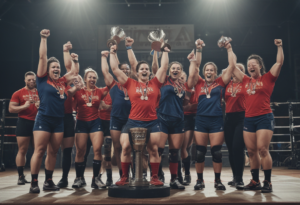
In the team standings, Egypt won, as expected. Second place went to the Czech Republic and third to Ukraine. This top three reflected the overall picture of the championships well: the host nation was numerous and emotional, the Czech Republic had a very strong top athlete, and Ukraine took several important places.
The IFBB amateur world championships and the congress decisions
The IFBB congress was held at the same time as the championships. The federation’s leaders stressed that the sport’s membership had grown thanks to new countries and greater interest in the existing member countries. The importance of youth and juniors was highlighted separately, since the next generation was to be given more opportunities to compete.
A major topic was the work against prohibited substances. Because bodybuilding was a candidate for inclusion in the Olympics, one of the International Olympic Committee’s main requirements was to strengthen doping control systems. For this reason, starting from the following year, all athletes who reached the final were to undergo mandatory doping control. In addition, random testing was to be introduced during qualifying competitions, along with more frequent random testing at the weigh-in.
An important change was the addition of a new weight class, up to 85 kg. Possibly as early as the 2003 world championships in Bombay, India, but definitely from the 2004 championships in Chelyabinsk, Russia, there were to be 7 classes: up to 65 kg, up to 70 kg, up to 75 kg, up to 80 kg, up to 85 kg, up to 90 kg and over 90 kg.
Teams could field up to 7 competitors in total, with up to two athletes from the same country allowed in each category. 15 competitors were still to advance to the semifinal, but the final would now have only 5 athletes instead of the previous 6. The congress re-elected the IFBB Executive Council, with its existing membership, for a new four-year term.
FAQ
Who represented Estonia at the 2002 championships?
Estonia was represented by Ott KIIVIKAS from Reval Spordiklubi. He competed in the up to 90 kg category, which had 36 bodybuilders and a very strong standard.
Who won the overall title?
The overall title went to Stefan OROSZ. He was 162 cm tall, weighed 85 kg and beat Sergei TSIKUNOV in the deciding comparison.
What changed after the IFBB congress?
The congress stressed stronger doping control, the importance of youth and junior competitions, and the addition of a new weight category of up to 85 kg.
Today: https://kulturism.ee/
Author: Ergo Metsla
Source: WHO – physical activity.
Come and train! ArtGym