
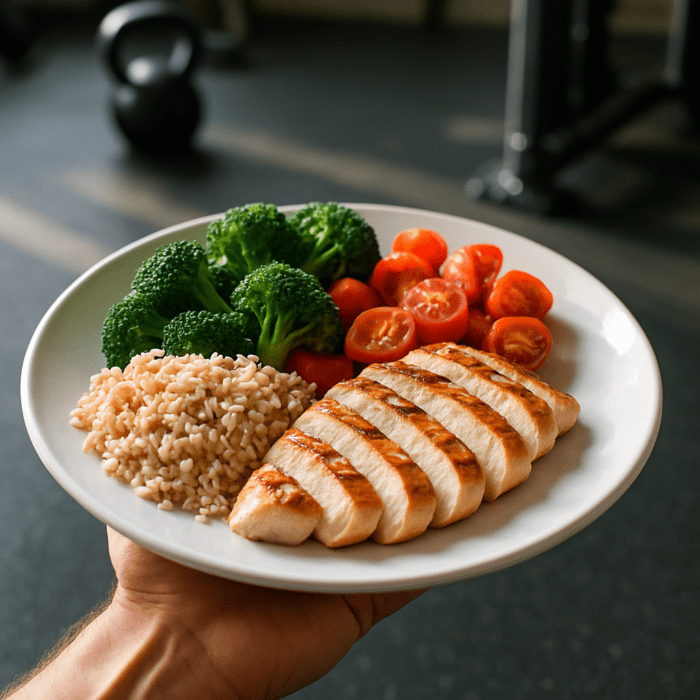
Fear of food: where balance in nutrition begins
Fear of food develops when ordinary clean food – oat flakes, chicken, potatoes, an apple – starts to feel dangerous and forbidden. In this piece I look at where that idea comes from, why “balance” doesn’t mean candy every day, and why a competitive athlete’s Instagram plate is more of a role model than a warning for young people.
What is fear of food, really?
I sometimes read comments where eating whole-grain pasta, eggs, rice and vegetables is suddenly an “obsession” or an “unhealthy relationship with food”. I wonder then – has anyone actually looked at that plate and asked what’s wrong with it?
Look at this list: oat flakes, potatoes, rice, eggs, fish, meat, vegetables, fruit, berries, bread, nuts, farm butter, quark, kefir, yogurt, honey, avocado, olive oil. Is there anything scary here? This is simply normal food. Fear of food doesn’t come from someone putting a piece of dark chocolate on their porridge. It comes more from confusion – when one blogger says clean food is pathological and another says everything except clean food kills you.
Balance doesn’t mean marshmallows every day
“Balance” has been worn out badly in recent years. It’s used to justify all sorts of things – candy for breakfast, a cookie for lunch, marshmallows in the evening. But balance doesn’t mean that half your plate is processed stuff.
A simple yardstick: if about 90% of your food comes from unprocessed or minimally processed sources and you allow yourself something else for 10% – a piece of chocolate on your porridge, a glass of wine with friends, a three-course dinner at the weekend – that is balance. If the ratio is the reverse, you can no longer call it balance.
Human nature is such that we want everything in excess. A bigger car, a pricier house, a full plate. Finding balance is everyone’s own business and quite individual – but some things can still be measured. If there’s a cookie on your plate every day, there’s no point dressing it up in nice words any more.
An athlete’s example and fear of food on social media
One common reproach is that a competitive athlete who weighs their food creates fear of food in young girls. But let’s be honest – the athlete weighs an apple, quark and chicken fillet. Next to them, the same blogger often weighs a Komeet candy and a curd snack. Both are weighing. The difference is in what’s on the scale.
Competitive sport doesn’t leave the kind of freedom an ordinary gym-goer has. If you want results, you need a routine too. That is a conscious choice, not an illness. And when a person shows that choice on Instagram, it makes no sense to blame them for eating disorders among young people – all the more so when you’ve filled your own day with pictures of cookies and curd snacks.
Not everyone has to be in peak shape. I’m all for people moving, eating more or less decent food and being healthy. But when there are 160,000 overweight minors in Estonia, ask yourself – whose example is this story really about? Certainly not that of the Instagram athlete who ate scrambled eggs for breakfast this morning.
What to do if fear of food has already set in?
If you notice in yourself or someone close to you that ordinary food – bread, potatoes, fruit – is starting to cause anxiety, the answer isn’t more candy but the opposite: a calm return to a normal plate. Set aside words like “clean” and “dirty” food for a while. Eat a proper meal that fills you up and gives you energy.
If anxiety around food is strong and doesn’t ease, it’s worth seeing a family doctor or a nutrition therapist. Fear of food isn’t solved by following a new blogger on Instagram – it resolves best when you trust a real person who sees you in real life.
FAQ on fear of food
Is fear of food an eating disorder?
Fear of food alone isn’t a diagnosis, but it can be an early sign of an eating disorder. If fear of food interferes with daily life, social events or your health, it’s worth seeking help.
Is weighing food always bad?
No. For a competitive athlete, the scale is simply a tool, like a measuring tape or a mirror. It turns bad when weighing becomes compulsive behavior and every meal without the scale causes panic.
Does balanced nutrition mean nothing is off limits?
Balance isn’t a ban, but it’s not freedom to eat candy every day either. It means that 90% of your plate is food that nourishes you and about 10% is what simply tastes good.
Author: Peep Reinart
Come train with us! ArtGym




