
Professional bodybuilding is losing its way
On March 8, 2015, professional bodybuilding was held up to a painful mirror when Arnold Schwarzenegger spoke publicly about where the sport, in his eyes, had drifted. This wasn’t just an old champion’s nostalgia. He was talking about aesthetics, health, judges, the media and a system that rewards an ever more extreme physique.
Why professional bodybuilding came under fire
To be precise, it was March 8, 2015, less than 24 hours after the latest Arnold Classic winner had been congratulated in Columbus, Ohio. Schwarzenegger walked out to the fans and journalists gathered for his annual Sunday-morning seminar with a rather sharp message.
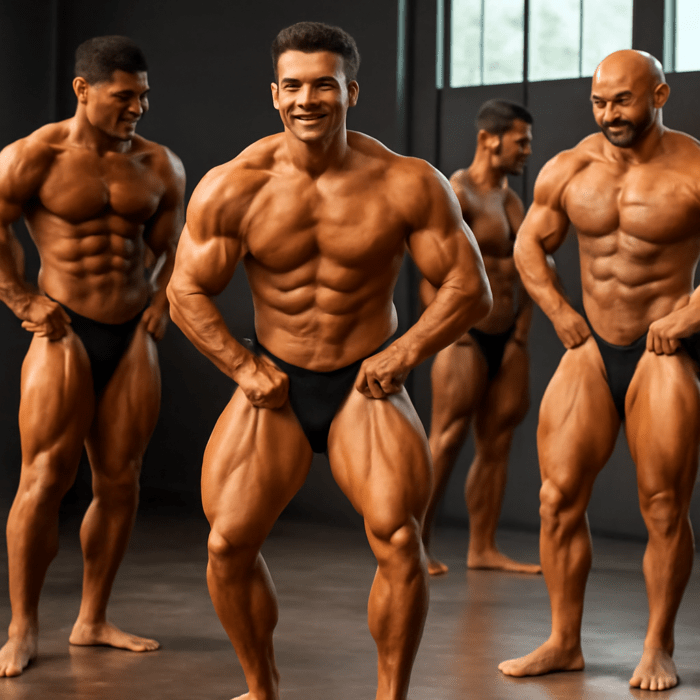
He criticized the current state of elite bodybuilding and placed part of the responsibility on IFBB chief judge Jim Manion and other officials. His main concern was simple: the stage no longer favors aesthetically developed physiques, like the Steve Reeves-style build of an earlier era. Instead, the winners are men whose bodies, in his words, look bottle-shaped, or whose only edge is a thicker neck and bigger muscles.
It was a proper dressing-down. The echoes were still heard weeks later in chat rooms, forums and gyms. And, frankly, there was good reason for it.
Schwarzenegger is no random grumbler. He is a man who grew from a small subculture into a global celebrity, ran one of the world’s largest economies as governor of California, and is one of the best-selling film stars of all time. At the same time, he has stayed connected to the roots of bodybuilding. When he talks about the aesthetics of the sport, it can’t simply be brushed aside as “things were better in our day” talk.
Many experienced observers know exactly what he means: distended, bulging stomachs, Synthol, acne scars, subcutaneous abscesses and bodies that look pieced together like the Michelin Man. At some contests it seems as if pieces of furniture with heads on top are standing on stage.
So what has gone missing? Put very simply: line, proportion and the overall impression. What today’s top bodybuilders often lack was seen far more in the seventies, in Arnold’s heyday. There’s a reason that period is called the “Golden Era” of bodybuilding.
Professional bodybuilding and the forgotten “Golden Era”
Photos of Frank Zane’s physique are used again and again as an example of what masculine aesthetics could look like. Schwarzenegger’s cover photos from the seventies still sell better than pictures of many of today’s bodybuilding stars. That era gave the sport its face, its standards and much of the myth on which an entire industry still stands.
But when it comes to how professional bodybuilding got to where it is now, opinions divide. Some blame the so-called “gurus” who operate on the black market, hand out substances and give advice with no medical supervision or accountability. It’s a convenient explanation, but it isn’t the whole picture.
The roots of today’s situation reach further back. In the mid-nineties, an editor of Flex magazine asked a top bodybuilder for a sample of his training program. This man, known for his sharp humor, sent back a copy of his drug cycles. Half joking, but painfully so. The list showed what kind of arsenal was considered necessary to break through in elite bodybuilding.
It brings to mind the saying: “It’s funny because it’s true.” Only today it no longer seems funny.
Now, twenty years later, the list of top bodybuilders and amateur bodybuilders who have died young grows longer every year. Don Youngblood, Art Atwood, Mat DuVal, Greg Kovacs, Luke Wood. These are not just names. They were people.
Mike Matarazzo’s death hit the author particularly hard. The cheerful fighter, born in Boston, died last year while waiting for a heart transplant. Before he went, he warned others not to choose the same path he had chosen.
That death raised an uncomfortable question: who else is responsible? Not only the athletes, not only the judges and not only the “gurus”. The responsibility also lies with the media, which watched it all happen and helped sell the extreme.
How judges, the audience and the media changed direction
Judges are easy to blame. Schwarzenegger did so too. But their influence is not absolute. In a subjectively judged sport, where there are no clear, directly measurable criteria, the audience’s reaction can be a very powerful force.
The author has seen contests where judges left obvious steroid monsters out of the placings. The audience responded with loud contempt. That kind of pressure doesn’t just hang in the air. In the end it reaches the stage, the magazine covers and the standards.
A good example is Englishwoman Paula Bircumshaw, who in 1992 competed at the Ms. International, exceptionally massive for that time. The judges kept her out of the top contention, favoring more aesthetic and more conditioned competitors. She didn’t even make the top six.
Bircumshaw was already backstage and dressed, but the audience in the hall kept chanting the name. Bircumshaw came back onstage and stood next to the smaller competitors who had been placed ahead of Bircumshaw. The crowd went wild.
Bircumshaw received a six-month competition ban for returning to the stage, but in the eyes of the audience, became a hero. The judges got the message. So did the bodybuilding press.
In the nineties, before the internet era properly began, the direction was set by “Flex”, “Muscle & Fitness”, “MuscleMag” and “Muscular Development”. Paula was a good face to sell and a strong story. The result? In women’s bodybuilding, the standard shifted toward ever greater mass.
Later, the same system began to complain that unnaturally muscular, masculinized women were bad for the sport’s image. Today, women’s bodybuilding is fading at the professional level, and the way has been paved by the women’s physique category, which rewards less muscle mass. “Ms. International”, which was Bircumshaw’s show, has ended and been replaced by “Physique International”. It should be said that Bircumshaw could hardly be called a chemical monster even then. By today’s standards, Bircumshaw would fit the physique category better.
Professional bodybuilding as a system of disposable tools
From the outside, the IFBB’s strategy looks pretty harsh: create a new category with the new desired standards and quietly let the old one fade away. A similar movement can be seen with the men’s physique category. And this past summer, as if in response to Schwarzenegger, Manion announced the creation of a new classic physique category.
That sounds like a solution. But does it fix the underlying problem? Not necessarily. When fans and the media demand an ever bigger spectacle, the athlete easily becomes a tool to be used. When the “pile of corpses” grows too high, displeasure is voiced, but the machine keeps moving.
The same pattern has been seen elsewhere. Wrestling is full of examples of people who died young, from overdoses, suicides and heart attacks. American football and the National Football League are, in their own way, facing the consequences of injuries and concussions. Yet these troubles don’t seem to reduce popularity all that much.
A simple truth: the problem is not only substance use. The problem is also how the system treats professional athletes. If a person is valuable only as long as they sell tickets, magazines and advertising, their health too easily gets pushed into the background.
Some will argue that it’s a trade-off. The athlete gets fame and a hefty paycheck, and knowingly takes on the risk. Perhaps there is a grain of truth in that. But it’s hard to swallow that idea calmly when you remember Mike Matarazzo: a father, a husband and a friend who should actually be alive right now, laughing, joking and simply living.
By the way, the bodybuilder who half-jokingly sent a “training program” to the editor of “Flex” was Nasser El Sonbaty. El Sonbaty died at 47 of heart and kidney failure.
FAQ: professional bodybuilding and where it’s heading
Did Arnold Schwarzenegger criticize only the judges?
No. The criticism did concern IFBB head judge Jim Manion and the judges’ preferences, but the broader problem is bigger: the audience, the media, the creation of categories and the selling of an extreme physique also influence what gets rewarded onstage.
Why does the “Golden Era” still matter so much?
The seventies ideal emphasized proportion, line and the overall look onstage. For many fans, it is still the face of bodybuilding. Against that backdrop, today’s extreme mass feels alien to many.
Will new categories solve the problem?
They may give a more aesthetic physique a new stage, but they don’t automatically solve the question of health, substance use and pressure from the system. If the spectacle remains more important than the athlete, the same pattern will repeat in a new form.
Source: www.bodybuilding.com
Translated by Janar Rückenberg
Come and train! ArtGym




