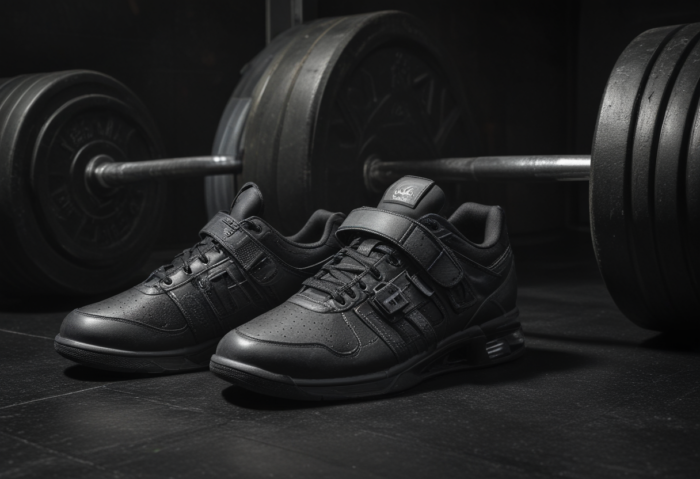
Squat shoes or sneakers? Which to choose
Key points…
Raised heels help the lifter keep a more upright torso during the squat, and a higher heel also helps prevent the knees from caving in when you come up out of the squat.
Weightlifting shoes or “squat shoes” help with squatting in the first years of a training career, but as your training age grows, they can even start to hold back maximal performance.
Most powerlifters who have squatted records and big numbers don’t wear weightlifting shoes.
If you are a quadriceps-dominant squatter with a narrow stance, or your goals are geared toward quadriceps hypertrophy, using squat shoes is even justified.
If you are a wide-stance squatter who relies more on the hip extensors and your goals are geared more toward increasing your strength numbers, regular sneakers are the best choice.
I remember that back in my student days, when I was still a beginner squatter, I struggled enormously to reach 135 kg. With long legs and a short upper body, I was built more for the deadlift than the squat. By my final year at university I was already deadlifting 230 kg, but in my fourth year my squat was still nonexistent. In the summer before that last year, a gym trainer gave me a pair of squat shoes to try. I remember well how my squat went up by 10 kg in a short time and, seen from the side, no longer looked like a “good morning” (exercise) but like an actual squat. I squatted in weightlifting shoes for another year or so and then went back to my good old sneakers. After I swapped the squat shoes back for sneakers, it was clearly noticeable that squatting had somehow become easier and lighter. What happened?
One of the claimed benefits of squat shoes is that they let you keep your upper body upright far more effectively when squatting than you can without a raised heel. This in turn reduces the adverse shear forces on the lumbar region of the lower back and shifts the load more onto the quadriceps. Obviously, the raised heels also helped me keep a more upright upper body and at the same time prevented my knees from caving in when I came up out of the squat, which was caused by a muscle imbalance in my lower body. But do squat shoes also support the performance of experienced, elite-level squatters?
Flat soles or raised heels?
Squat shoes were a great help to me in my early squatting years, but as time went on, it seemed more and more that squatting in them was actually starting to hold back my progress with heavier weights. Why? And which is actually the right choice, sneakers or squat shoes? To answer that, we first need to look at how raising the heels affects squat biomechanics, in bodyweight squats, at moderate intensity, and also with weights approaching a 1-repetition maximum.
Another theory supporting the benefit of squat shoes is that a higher heel makes squatting easier for lifters whose ankle mobility is relatively poor. Raised heels let you move down into the squat and back up in such a way that even lifters with stiff ankles can maintain a relatively upright posture.
There isn’t much research on squatting in squat shoes, but in one of their studies Sato and colleagues concluded that participants who squatted at 60% of their 1RM were able to maintain a significantly more upright posture during the squat in squat shoes than those squatting without them. Less forward lean of the torso during the squat also means less adverse load on the lower back. The study used 60% specifically because it was found that at 80%, for example, the lifters’ speed during the squat already varied a great deal, which in turn affects the kinematics of the squat as a movement.
This finding is, of course, useful for coaches who work with beginners. Squat shoes can prove effective in helping beginners reach an intermediate level, since thanks to the raised heels lifters can maintain a more upright posture, which ultimately ensures better squat technique overall.
The more upright posture that squat shoes provide is also important for lifters who squat but struggle with lower back problems. But what about squatters whose backs are fine and who have moved beyond the intermediate level? How should lifters who squat, say, 180 kg or more view squat shoes?
A quick analysis gives a fairly good picture of what the reality is here. And the reality shows that most good top-level squatters don’t use squat shoes. For example, John Gaglione, one of T Nation’s authors, who squats over 400 kg, doesn’t use squat shoes. Andrew Hollenbeck squats 230 kg at a bodyweight of 67 kg, also without squat shoes. Jim Howell, who has squatted 365 kg, does so without squat shoes. Likewise, if you look at lifters who have squatted records or squat record holders, most of them haven’t used squat shoes. Something similar even happened to me (the article’s author): once, when I ended up training at the Allentown powerlifting gym and they noticed I was planning to squat in squat shoes, I could faintly sense that it wasn’t looked upon very kindly.
So if squat shoes help improve squat technique by letting you squat more upright, why don’t we see top-level squatters wearing them very often? There is practically no research on the use of squat shoes among elite powerlifters, or on whether and how squat shoes affect or change squatting biomechanics. So all we can do is speculate. The Sato study cited earlier compared squatting at 60% (squat shoes versus flat-soled shoes). Yet it is known that increasing the load has a clear effect on the movement kinematics and technique of many exercises. It is therefore possible that if Sato had compared squatting at 90% intensity (with squat shoes versus without), the forward lean of the torso might have been identical.
Another aspect to consider is the stance width (distance between the feet) that different powerlifters use when squatting. Escamilla studied squat biomechanics and observed 39 powerlifters. The subjects were divided into three groups. The stance widths observed varied between 87-196% of shoulder width. The subjects squatted with a narrow, medium and wide stance. Between medium-stance and wide-stance squatters, there was no notable difference in forward knee travel or torso lean. However, when squatting with a narrow stance, the knees moved 4-6 cm further forward than in wide-stance (and medium-stance) squatters. This suggests that narrow-stance squatters squat with an emphasis on the quadriceps. But, as you’ll remember, squat shoes support greater forward knee travel, which in turn allows a more upright torso position. If you watch Olympic weightlifters, in both the snatch and the clean and jerk you can see that the athletes’ torsos stay relatively vertical, while their knees travel quite far forward past the toes. Many powerlifters squat more from the hips and don’t let their knees travel forward much during the squat. According to Escamilla, this is also because, given the technical demands of their lifts, powerlifters don’t actually have to squat as deep as Olympic weightlifters do. Many powerlifters squat with a wider stance and rely more on the posterior chain. Because of the nature of their lifts, Olympic weightlifters are forced to stay with a narrow stance and a more upright torso. This automatically means they have to squat with more quadriceps involvement. Of course, if a powerlifter is also a narrow-stance squatter, they will most likely benefit from using squat shoes too. When it comes to powerlifters, a lot depends on individual preferences and characteristics.
So which shoes should you wear?
If you are more of a quad-dominant squatter, use a narrow stance when squatting, or are simply interested in quadriceps hypertrophy, then using squat shoes for squatting will most likely prove worthwhile.
Are squat shoes always necessary to reach your big goals or big squat numbers? As noted, it depends on several factors. What level are you at? Which style (narrow or wide stance) do you prefer to squat in? Are you quad-dominant or hip-extensor-dominant? What are your goals overall? If you are a beginner or an intermediate lifter with some experience, squat shoes may well help you progress in your squat numbers. The very few trials of squatting with low and moderate-intensity loads show that raising the heels improves technique, which could ultimately mean fewer injuries and progress in the weights you lift. Also, since squat shoes direct more of the load to the front of the thigh when squatting, those whose goal is to prioritize quadriceps development may benefit from squat shoes.
If you are more of a hip-extensor squatter with a wider-than-average stance and your goals are geared toward strength numbers, then plain flat-soled sneakers are most likely the best choice.
If the aim is to squat big numbers, that ambition generally presupposes that you already have a solid base and are at least at an intermediate level. If you squat with a medium or wide stance, you are clearly more of a posterior-chain squatter. If so, plain sneakers are the best choice for you. It is rare to see top-level powerlifters squatting in squat shoes. Besides, preference in the interest of results is one thing; another is that plain sneakers are also considerably cheaper than squat shoes.
And since there are no more rigorous studies on the effects and benefits of squat shoes, we probably have no choice but to trust the preferences of the men who have sat down in sneakers with 300 kg on their backs and come back up with it.
To quote Louie Simmons: “When it comes to footwear for squatting, plain sneakers are the best choice. There’s no point investing 200 dollars for a squat that’s worth 10 cents”
Original article: Olympic Shoes or Chucks for Squats?
Author: Janar Rückenberg (translation)
Come and train! ArtGym