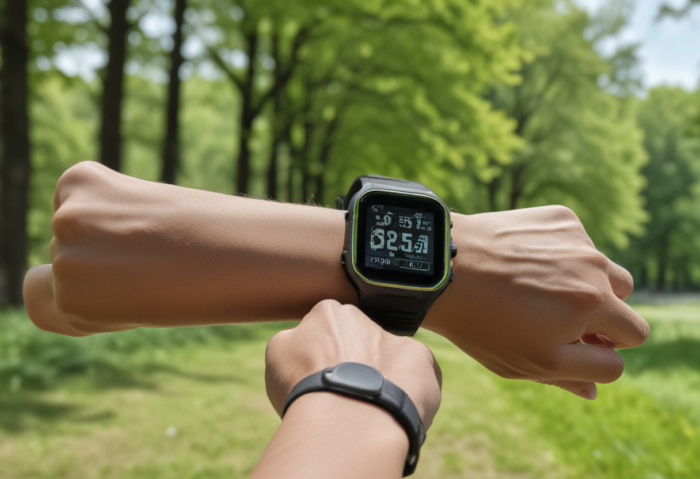
I look in the mirror and am far from happy with what I see. “I clearly need to lose at least 10 kg. Right, I’m definitely going to start working out. I’ve heard that the best way to lose weight is to go for an easy jog or ride a bike. I already have a bike, so now I definitely need good running shoes, proper cycling kit and a heart rate monitor. Then I can get serious about losing weight.”
Perhaps not in those exact words, but this is roughly how hundreds and hundreds of people think when they decide their body weight has got out of control and they need to do something about it. In most cases, they end up buying a piece of cardio equipment, trendy specialist sportswear, water bottles and a heart rate monitor. What never materializes is regular exercise. These situations have become a running joke, and they are ridiculously common. Often, the first priority is to buy every fancy accessory that supposedly “goes with the territory” as quickly as possible. Yet somehow, even after all that spending, the exercise itself still never happens. To head off any nitpicking, I’m not suggesting that buying good running shoes before starting a workout plan is excessive. But the shopping rarely stops there. People often buy equipment designed to support the training of very serious recreational athletes or elite competitors, without any justification or real thought. Here, I’m talking specifically about heart rate monitors.
A heart rate monitor is something you can have, but beginners and intermediate exercisers generally don’t need one at all. First, you should understand what maximum heart rate means, how the different aerobic training zones work and how to check your pulse without a device. People often buy a heart rate monitor and have no idea what to do with it. They believe it’s some kind of miracle gadget that starts burning fat simply by being strapped to their wrist—or at least that’s how it seems. They also think there is a single fixed heart rate, or a very narrow range, that they absolutely must stay within during training. It really isn’t that complicated. The fear of doing something wrong or pushing yourself too hard is also unfounded. To me, the latter always sounds more like a subconscious excuse to avoid making an effort in the first place. When it comes to aerobic activity, pushing yourself too hard isn’t as easy as people think, either. If you increase the intensity very quickly to a very high level, the fact is that you simply won’t be able to keep going. To continue, you’ll have no choice but to slow down.
Another reason the average recreational exerciser doesn’t need a heart rate monitor is that the intensity range you should work within to achieve your goals is fairly broad, and it applies even across different goals. Whether you want to burn fat, improve your heart’s pumping capacity, aid active recovery or build endurance, you should generally be working at 60-80% of your maximum heart rate. That is a general guideline: people who are very unfit and unused to exercise can also start at 50% of their maximum heart rate. There is no need to go above 80-85% of your maximum heart rate, either. The anaerobic threshold usually lies at the upper end of this intensity range. Above it, you start training your ability to tolerate lactate. The average exerciser doesn’t need this ability. And if an average exerciser does reach that threshold, their lack of conditioning means they won’t be able to sustain that level for long anyway, so the intensity will drop of its own accord. Knowing your anaerobic threshold VERY PRECISELY and training right at it or just below it is something for advanced recreational athletes or competitive athletes. This trains the efficiency of the mechanisms responsible for processing lactic acid.
So, 60-80% of maximum heart rate is the range in which the average recreational exerciser should do their aerobic training. It is such a broad range that you will reach it anyway, and you don’t need to buy an expensive heart rate monitor to establish that you’re in it. You can check whether you’re working within this range without a monitor: simply stop briefly, count your pulse for 10 seconds and multiply by 6 to get the number of heartbeats in 1 minute. First, of course, you need to know your estimated maximum heart rate, which you can calculate as 220 – age (in years).
For training to provide any benefit at all, you should aim to exceed at least the lower end of this range (60%). Otherwise, sustained aerobic activity will not provide enough training load to stimulate adaptations in your body, and the benefit will be nonexistent or minimal. This lower limit can also be 50% of maximum heart rate. Much depends on your starting fitness level. The duration of aerobic training is also always important if it is to produce improvements.
So, the most important thing is to get yourself out of the armchair and start moving in the first place. A heart rate monitor is far from the top priority, and for the average casual exerciser, buying one is excessive and an unnecessary expense.
Author: Janar Rückenberg
Come and train! ArtGym