
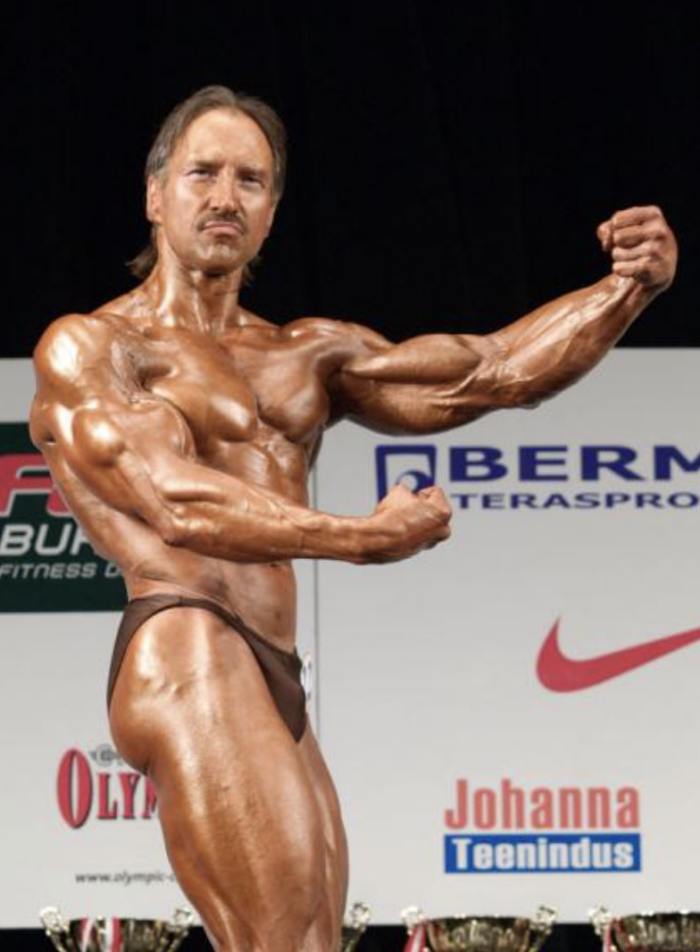
Talent and knowledge on the road to bodybuilding
Talent counts for a lot in bodybuilding, but on its own it won’t take anyone far. If you want to get serious about fitness or bodybuilding, you need to study, train and honestly assess your natural aptitude.
Why do talent and knowledge go together?
Dear reader, this text isn’t meant for those who want to start the morning by arguing on a forum. If every better athlete instantly looks suspicious to you and every smart book seems boring, my words probably won’t reach you.
The lines that follow are meant more for the young athlete who wants to know how far they might go over time. Not in a week. Not with a single plan. Over years.
As a coach, it’s sad to see how often a beginner looks for information on bodybuilding training and nutrition in the wrong place. A forum can offer a good idea or two, but it isn’t a foundation to build all your training on. You’ll find sound advice, ads, half-baked anecdotes and plain nonsense all lumped together.
The less knowledge a person has, the harder it is to separate the wheat from the chaff. Then every new miracle diet seems believable and every loudly voiced opinion seems like the truth. A simple truth: an athlete needs the right basic knowledge and the right attitude from the very start.
How does knowledge make training better?
The right information should come from a coach. Unfortunately, it isn’t always enough that the person has once trained themselves or taken a course or two. If a coach’s knowledge is limited to the bare minimum, say the general-education basics (the Estonian course Üldained I-III) and a bodybuilding book or two in Estonian, they may struggle even with teaching a beginner.
But it’s not forbidden to know more, is it?
Every athlete who sets higher goals should pick up anatomy and physiology textbooks. The same goes even more strongly for a coach. You don’t have to be a doctor, but you do have to understand how the body works, why muscle grows, why recovery matters and why not all exercises suit everyone in the same way.
You can’t be a credible bodybuilding coach if you can correctly name only about ten muscles out of six hundred. That isn’t nitpicking. It’s a toolbox. The better you know the body, the better you can structure training.
Nutrition is the same story. Start with the books and authors used to educate coaches at universities. Don’t waste time on miracle diets and theories that sound exciting but have no solid basis. Once the basic knowledge is in place, the choices in training and nutrition start to become clearer.
Talent in bodybuilding: what does it really mean?
Now for another topic that quickly gets many people arguing. You often hear the claim that without doping it isn’t possible to reach the medals in bodybuilding. That all the best athletes use something. That if I’m not winning, then the others must be cheating.
Honestly, it’s a convenient thought. It takes the responsibility off you. But only a limited person who thinks too highly of themselves fails to understand that someone else may simply be more talented.
We all have a genetically determined height, normal weight and body build. Some traits don’t respond to training at all. Some do, but very differently in different people. In bodybuilding, talent often starts with what is immediately visible to the eye: skeleton, proportions and the frame of the body.
If you weren’t born with an ideal frame, the ceiling for your achievements is different from the start. That doesn’t mean training is pointless. Quite the opposite. It means you need to know what you can develop and what you can’t.
Good predispositions also include the ability to build muscle mass better than average. Likewise the ability to reach a very low body fat level through diet without the physique falling apart completely. These traits don’t always show on the first day of training. They reveal themselves in the course of the work.
Practical choices for the young athlete
If you want to improve, don’t build your belief on rumors. Train, read, ask people who know more and look at the results calmly. If a plan doesn’t work, it doesn’t immediately mean you’re hopeless or that others are cheating. Maybe the plan was wrong. Maybe your recovery was poor. Maybe you simply didn’t stick with it long enough.
Can you reach the world’s top level in amateur bodybuilding drug-free? I believe you can. If a clean athlete without ideal predispositions reaches the final, it’s logical that an even more talented athlete can also take a medal. Examples of this can be found in Estonian sport.
Is the global elite always drug-free? I’d answer that more cautiously: probably cleaner than is generally believed, but there are certainly more sinners than get caught.
That’s why it’s worth assessing your abilities realistically. Not bitterly, but honestly. Enjoy training, keep learning and let the years show how far your wings will carry you.
FAQ
Is talent more important than work in bodybuilding?
No. Talent gives you a better starting position and a higher ceiling, but nothing happens without consistent work. The best result comes when good predispositions meet knowledge and discipline.
Where should a beginner learn about bodybuilding?
Start with the basics of anatomy, physiology and nutrition. Once the foundation is clear, you’ll be better able to judge a coach’s advice, plans found online and other athletes’ experiences.
Do poor predispositions mean there’s no point in training?
No, they don’t. Training improves your body, strength, health and well-being even if you weren’t born with a world champion’s frame. The goal simply has to be honest and suited to your body.
Kind regards,
Source:Turg.Fitness.ee
Come and train! ArtGym




