
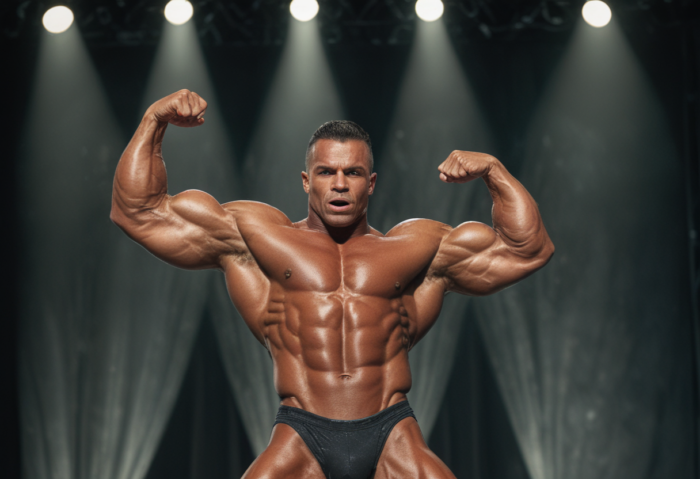
Amateur bodybuilding and doping control
Amateur bodybuilding raises one uncomfortable question: if testing is so strict, why do some competitors look as though the rules don’t apply to them? This is not an accusation against any one athlete, but an honest reflection on a system that should be the same for everyone.
Why amateur bodybuilding and doping control stir up so much emotion
After the Tallinn Euro Elite Tour, a feeling lingered in the air that is hard to put politely. The stage was full of IFBB amateurs, not pros, but the size and conditioning of some of the men made people ask: what is really going on here?
Banned substances have always come with bodybuilding. That is no secret. Especially in professional bodybuilding, it has long been clear that a top-level physique isn’t built on chicken breast, rice and willpower alone. It’s a different story, though, when we’re talking about the amateur system, where the IFBB speaks of drug-free sport, testing and ever-stricter penalties.
This is where the contradiction comes in. On the one hand, we are told the rules are the same for everyone. On the other, the audience sees men on stage whose condition gives the impression that some of them are playing with a completely different deck of cards. Frankly, this isn’t just a matter of envy. It’s about trust.
On 6 May, Ott wrote on a forum about the European Championships that the Russians did a clean job: 8 golds in total. On 7 May, Marek Morozov added under the same topic that the overall winner was superb and that the Russians have put serious money into themselves this time. That sounds like an ordinary post-competition comment, but behind it was a bigger question: how is such a level possible if the system is supposed to be strictly controlled?
How doping control actually raises questions
Doping control doesn’t just mean that someone goes to give a sample after a competition. It also means who actually gets tested, when testing takes place, how samples move through the chain, and whether everyone is truly treated the same way. To the average spectator, the system looks simple: if you’re clean, you compete; if you’re not, you’re out. In practice, the picture seems messier.
The original outrage came precisely from the rumor that, of the Russians’ eight winners, only one was tested, their weakest and smallest man. Does that prove anything? No, it doesn’t. But information like that undermines faith in the system, especially when people are talking about WADA rules, a tough policy and random out-of-competition tests at the same time.
So what is actually happening? There are several possibilities. In some countries, testing may be weaker. In some places, connections and money may play a bigger role. It may also be that the substances used, the timing and the preparation are simply thought through much more cleverly. But for an athlete who wants to compete honestly, that is hardly a comforting answer.
When Pocius, Shabunya and other men of a similar level step onto the stage in Tallinn, a comparison is inevitable. One athlete may think: I want to look like that too. Then comes the next thought: but if I try the same route, I’ll get caught in testing right here at home. And if I don’t try, I may never reach the top of the world.
Amateur bodybuilding from the athlete’s point of view
This isn’t only about who is bigger or leaner. It’s about whether the game is fair. An Estonian athlete can train for years, keep their nutrition in order, do everything right and still hit a wall if the international level is moving through a gray area of the rules.
Our federation has been firm in pursuing its anti-doping policy. In principle, that’s a good thing. Clean sport must be protected. The problem arises when one part of the system is strict and another part lets things slip through its fingers, as it were. Then it’s not only the user of banned substances who gets punished. The one who follows the rules can be punished too.
A simple truth: if testing is truly tough, it has to be tough on everyone. Not just on smaller countries. Not just on those without strong backing. Not just on athletes who aren’t part of a big national team or who don’t have enough money and influence around them.
That doesn’t mean every big, strong bodybuilder is automatically guilty. Such a conclusion would be unfair. Genetics, years of training, nutrition and experience count for a lot. But when the picture on stage and the public talk about the testing system no longer fit together, the questions are unavoidable.
FAQ: amateur bodybuilding and fair competition
Is amateur bodybuilding automatically linked to doping?
No. Many athletes train and compete honestly. The question is rather whether international testing can treat all countries and competitors equally.
Why do big amateurs raise so many suspicions?
Because their physiques can seem at odds with the talk of strict testing. When the IFBB stresses drug-free sport but the stage is full of extremely massive competitors, the question of where the line really runs is bound to come up.
What should the testing system do better?
Testing has to be visibly equal. Athletes and the audience need to understand who gets tested, when samples are taken, and why no winner should be allowed to conveniently slip past the system.
Author: Janar Rückenberg
Come and work out! ArtGym




