
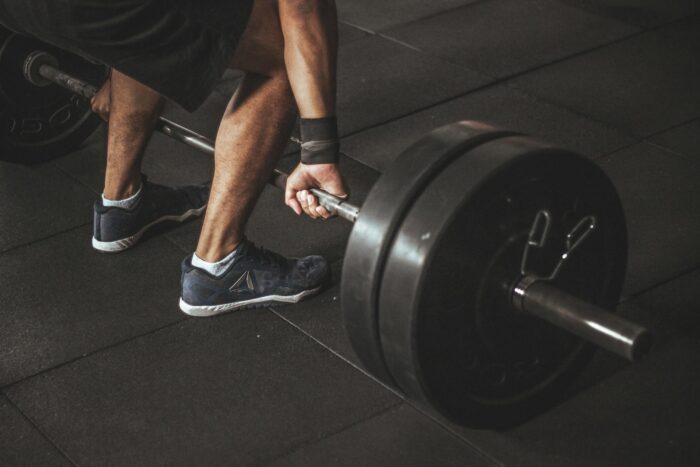
Ronnie Coleman leg workout for strength
Ronnie Coleman showed just how brutal a leg workout can really be. This is no comfortable pump session, but hard work where squats, the leg press and extensions take your thighs all the way to exhaustion.
Ronnie Coleman and heavy leg training
If your goal is overall leg growth, it isn’t enough to do a couple of sets on a machine and head home. Legs need a heavy training load, especially if you want the work to reach all the major leg muscle groups.
Ronnie Coleman stressed a simple idea here: the sets have to be heavy. Not sloppily heavy, but heavy in a way where your technique holds together and the muscle does the work. Honestly, the difference is huge. Moving weight is one thing. Making your thighs actually work is another.
The core of this workout is the drop set. That means that when a regular set ends, you don’t rack the bar or leave the machine right away. The weight is reduced and the work continues. The rest break stays short, and the muscle gets a fresh jolt just when it wants to quit.
This approach suits advanced lifters. A beginner should first learn a solid squat, a good leg press position and control on the leg extension. If your knees, hips or lower back start to misbehave during an exercise, adding weight is not a smart decision.
How Ronnie Coleman builds the workout
The workout starts with squats. The aim is to put your thighs to serious work right from the beginning. According to the original plan, you do five sets of squats to thoroughly wear your thighs down. That is a lot of volume, especially when every rep is controlled.
Next comes the leg press. The first three sets prepare you for the hardest part. The fourth set is the heaviest. When you reach 15 reps, your training partner starts reducing the weight step by step. You keep going until your thighs are completely spent.
The same idea carries over to the leg extension machine. A drop set is used there too. This is where you should leave your ego at the door. If you start throwing your body upward or helping with your hips, the tension leaves the thigh and the whole exercise turns into simply flinging weight around.
So what actually happens? The muscle gets less and less rest. Blood pools in the muscle, the burn builds and the reps become mentally tough. That’s exactly why control matters. When your form falls apart, the benefit ends and the risk begins.
- Use this workout every fourth leg day.
- Keep strict control of the movement on every rep.
- Use a spotter or two to strip the plates and keep the pause as short as possible while the weight is reduced.
- Use only your leg muscles, not your hips and joints. Don’t cheat yourself. Extend and curl the muscles smoothly and steadily, without jerking.
- Your muscles can fool you, simply because you pump them numbly and no longer know when it’s working. Treat them set by set and keep surprising them again and again.
- I warm up my legs with 30 reps, four sets per exercise. Calmly and with feel, pump your body full of blood. Use controlled movements, but you don’t have to use peak concentration: that comes later. Just pump.
Ronnie Coleman plan: sets and reps
The plan below keeps the main numbers of the original. The idea is not to do this on every leg day. It’s more of a shock workout, used rarely, once your recovery, technique and training experience are already in place.
| Exercise | Sets | Reps |
|---|---|---|
| Squat | 5 | 12-15 |
| Press | 3 | 15 |
| Press | 1 | 15* |
| Extension | 3 | 15 |
| Extension | 1 | 15* |
*After 15 reps in the set, start reducing the weight.
With a drop set, your partner has to move fast. If reducing the weight drags on, the set becomes an ordinary multi-part set with pauses. The point of this workout, however, is to keep the tension on.
If you train alone, choose machines where the weight can be changed safely and quickly. With squats, don’t play the hero. A spotter is nothing to be ashamed of. Heavy leg sets drain your focus too, not just your thighs.
What to watch for in this leg workout
The first thing is range of motion. A squat doesn’t have to be exactly the same depth for everyone, because body structure and mobility differ. But the movement does have to be controlled. Your knees shouldn’t cave in, and your lower back shouldn’t collapse at the end of the rep.
On the leg press, the biggest mistake is too much weight and too little movement. If the sled only moves a little, your thighs get little work. Keep your feet planted firmly on the platform, lower the weight with control and press up without forcefully snapping your knees into lockout.
It’s tempting to use momentum in the leg extension. Don’t. Extend smoothly, hold the tension for a moment and lower the weight back with control. It’s a simple truth: the less you jerk the weight around, the more the work is done by the muscle you sat down at the machine for.
Recovery matters too. If you do this only every fourth leg day, your body has time to recover between your more regular workouts. Your legs get a strong stimulus, but you don’t dig yourself into a hole with the same method every week.
FAQ
Is this workout suitable for beginners?
Probably not. First you should be able to squat, do the leg press and control the leg extension so that your technique doesn’t break down even under fatigue.
How often should you do this routine?
The original recommendation is to use this workout every fourth leg day. That keeps the training load infrequent, yet it’s still a strong enough special stimulus.
Why is the drop set so hard?
Because the muscle never really gets to rest after 15 repetitions. The weight is reduced and the work continues until your thighs are completely exhausted.
Author: joker: Flex
Source: WHO – physical activity.
Come and train! ArtGym




