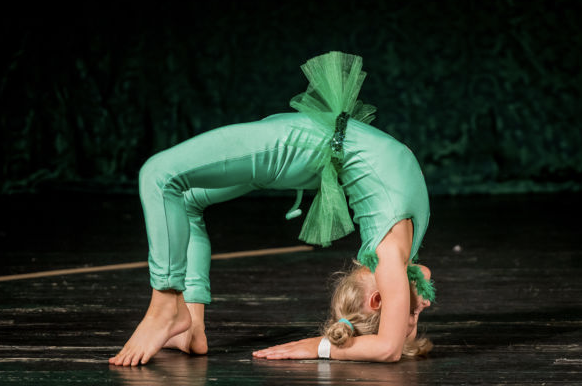
Children’s fitness brought 28 children to the stage in Pärnu, showing that the sport is growing slowly but steadily in Estonia. The cup competition on April 6 showcased courage, a sense of rhythm and the hard work children and coaches put into their routines.
Children’s fitness in Pärnu: why this competition stood out
The latest Estonian Cup competition in children’s fitness took place in Pärnu on Saturday, April 6. A total of 28 children took to the stage. That number means more than just a strong turnout on the results sheet. Behind every participant are a family, a coach and hours of training, all leading up to the moment when a young athlete steps out in front of an audience entirely on their own.
The competition made it clear that children’s fitness has moved beyond simply putting on a cute performance. The competition gets tougher every year. Routines are more technically demanding, movements more assured and stage presence much more confident. Frankly, that is a considerable step forward for a sport in which performance nerves play as big a role as flexibility or strength.
The Pärnu competition also showed that the standard of coaching across clubs has become more consistent. Strong young competitors represented several sports clubs: Happy Dancers, Spa&Sport, Kristina Koroljaki sports club, Arigato, HC Gym and others. That is healthy for the sport. When success is spread across several clubs, children have more role models and coaches face more constructive pressure.
How children’s fitness competitions work
Children’s fitness is judged on more than a single aspect. The whole performance matters: the structure of the routine, clean execution, staying in rhythm, flexibility, strength elements and expression on stage. A child needs to perform their routine so that the audience sees both the exercises and their confidence.
So what actually happens? A child takes to the stage and performs a prepared routine, while the judges assess how cleanly and convincingly it is executed. For younger children, it is especially important that the routine is age-appropriate. An overly difficult routine can fall apart on stage, while one that is too simple will not show the athlete’s true ability.
Competitors in Pärnu were divided into age groups. This is fair for children, as a 9-year-old and a 15-year-old differ greatly in physical development, coordination and performance experience. A good competition makes room both for beginners and for children who already have several seasons of stage experience.
Younger age groups
The category for children aged 9 and under had 4 competitors. Lisett Isabel Villenthal from HC Gym sports club took third place. Lore-Andra Raud from Happy Dancers finished second. Iris Madleen Nõmper from Arigato sports club, coached by Endla Vaher, won the category.
The 10-11 age category also had 4 competitors. Milana Knoševa from Kristina Koroljaki sports club took third place. Piia-Karlotta Rand from Happy Dancers finished second, while Lyneth Hirvela from Spa&Sport sports club took first place.
Older age groups
The category for 12-year-olds had a larger field, with 7 competitors this time. Marleen Ruusmaa from Spa&Sport sports club took third place. Daria Druntsenko from Kristina Koroljaki sports club finished second. Anastassia Ussova, also from Kristina Koroljaki sports club, won the age group.
In the category for 13-year-olds, 5 competitors took to the stage. Annika Absalon from Happy Dancers took third place. Loree Neerut from Kristina Koroljaki sports club finished second. Anita Leilop from Happy Dancers won the age category.
The largest category was the 14-15 age group, with 8 children competing. Johanna Kivimäe from Spa&Sport sports club took third place. Lisett Antsmaa from Happy Dancers finished second. Sofia Zapalova from Kristina Koroljaki sports club won the category.
Children’s fitness and the coach’s role behind the scenes
A child is alone on stage, but there is always a team behind a performance like this. The coach helps choose the music, put together the routine, refine movements and keep the training load manageable. Children’s fitness requires patient guidance: the aim is not to burn a child out early, but to teach them to control their body and enjoy performing.
As a parent, you also have a major role to play. Good support means more than driving your child to the venue. It also means taking the result in stride. Your child may win a medal, or they may make a mistake. Either way, they learn something. The simple truth is that if a child leaves the stage wanting to keep training, a lot has already been done right.
Cup competitions give young athletes a clear goal. Winter training, fine-tuning their form in spring and finally competition day create an easy-to-follow rhythm. In Estonia’s climate, where the dark season can sometimes feel long, a goal like this helps children maintain their training routine.
What children’s fitness offers spectators
As a spectator, you get plenty of variety in children’s fitness. A single routine combines dance, acrobatics, strength and personality. Some children are lively and playful on stage; others are focused and precise. That is exactly what makes the competition interesting. There is no need for everyone to perform in the same style.
After the Pärnu competition, those interested were also invited to the next event: the Kristina Koroljak Open Cup in children’s fitness took place on 21 April, starting at 14.00 at Kalev Sports Hall. Competitions like these are a good opportunity to see how the sport is developing in Estonia and just how much work young athletes put in.
Children’s fitness FAQ
Is children’s fitness suitable for beginners?
Yes, provided the training is age-appropriate and the instructor knows how to manage the training load. At first, the focus should be on learning movement, rhythm and posture, rather than attempting complex elements straight away.
What is judged in a children’s fitness competition?
Judges assess the routine as a whole: precision of technique, flexibility, strength, coordination, stage presence and whether the routine suits the child’s age and ability level.
Is placing more important than the experience?
Of course, children care about where they place, but in the long run, the experience matters more. Competing teaches focus, courage and the ability to see their work through to the end.
Author: EKFL
Come and train! ArtGym