Bodybuilding at the 2004 Russian Grand Prix
The 2004 Grand Prix was one of those professional bodybuilding contests in 2004 where the big question was simple: could anyone seriously challenge Ronnie Coleman? The answer came quickly onstage. The veteran won convincingly, but the evening also illustrated just how much separates being in peak condition from simply stepping onstage.
Why the 2004 Russian Grand Prix got people talking
The 2004 professional bodybuilding contest delivered no major surprises. In the buildup, the conversation centered on two men: reigning 7 x Mr. Olympia Ronnie Coleman and Russia’s young number one, Alexander Feodorov. On paper, it was an exciting prospect. A rising star in front of his home crowd, facing a man accustomed to winning even when his rivals looked very good.
Onstage, though, it was a one-sided affair. Coleman brought his usual massive physique, weighing in at around 145kg. That was more than just a big number. At that body weight, he also had to maintain muscle separation, density and stage presence. That was what made the difference.
For Alexander Feodorov, things were more complicated. His preparation had been severely disrupted by a chest injury sustained earlier in the year that was treated surgically. As a result, his chest was visibly lagging behind. In bodybuilding, symmetry is an unforgiving judge. When one muscle group stands out, both the judges and the audience notice.
Physiques and conditioning at the Russian Grand Prix
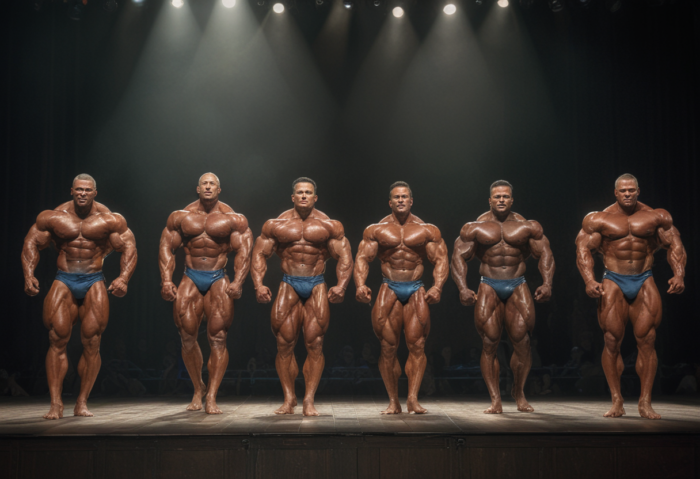
A total of 10 athletes took to the stage. Frankly, the standard was uneven. It has to be said that nearly half of them had not put in the effort to get into contest condition. That sounds harsh, but the bar is high on a professional stage. When you are standing next to Ronnie Coleman, incomplete preparation leaves you nowhere to hide.
Other familiar names onstage included Tommi Thorvildsen and Kris Dim. Both men had substantial reputations, but their conditioning left something to be desired. At contests like these, a famous name alone is not enough. A name may bring in the crowd, but the judges assess what is in front of them on the day: dryness, proportions, back and leg development, posing, and whether the physique holds up under the lights.
Sergei Tsigunkov finished third. An interesting part of his story was that he also entered the amateur world championships, but withdrew when he realized he was not in contention for a medal. That says a great deal about the standard of the amateur heavyweight division at the time.
What this contest showed about bodybuilding
The simple truth is that a lot of muscle mass cannot make up for poor conditioning. And good conditioning is not always enough when the gap in muscle mass is too large. Professional bodybuilding in 2004 demonstrated both at once. Coleman had the mass, the confidence onstage and the aura of a winner. The others had their moments, but their overall packages fell short.
The scheduling was interesting, too. The professional finals and the amateur weigh-in took place at the same time in different venues, so delegates and amateur competitors were able to watch the daytime prejudging. This effectively allowed the professionals and amateurs to be compared side by side over the same weekend.
It has to be said that the standard in the amateur men’s heavyweight division was so high that everyone in the professional contest except Coleman could have dropped a few places had the amateur medalists been there. That is a harsh assessment, but it happens in bodybuilding. The title “professional” does not automatically make every man better than the world’s best amateurs.
Ronnie Coleman’s historic win
The winner received $15,000 in prize money. For Coleman, this was a historic professional win number 23. It broke Vince Taylor’s record of 22 professional victories. A tally like that does not happen by chance. It takes years of work, a strong body, steady nerves and the ability to step onstage in the right condition at the right time.
Coleman also won the German Grand Prix on 06.11. and the English Grand Prix on 07.11. in the days that followed. Chris Cormier finished second on both occasions. That shows just how relentless the competition schedule was back then. Today, competing at the highest level in such quick succession seems almost inhuman, but that was professional bodybuilding in that era.
The original article included the note: GALLERY HERE. The old gallery link no longer works, so it remains here simply as a note for historical context.
FAQ
Who won the 2004 Russian Grand Prix?
Ronnie Coleman won the contest. He beat Alexander Feodorov convincingly to claim professional win number 23.
Why was Alexander Feodorov unable to challenge Coleman?
Feodorov’s preparation was affected by a chest injury sustained earlier in the year that was treated surgically. His lagging chest development was visible onstage, reducing his chances of seriously challenging Coleman.
Why does this contest matter in bodybuilding history?
This was the contest where Ronnie Coleman broke Vince Taylor’s record. Professional win number 23 cemented his place among the sport’s most successful names.
Author: Ott Kiivikas
Source: WHO – physical activity.
Come work out! ArtGym