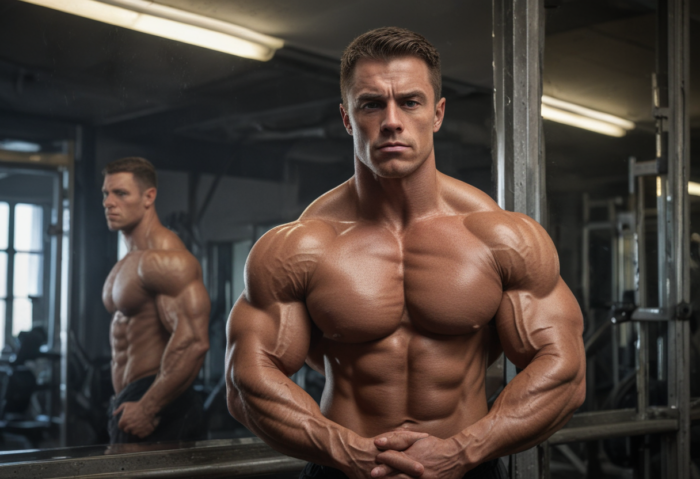
We live in a time when the world is finally open to Estonian bodybuilders too, and that is great. They compete at various world championships and, surprise, surprise, even bring medals home – that is great too, seriously!
Lately people have been asking me how many of these titles are handed out each year and who awards them. I think the following information about some of the world’s bodybuilding and fitness organizations and the title competitions they run could be of interest to a wider audience.
IFBB (International Federation of Bodybuilders)
Founded in 1946, with 173 member countries in total at present (2005). It is the only bodybuilding organization recognized by the Global Association of International Sports Federations (GAISP) and the International Olympic Committee (since 1998). It is also recognized by 90 national Olympic committees. It organizes amateur world championships (since 1959) and continental championships (including the European Championships, since 1968).
It is divided into an amateur division and a pro division. For professionals, the most prestigious title is Mr Olympia, awarded since 1965. By a wide margin it is the best in terms of both organization and athletic level, among amateurs and pros alike.
Estonia is represented in the IFBB by the EKFL (Estonian Bodybuilding and Fitness Federation).
The IFBB has signed up to the code of WADA (the World Anti-Doping Agency). Since 1986 it has applied doping control at amateur title competitions in line with IOC requirements.
It requires athletes sent to title competitions to be tested beforehand, and also requires testing at national championships (the EKFL orders doping control at the Estonian Championships and the Estonian Cup, and out-of-competition tests are planned as well).
Estonians have won gold (Inna Uit,1996) and bronze (Olev Annus, 1984, albeit as a Finnish citizen) at the IFBB amateur World Championships. The European Championships have brought three golds (Olev Annus 1986, Ain Paavo 1990 and Inna Uit, 1995), two silvers (Olev Annus 1985 and Ott Kiivikas 2005)
and one bronze (Imre Vähi 2005, bodyfitness).
NABBA (National Amateur Body-Builders Association)
Founded in 1950 in England, and it has remained England-centered to this day. Since that year it has organized the Mr Universe competition for amateurs (for professionals since 1952). It is held every year, traditionally in London.
In terms of athletic level it ranks below the IFBB, but some bodybuilders who started out in this league have gone on to reach the absolute top in the IFBB as well (Schwarzenegger, Zane, Dickerson). Mostly, though, the movement goes the other way – athletes who cannot make a breakthrough in the IFBB move over to NABBA.
In 1984 a sub-organization was founded – NABBA-International. It brings together 29 countries (in 2005) and organizes World and European Championships for both amateurs and pros.
Olev Annus has been successful in NABBA, with three golds in total (amateur World Championships 1987, pro Mr Universe 1987 and pro World Championships 1991).
WABBA (World Body Building Association).
An association created by the legendary French bodybuilder Serge Nubret, which joined NABBA in 1977 and split off again in 1983. It organizes World and European Championships, whose participants are mostly (weaker) NABBA bodybuilders.
WFF (World Fitness Federation).
The “circle of friends” of Lithuanian bodybuilding activist Edmundas Daubaras. In 1995, together with the German Klaus Hoffmann, he created a project called “WFF” to develop fitness.
In 1998 they organized a fitness “world championship” in Palanga (Lithuania). After that they fell out and each created their own WFF – Daubaras WFF “Eastern Hemisphere” (later renamed WFF International in 1999) and Hoffmann WFF “Southern Hemisphere”. In 2000 it was decided to divide the competitions as follows – Daubaras the European Championships, Hoffmann the World Championships and WFF Universe. In 2003 Hoffmann gave up the World Championships for lack of sponsors, and since then Daubaras has run both the European and the World Championships.
The WFF is a true “everyman’s league”. They have declared this direction themselves; for example, at the World Championships the number of different competition categories, i.e. medal sets, is nearly 100! (age-group rankings in each category, and so on.)
Competitors are divided into classes arbitrarily (by muscle mass?), and as many classes are created “as needed”, depending on the number of competitors. Naturally, the competitors in the tougher classes meet the bodybuilder standard. Since 2003 it has had its own pro division as well.
Is such a league needed at all? I think it is – for those who have no serious athletic goals, and it is also an outlet for those who are bothered by doping control.
So Estonian athletes, too, have something to choose from. I hope the information above helps you make your choices. Finally, one more thing to be aware of: the EKFL, following the IFBB statutes, can no longer allow its athletes to take part in the events of any other organizations from 2006.
Come and train! ArtGym