
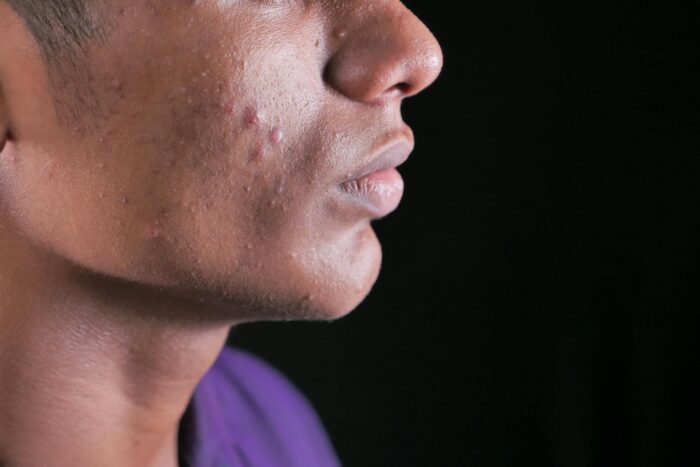
Acne: causes, symptoms and treatment
Acne is a chronic disease of the sebaceous glands that shows up as pimples, comedones and inflamed nodules on the face, back and chest. It is closely tied to the hormonal changes of puberty, and it affects 85–100% of teenagers. Acne is treatable, although treatment takes time and patience.
Why does acne develop?
There are several causes: heredity, disorders of sebum secretion and keratinization of the sebaceous glands, hormonal shifts and bacteria.
Before puberty the sebaceous glands are small, so acne cannot develop. During puberty, androgens (male sex hormones) begin to stimulate the sebaceous glands: more sebum is secreted, the gland’s duct becomes blocked and comedones, or sebum plugs, form. Both boys and girls have enough androgens to drive glandular activity to almost its maximum. Female sex hormones, or estrogens, work in the opposite direction: they suppress androgen synthesis and reduce sebum production.
The area around a blocked sebaceous gland is a favorable breeding ground for the bacterium Propionibacterium acnes. This bacterium produces free fatty acids, which trigger inflammation: papules (small nodules) and pustules (pus-filled spots) appear. If the wall of the hair follicle ruptures, whether from squeezing or on its own, larger collections of pus and scars can form.
Heredity clearly plays a role: teenagers whose parents had acne in their youth are more likely to develop it themselves. Scar formation is also partly hereditary.
A number of additional factors make the condition worse. Anabolic steroids, used to build muscle mass quickly, strongly increase sebum production, and this can lead to severe so-called bodybuilder acne. Long-term use of cortisone-based medications also promotes acne. Cosmetics with a high fat content, soap residue left on the skin, sweating and stress all increase pore blockage. In women, acne often flares up in the premenstrual period because of hormonal fluctuations.
Acne symptoms and severity levels
The rash appears in areas rich in sebaceous glands: the face, chest and back.
Non-inflammatory lesions are closed and open comedones. Open comedones (blackheads) are recognizable by their dark tip, which is a melanin deposit, not dirt from poor washing. In closed comedones (whiteheads), sebum cannot escape because the opening is too small.
Inflammatory lesions develop when a comedone becomes inflamed. Sometimes the inflammatory foci are deeper and form pockets containing a foul-smelling mixture of blood, pus and sebum. These heal poorly and often need surgical treatment.
Acne is divided into three severity levels:
- Comedonal acne — open and closed comedones dominate, mainly on the face. Seborrhea is also present. Inflammation is rare. Comedones appear in early puberty around the nose and on the forehead.
- Inflammatory acne — inflammation dominates. Comedones, papules and pustules are all visible. The face, chest and back are affected. Scarring occurs.
- Nodular acne — the most severe form, more common in men. In addition to the above, there are abscesses, deep comedones and often very large scars. Besides the face, the condition can affect the chest, back, arms, abdomen, buttocks and even the scalp.
Acne begins at the start of puberty, slightly earlier in girls than in boys, lasts 5–10 years on average and usually subsides after age 25. Sometimes it persists longer. Severe forms occur in about 10% of cases, most of them in men. Because it affects the face, acne is a major cosmetic problem that causes young people considerable psychosocial difficulties.
A simple visual examination is enough for diagnosis. In severe forms, blood tests are checked to assess the body’s overall condition and to monitor the effects of medication.
Acne treatment and daily care
Although acne usually clears up on its own between the ages of 20 and 30, treatment can ease its course, reduce scarring and improve quality of life. There is no single medication that suits everyone: treatment is long-term, individual and requires patience.
Facial cleansing. Contrary to popular belief, acne is not simply a matter of cleanliness. Washing too much can irritate the skin. The best approach is to wash your face with a mild acidic soap (pH 5.5) 1–2 times a day, which preserves the skin’s pH balance and reduces bacteria. Bactericidal soaps are not effective, because their action does not reach the ducts of the sebaceous glands. Lotions containing benzoyl peroxide and special facial cleansers are more effective. For very oily skin, a toner containing alcohol can help.
Diet. There is no scientific evidence that food directly affects acne. If you notice that a particular food makes your acne worse, avoid it. A known exception is iodine: you should not use iodized table salt excessively. Unusual diets can also contain excess iodides, which are best avoided.
Emotional state. Almost everyone with acne needs significant emotional support. Stress can trigger acne flare-ups, and some patients also need help from a psychiatrist.
Cosmetics. Covering the rash with makeup can help you feel better. Use makeup that is low in fat and easy to wash off. Repeatedly applying and removing makeup during the day damages the skin more. All makeup should be removed in the evening. If you have applied medication to your skin, wait 20–30 minutes before putting on makeup.
Phototherapy. Many people notice that acne improves in summer — ultraviolet radiation and sunlight have an anti-inflammatory effect and dry out oily skin. However, because of the risk of skin aging and because some medications (tetracycline, retinoids) make the skin sun-sensitive, phototherapy has lost its importance today.
Medications — the main groups:
- Comedolytic agents — exfoliating and keratinization-normalizing action. They promote the maturation and emptying of comedones and prevent new ones from forming. They may irritate the skin at first and cause excessive sun sensitivity.
- Antibiotics — both topical and as tablets. They reduce the number of bacteria that release inflammatory substances. Antibiotic treatment should last at least 6 months, as a shorter course is not effective enough.
- Benzoyl peroxide — reduces the amount of P. acnes on the skin and in the follicles of the sebaceous glands, and also has a comedolytic effect.
- Systemic retinoids — reduce sebum production, unclog blocked follicles and inhibit bacterial growth. The side effects are numerous: dryness of the skin, lips and eyes (particularly problematic for contact lens wearers), poorer vision in the dark, and mild changes in liver function. The worst side effect is the risk of fetal malformations — the drug is contraindicated in pregnant women. A pregnancy test must be done before treatment, and pregnancy must be avoided for 1 month before treatment, during treatment and for 1 month after treatment.
- Hormone therapy — antiandrogens are indicated for women who have severe acne and who want to avoid pregnancy at the same time.
- Surgical treatment — used to open large inflammatory lesions and to correct extensive scarring.
You should not squeeze comedones or inflammatory acne lesions — it slows healing and promotes scarring.
FAQ: frequently asked questions about acne
Is acne only a teenage disease?
No. Although acne is most common during puberty — 85–100% of adolescents experience it to some degree — the condition can also persist into adulthood. It usually subsides between the ages of 20 and 30, but sometimes later.
Does poor nutrition cause acne?
There is little scientific evidence of a direct link. The exception is iodine — consuming too much iodized salt can aggravate acne. If you notice a connection with a particular food, avoid it.
How long does acne treatment take?
Treatment is long-term. A course of antibiotics should last at least 6 months — a shorter course does not give a sufficient result. Since there is no universal medication, the doctor adjusts treatment individually. Patience is essential.
Author: Marek Morozov
Come and work out! ArtGym




