
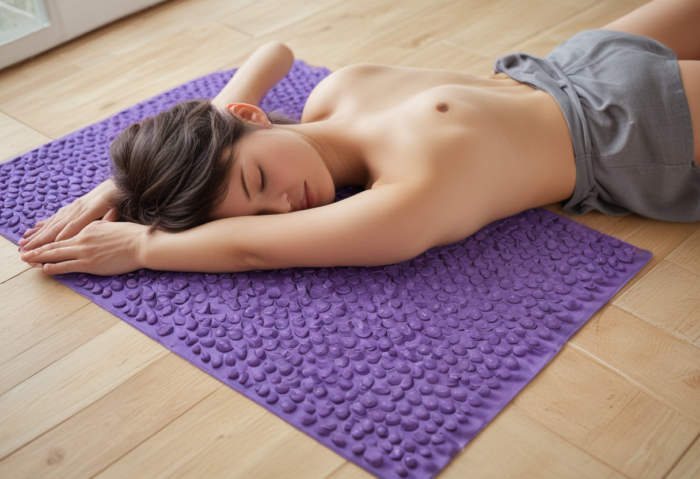
Acupressure mats for muscle tension and stress
An acupressure mat is a simple tool you can use at home: lie down on it and let the small plastic spikes wake up your body. It won’t work miracles, but it may help ease a tense back, soothe a stiff neck in the evening and give a restless mind a moment to slow down.
Why are acupressure mats getting attention?
After a long day at work, it’s very common to find your shoulders up around your ears and your lower back making its presence felt. The same can happen after training, especially after plenty of squats or deadlifts at the gym, or a longer run. Your body seems to be constantly braced for effort, unable to unwind.
That’s where an acupressure mat comes in. Its surface is covered with small plastic spikes. These don’t pierce the skin like acupuncture needles; instead, they apply even pressure to it. The first minute can feel surprisingly sharp. After a while, the sensation becomes warmer and gentler.
Honestly, that sensation isn’t for everyone. Some people love it from the first try; others keep a shirt between their skin and the mat and get used to it gradually. Both approaches are completely normal. The aim is to relax, not to endure discomfort.
How does an acupressure mat affect your body?
An acupressure mat works by stimulating the body through pressure. When your body comes into contact with the small spikes, your skin and the tissue beneath it begin to respond. Many people describe a feeling of warmth in the area. This may indicate increased local circulation and a slight easing of muscle tension.
Does it replace a massage therapist, physiotherapist or doctor? No. If the pain is severe, starts after an injury or gets worse over time, you need to seek professional help. Think of an acupressure mat as a tool for use at home, rather than a cure for every ailment.
Acupressure mats are most commonly used to relax the back, neck, shoulders and legs. Some people also use them before bed, as lying quietly helps bring the day to a close. If you’re holding your phone and scrolling through the news at the same time, much of the point is lost. The simple truth is that the mat works better when you give your body a proper chance to rest.
How do you use an acupressure mat?
Start gently. Place the acupressure mat on a bed or rug, carefully sit or lie down on it and listen to your body. Keep your first few sessions short. If the sensation is too intense, put a thin T-shirt or towel between your skin and the mat.
For your back and shoulders
For your back, the simplest approach is to lie on the mat with the spikes beneath your upper and lower back. If your shoulders are tense, let your arms rest by your sides and breathe slowly. Don’t force your body against the mat. Your body weight is enough.
For your neck
A small acupressure pillow or roll is often used for the neck. If you don’t have one, you can carefully position the edge of the mat so that the pressure is beneath the back of your neck, rather than directly against your throat. Your neck is a sensitive area, so be particularly gentle here.
After training
It’s best to use the mat once your heart rate has come down and your body is no longer hot. It fits well into a quiet evening alongside some stretching, a shower and a proper meal.
Acupressure mats: what to consider when buying and using one
A good acupressure mat doesn’t need to be complicated. Check that the surface is large enough, the spikes are uniform and the cover is removable or easy to clean. If you also plan to use the mat under your feet, look for a more durable material. If your neck is your main concern, a pillow or roll is a practical addition.
Don’t use an acupressure mat on broken skin, inflamed areas or anywhere the pressure causes sharp pain. If you’re pregnant or have a bleeding disorder, skin condition or nerve problems, seek medical advice before using it. The same applies if you have a condition for which strong pressure is not recommended.
During Estonian winters, many people find an acupressure mat particularly pleasant in the evening, when the cold has left their body stiff and they’re moving less. In summer, it can be useful after gardening, cycling or a longer walk. The key is not to turn it into a chore. If using it becomes unpleasant, take a break.
FAQ: acupressure mats and everyday use
Can an acupressure mat help with back pain?
For some people, it helps relieve tension and stiffness, particularly when the pain is linked to sitting or muscle tension. If your pain is severe, radiates or persists, you shouldn’t rely on the mat alone.
Can you use an acupressure mat every day?
If your skin responds well and you feel good using it, you can use it regularly. Still, start with shorter sessions and see how your body responds. Pain, numbness or skin damage is a sign that you need to stop.
Is an acupressure mat suitable after a workout?
Yes, if you use it gently to support recovery. It doesn’t replace sleep, food or a sensible training load, but it may help your body settle down after exertion.
Come work out! ArtGym




