
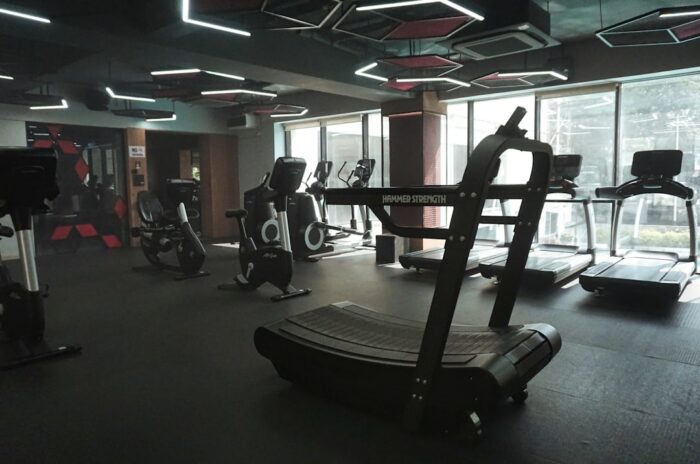
Aerobic training: myth and reality
Aerobic training is not a miracle tool that melts fat on its own. If your goal is better shape, a stronger body and less overload, the picture has to be wider: nutrition, strength training, recovery, and only then a suitable amount of endurance work.
Let’s skip the empty talk. Long, slow plodding can help in some cases, but for a beginner or someone training on a diet, it can end up being a brake rather than a lifebuoy.
Why aerobic training alone won’t save you
It’s easy to spot this scene in a gym. Someone comes back to training after a long break, steps onto the treadmill or exercise bike and hopes the hours spent there will do the rest. The idea seems logical: I sweat more, I burn more, my weight drops.
Unfortunately, the body isn’t such a simple machine. If a beginner is carrying 20 extra kilos, has no good shoes and joints that aren’t used to the load, sending them out for a 20-minute run can quickly end in knee, hip or shin pain. Sometimes the body doesn’t signal trouble right away. The load builds up quietly, and a few weeks later the problem is no longer weight but a doctor’s or physiotherapist’s appointment.
The simple truth: a beginner doesn’t need a harsh cardio plan first. They need a nutrition plan that’s actually doable and a simple full-body strength training routine. Muscles help keep the body strong, improve posture and burn energy even when you aren’t training.
That doesn’t mean walking, cycling or swimming are bad. They aren’t. What’s bad is making aerobic training the main tool in the plan of someone whose body isn’t yet ready for the load.
How does aerobic training affect the body?
Low-intensity training burns energy mainly while you’re doing it. Once the session ends, the extra energy cost drops off quickly too. Strength training and interval training behave differently, because they give the body a stronger signal to recover, hold on to muscle and raise metabolism.
This is where the big difference appears. Long, steady aerobic training can teach the body to get the same work done more economically. That’s good for endurance, but when it comes to fat loss, it’s not always the result you want. In some studies, people who walk or run constantly have shown 30-65% lower energy expenditure for the same work; in a few exceptional cases, even 80%.
Another factor is stress. A strict diet, too little sleep and ten or even more hours of aerobic work every week can push the body into a corner. In that state, fat doesn’t necessarily come off faster. Some people retain fluid instead, especially in the legs, and the waistline doesn’t budge. Frankly, it’s discouraging, because you seem to be doing more, yet the results get worse.
The original idea also said that a stronger training load often benefits health more than overly gentle drifting along. For example, activities valued above six MET units fall into the higher-intensity group. Six METs means that metabolism speeds up six times during the activity. The MET value of strength training is six, and burning as little as 54 calories a day may be enough for physical activity to have a health-supporting effect. That amounts to about an hour of strength training a week.
Aerobic training, strength and intervals
Strength training is not some side branch of “real workouts”. It is training in the most direct sense of the word. If you want a better physique, stronger bones and more muscle, work with weights has to be at the center of your plan.
The EPOC of aerobic training is almost nonexistent. Studies show only 9-30 extra calories burned after 0.3-3 hours of training. After strength and interval training, the picture is different: metabolism can be 4-7% faster even 24 hours after the session. If a bodybuilder’s daily energy expenditure is 2500 kcal, that could mean another 100-170 calories a day.
In plain terms, EPOC means afterburn. The body spends energy to restore normal body temperature, hormonal balance, oxygen debt and other markers. The stronger and sharper the training stimulus, the higher the cost of recovery usually is.
That’s no license to push yourself to total exhaustion every time. Rather, it means a smart plan beats blind plodding. If competition shape takes 3-5 training sessions plus three or four interval sessions a week and the fat still won’t budge, it’s worth reviewing your diet, sleep and overall training load first.
Aerobic training: a practical plan
If you want to keep endurance work, do it smartly. At the start, a bike, stepper, rowing machine or swimming all work well. They load the joints less than running. Once your fitness is better, running can be very effective, especially at a slight incline.
Warm-up
5 minutes at an easy pace. Don’t start at full speed. Your body needs to understand what’s about to happen.
Intervals
Each interval lasts 3 minutes. Raise the pace or resistance as much as you can sustain for 60 seconds. By the end of that minute, your heart rate should be at 90-95% of maximum and your muscles should be clearly working hard. After that, lower the intensity for two minutes, until your heart rate drops to about 60% of maximum.
If your fitness isn’t up to it yet, halve the times. Do 30 seconds near maximum effort and one minute at an easy pace. That’s more sensible than overdoing it in the first week and then taking two weeks off.
Cool-down
5 minutes at a slow pace. Let your breathing settle, and don’t jump straight into the next hard exercise.
- Weeks 1-4: 3 intervals, 3 times a week (19 min*)
- Weeks 5-8: 4 intervals, 4 times a week (22 min*)
- Weeks 9-12: 5 intervals, 4 times a week (25 min*)
- Weeks 13-16: 6 intervals, 5 times a week (28 min*)
*includes warm-up/cool-down. After that, you can reduce the low-intensity time to one minute.
FAQ: aerobic training
Is aerobic training bad for weight loss?
No. It’s bad only when it replaces getting your nutrition in order and strength training. Moderate aerobic training can be a good addition, but it’s rarely the whole solution.
Should a beginner run at all?
If your body weight, joints and fitness allow it, running can be a good fit. If you’ve had a long break or your joints tend to ache, start with cycling, walking, swimming or strength training instead.
Which is better: long, easy sessions or intervals?
It depends on your goal. For fat loss and improving fitness, strength training and intervals often give you more in return. Long, easy sessions can suit recovery or building endurance.
Translated from Body magazine; Author: Joachim Bartoll
Author: Greta
Source: Kardioseadmed
Come and train! ArtGym




