
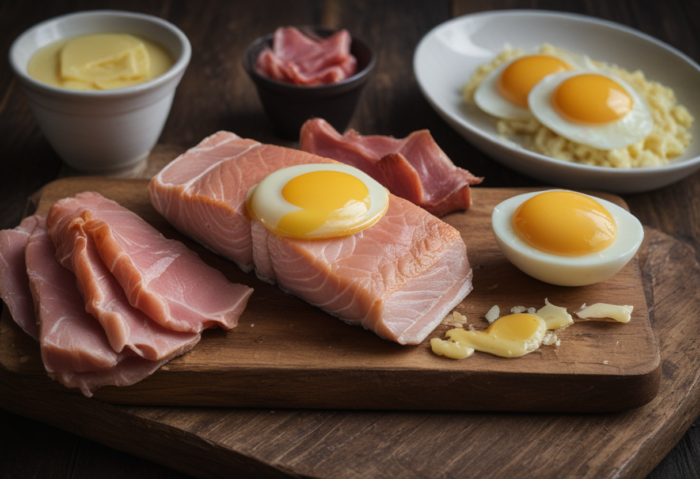
Animal fats: necessary, but in moderation
Animal fats are nothing to panic about, but you shouldn’t pile them onto your plate either. When you understand why you need fat and where different fatty acids come from, everyday food choices become much easier.
Why do animal fats matter?
There has been a lot of noise around fat for years. One moment, you’re told that fat makes you fat. The next, you’re advised to cut back on carbohydrates and eat more fat. You end up standing in front of the milk cartons, cheese counter or bottles of oil, wondering: what actually makes sense?
The simple truth is that your body needs fat. Animal fats help build cell membranes, provide energy and support hormone production. They are also needed for the absorption of fat-soluble vitamins. Vitamins A, D, E, K are not absorbed or stored well if your diet is too low in fat.
Saturated dietary fats play several roles in the body at once. They serve as an energy reserve, building material and protective layer, and support metabolism. Body fat is found mainly beneath the skin (80%) and around the internal organs. The issue is not fat itself, but the amount, source and balance.
If you restrict fat too severely, your body may let you know quite quickly. You may experience weakness, intense sugar cravings, dry and flaky skin, dandruff, brittle nails, hair loss and increased feelings of stress. This doesn’t mean that every bout of tiredness is caused by a lack of fat, but a diet that is too low in fat is not a good idea.
Animal fats and plant fats: what’s the difference?
Animal fats consist of saturated, monounsaturated and polyunsaturated fatty acids. Animal fats usually contain more saturated fatty acids. Plant fats tend to contain more monounsaturated and polyunsaturated fatty acids.
Saturated fatty acids are found in foods such as butter, cheese, meat products, frankfurters, thick boiled sausages, whole milk and full-fat yogurt, pastries and confectionery, hard margarines, pork fat, lard, palm oil and coconut oil. You don’t need to eliminate these foods from your diet, but you should be mindful of how much you eat.
Monounsaturated fatty acids are found in olives, rapeseeds, nuts, almonds, avocados and the oils made from them. These fit well into everyday meals, for example in salads, on porridge or alongside a sandwich.
Polyunsaturated fatty acids are most often discussed in the context of omega-3 and omega-6. These are essential for the human body because it cannot produce them itself. Your diet therefore needs to include both.
Omega-3 polyunsaturated fatty acids are found in salmon, herring, trout, soybeans, flaxseeds, chia seeds, camelina and the oils made from them. Omega-6 polyunsaturated fatty acids are found in sunflower seeds, wheat germ, sesame seeds, nuts, soybeans, corn and the oils made from them, as well as some margarines.
How can you fit animal fats into your diet?
A good diet doesn’t require extremes. If you have a cheese sandwich for breakfast, a meat dish for lunch and a full-fat dairy product in the evening, your animal fat intake can add up over the day. Including fish, seeds, nuts or rapeseed oil that same day gives you a more balanced mix of fats.
A practical approach is to look at the whole day rather than a single food. Does your diet include fish? What about nuts or seeds? Do you sometimes use plant oils in your cooking? Are meat products an everyday staple or an occasional change? These questions are more useful than simply labeling foods “good” or “bad”.
Animal fats provide 9 kcal/g of energy, almost twice as much as carbohydrates or protein. This means the amount of fat you eat can quickly affect your daily energy levels. That doesn’t make fat bad, but it explains why a small amount of oil, nuts or butter can provide quite a lot of energy.
What should you watch out for with trans fats?
Trans fats form in plant fats that have been made solid through hydrogenation. During hydrogenation, even healthy plant fats lose some of their beneficial properties, and trans fatty acids are formed. The original text rightly emphasized that trans fats are more dangerous to health than lard or other saturated dietary fats from animal sources.
Frankly, it pays to keep things simple and practical here. If a product is highly processed, has a long shelf life and contains hydrogenated fat, it shouldn’t be an everyday staple. Having cake occasionally won’t ruin your health. Choosing industrially produced baked goods and cheap convenience foods every day is another matter.
Because omega-6 fatty acids often predominate among the polyunsaturated fatty acids in our diet, it is worth paying attention to sources of omega-3. This doesn’t mean omega-6 is bad. It’s a question of balance. If your diet contains plenty of sunflower oil, corn oil and convenience foods, but little fish or flaxseed, the ratio can easily become unbalanced.
FAQ: animal fats and health
Should you cut out animal fats completely?
You don’t need to. It makes sense to consider how much and how often you eat them. Butter, cheese, full-fat dairy products and meat can be part of your diet, but you should balance them with fish, nuts, seeds, vegetables and plant oils.
Is a low-fat diet always healthier?
No. A diet that is too low in fat can impair vitamin absorption and leave you short of essential fatty acids. Your body needs fat, just not in unlimited amounts.
How can you make better choices every day?
Choose variety. Have fish one day, eggs or meat the next, along with seeds, nuts and plant oil. The keys to healthy eating are variety and moderation in everything.
Author: Veronika Otter
Source:Turg.Fitness.ee
Come and work out! ArtGym




