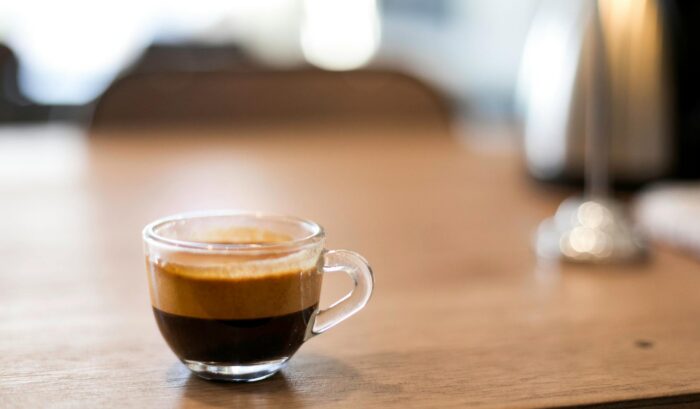
Caffeine before training!?
An adequate amount of caffeine before training gives you energy and improves performance.
Question: I feel that coffee (caffeine) before the gym gives me energy, but I also feel that it strongly suppresses my appetite. Is coffee (caffeine tablets) before the gym still justified during a bulking phase?
Answer: In short – yes, you can drink coffee before training during a bulking phase too. But let’s see what the experts say:
Steve O’Reilly, director of Underdog Nutrition: Caffeine helps increase strength because it simulates the release of epinephrine from the adrenal medulla, which in turn enhances and stimulates muscle contractions, O’Reilly confirms. This changes the perception and feeling of effort, and the athlete is able to lift more weight. The alertness and a certain kind of “power” that caffeine gives are not very long-lasting after a single dose, but regular use of caffeine before training undoubtedly has a positive effect on strength and, through it, on muscle mass.
O’Reilly claims that taking caffeine before training should not affect the rate of muscle growth in any way through appetite suppression. Appetite is strongly disrupted when caffeine is taken hand in hand with ephedrine (a fat burner), but the effect of caffeine itself on appetite is much weaker.
O’Reilly dares to recommend taking caffeine before training in all phases of bodybuilding training (the off-season and the pre-contest period). Caffeine is the most widely used legal stimulant among the general public, and the one most studied by scientists.
If you take caffeine about 45 minutes before training and then spend about 60 – 90 minutes in the gym, your appetite should have fully recovered by then (given the training load). And even if there are some problems with the post-workout meal, anyone can still drink a protein/carbohydrate shake after training.
As for how much caffeine you should take before training, this article recommends 2 mg per 1 pound of body weight, i.e. about 4 mg per 1 kg of body weight. So a bodybuilder weighing 90 kg should take about 400 mg before training.
IFBB pro George Farah, who placed sixth at the 2004 Night of Champions, is also an advocate of caffeine. He thinks caffeine tablets work as an excellent pre-workout supplement, but over the years the ill-informed media have labeled caffeine as a cause of high blood pressure and many other health problems.
Of course, as with many substances and compounds, caffeine is under constant scientific scrutiny, and the facts and evidence known so far keep changing and expanding, but at the moment moderate caffeine intake is not observed to be negative in any way. Some people consume 200 – 300 mg of caffeine every couple of hours. Overdosing is certainly not good. We experience serious and noticeable adverse effects (tremors, nausea, heart palpitations, etc.) when we consume, for example, 1 – 2 g of caffeine per day.
To avoid adverse effects, George recommends a moderate dose and taking caffeine specifically before heavy workouts. For example, before a leg workout, in addition to the energy boost, caffeine reduces/numbs muscle pain during training and works as a fat burner.
But George notes that we must not forget that caffeine tablets are not a direct mass builder; they simply give us the strength to train harder, and what we accomplish in the gym with the help of caffeine only pays off through adequate recovery and perfect nutrition.
From the translator: In the translator’s opinion, caffeine and everything connected with it are extremely interesting but, in a sense, contradictory. This article focused primarily on the effects of caffeine on appetite, and also covered its stimulating effect.
Why do caffeine’s effects seem contradictory to me?
I’m a big pre-workout caffeine user myself, usually in the form of a cup of slightly stronger coffee, and from time to time, when I’m in a hurry, I also take caffeine tablets. And truly, I don’t know whether it’s a bad feeling (a habit) or not, but workouts without caffeine beforehand are not the same in quality as when I drink a small cup of coffee before training. A moderate amount really does help get a workout off to a better start and cope with the training load. A moderate amount for me is about 100 – 200 mg, which would be 1 – 2 tablets, but the article talked about 400 mg. I haven’t taken such an amount at once before training myself, but thinking it through, those numbers seem quite large. At the same time, I believe that caffeine dosing and the effect and feeling you get from it are very individual. Why not – for some bodybuilders even that 400 mg may work perfectly.
What bothers me much more is the other effect of caffeine on the body. As I understand it, caffeine quite strongly inhibits the absorption of carbohydrates and also of creatine. When you start to analyze it, this whole thing seems contradictory to me. At this point I would like to quote the 2001 study guide by V. Ööpik, L. Medijainen and S. Timpmann, Food, Nutrition and Physical Work Capacity. In the chapter “Caffeine tablets”, Prof. Vahur Ööpik lists three mechanisms of caffeine’s action: caffeine increases the sensitivity of the muscle’s contractile apparatus to calcium ions (Ca 2+), stimulates lipolysis, and third, caffeine affects physical work capacity by altering the state of adenosine receptors. Adenosine regulates the function of very many organs, including the brain, the heart and skeletal muscles. Among other things, it is known to promote carbohydrate uptake by the working muscle. Caffeine, being chemically similar to adenosine, can block adenosine receptors and thus, depending on the dose, reduce the regulatory effect of adenosine on cells to a greater or lesser extent. As you can see, this also makes it possible to limit the rapid expenditure of glycogen and carbohydrates in general during work.
Given pre-contest goals, this is actually a good thing: the body can’t use carbohydrates, the receptors are blocked, and it has to go after the next energy source – fat tissue. But in light of the quote above, caffeine before training should be contraindicated during a mass phase. According to the quote, pre-workout caffeine should strongly inhibit carbohydrate absorption both before and during training. And that’s not all: if a hefty pre-workout dose of caffeine is on board, post-workout absorption of carbohydrates and creatine should be impaired too. If, for example, we take 200 mg of caffeine about 45 min. before a workout, its absorption into the blood peaks, according to different sources, 60 – 90 min. after intake. If the workout lasts, say, 45 minutes, then 90 min. have passed since taking the caffeine, and the peak blood caffeine concentration and the post-workout protein shake (carbohydrates, protein, glutamine, creatine) coincide.
Given the theories and positions set out above, this whole situation should create a contradiction.
But why am I racking my brain over this at all? Precisely because many bodybuilders write about how pre-workout caffeine tablets affect them positively, and in my view the topic has been relevant on our forum too. Pro or not, a protein shake (including carbohydrates, glutamine and creatine) after a workout is as sure as amen in church! And in theory, at least in theory, these two things (caffeine and carbohydrates) shouldn’t go together.
To me this looks like one big dilemma: do I have a cup of strong coffee before training and get a quality workout, at the cost of post-workout carbohydrate absorption? Or do I do a slightly groggier, less effective workout, but post-workout nutrient absorption doesn’t suffer? Because it’s clear that, whatever the timing, broadly speaking, if we drink coffee (caffeine) before a workout, it won’t clear from the body by the time of the post-workout shake, and the 45-minute, arguably vital carbohydrate window stays half closed.
Of course, I don’t want to claim that it all works exactly like this 100%, but having read various literature and relying on my own knowledge, I would dare to draw the conclusion stated above.
In any case, the topic is exciting and worth analyzing. All opinions and arguments, both on the forum and in the form of articles, are welcome!
Author: Janar Rückenberg (translation)
The best coffee and tea in Tallinn: https://teacoffeecentre.ee/
Come work out! ArtGym