
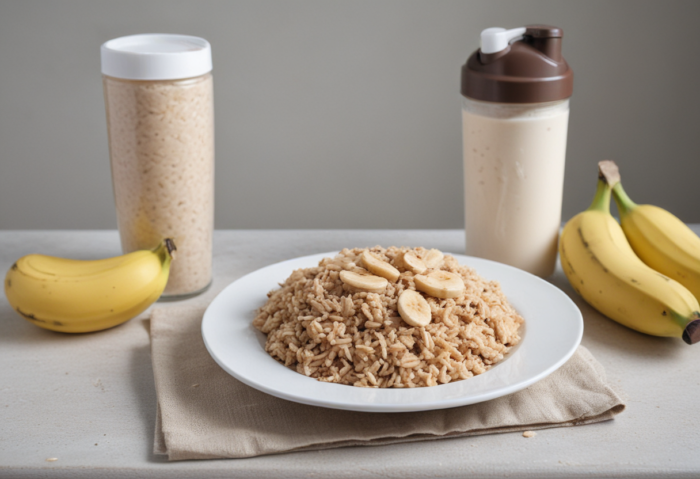
Carbohydrates in bodybuilding: energy and shape
Carbohydrates aren’t just a side dish of potatoes or rice on a bodybuilder’s plate. They determine how much strength you have left at the end of your sets, how quickly your muscles recover and how calmly your appetite stays under control through the day.
The simple truth: too few carbohydrates leave your training flat, while too many can blur your shape.
Why carbohydrates matter in bodybuilding
Bodybuilding isn’t a marathon, but that doesn’t mean energy doesn’t matter. The work you do in the gym is short, intense and repeated. Squats, presses, deadlifts, leg presses or a long back day use a lot of muscle glycogen. This is energy stored from carbohydrates, which the body keeps in your muscles and liver.
At a low heart rate, the body can use more fat. When the effort gets harder, the picture changes. Above roughly 50% of VO2max, the share of fat used for energy starts to fall and the body relies more on glycogen. In strength training this happens quickly, especially when rests are short and there are many sets.
Honestly, you can feel the difference even without any measuring equipment. If lunch was only a salad and coffee, your evening leg day won’t feel the same. The bar moves more heavily, your focus drifts and the last reps go undone.
How carbohydrates support training
An hour of intense strength training can burn roughly 500-600 kcal. Of that, 350-450 kcal, or about 90-110 grams, may come from carbohydrates. These figures don’t mean everyone has to eat exactly the same amount after training. They give you a sense of scale: hard training really does use energy.
After training, the goal is to replenish glycogen stores and give your body building material. If you use a recovery drink, old bodybuilding logic says it could contain around 50-60% carbohydrates. Recovery can just as well come from ordinary food: rice, potatoes, porridge, bread, fruit and a protein source on the side.
So what actually happens? Carbohydrates raise blood sugar and affect insulin. Insulin helps nutrients move into muscle cells. It’s not some magic muscle switch, just normal body function. When your training, protein, sleep and total daily energy intake are in place, the right amount of carbohydrates supports muscle growth well.
The problem arises when your carbohydrate choices are very haphazard. A large amount of candy or pastries gives a quick spike, but a sharp drop can follow. The result is drowsiness, hunger and a feeling that you want something more right away. For a bodybuilder, that’s a bad trade.
Which carbohydrates to choose
For everyday eating, the best choices are slower-release, nutrient-rich sources. They keep you full longer and give you steadier energy for training. In Estonia’s climate this is especially practical in autumn and winter, when appetite grows and movement outside training often drops.
- Oats, buckwheat, whole-grain rice and whole-grain pasta.
- Potatoes, sweet potatoes and other vegetables.
- Beans, lentils and peas.
- Berries and fruit, especially around training.
- Whole-grain bread, if it suits your digestion.
The glycemic index, or GI, shows how quickly blood sugar rises after eating 50 grams of carbohydrates. High-GI foods, such as sugar and white bread, raise blood sugar faster. Lower-GI options, such as legumes and whole grains, do so more slowly.
But GI doesn’t tell the whole story. Glycemic load, or GL, also takes into account how many carbohydrates a portion actually contains. Watermelon may rank high on a GI chart, but a normal portion doesn’t produce the same load as a large amount of white bread or sweets. So look at the food as a whole, not just one number.
During a bulking phase you usually need more carbohydrates. They help you train harder and keep body weight rising. When dieting, they’re often reduced, but cutting them to zero is usually not a good idea. If your leg day falls apart and your sleep gets worse, the cut has been too sharp.
In practice: carbohydrates and body weight
In the end, body weight is changed by energy balance. An old, simple rule says a daily surplus of about 500 kcal can raise body weight by roughly 500 grams a week. A deficit of the same size can lower it at a similar pace. In real life, weight fluctuates because of water, salt, digestion and training load, but the direction is useful to track.
A good start is to place most of your carbohydrates before and after training. Before training, choose a meal that won’t make your stomach heavy: for example porridge, rice with chicken and vegetables, or yogurt with fruit. After training, choose a proper meal that contains both carbohydrates and protein.
Don’t forget recovery either. If you train four to five times a week and constantly eat too few carbohydrates, fatigue builds up quickly. Then it isn’t a question of willpower. Your body simply doesn’t have enough fuel.
FAQ: carbohydrates and shape
Do carbohydrates make you fat?
No single nutrient makes you fat on its own. Body weight goes up when, over a longer period, you eat more energy than you burn. Carbohydrates can make that easier if portions are large and your choices are very sweet.
Do you have to cut out carbohydrates when dieting?
No. Many people get better results when the amount is reduced moderately and the carbohydrates around training are kept. That way performance stays better and the diet is more bearable.
When does a fast carbohydrate make sense?
A faster source can suit before hard training or right after it, if the next meal is far away. For your everyday staples, though, mostly choose whole grains, potatoes, legumes, vegetables and berries.
Source: Turg.Fitness.ee
Come and train! ArtGym




