Over the past couple of decades, classic bodybuilding has developed into a competitive discipline in its own right, offering a counterbalance to the extremes of professional bodybuilding. While conventional bodybuilding focuses on maximizing muscle mass at any cost, classic bodybuilding brings proportion, aesthetics and dry conditioning back to the fore. The recent performances by Estonia’s men at the World Championships in the Spanish resort town of Platja D’Aro showed that we are serious contenders in this sport.
What is classic bodybuilding?
Essentially, it is bodybuilding with a limit on muscle mass. Each athlete’s height determines their maximum permitted competition weight, preventing victory from simply going to whoever carries the most mass. Competition procedures and rules are virtually identical to those in conventional bodybuilding: judging covers physique comparisons and a free posing routine performed to music.
Alongside muscle mass, balanced proportions and beauty in the generally understood sense have regained their importance. Greater emphasis is placed on muscle dryness and definition, reflecting an athlete’s ability and determination to peak at the right time. It is a return to bodybuilding’s original values, hence the name.
And no, it is not “inferior bodybuilding,” as some people assume. It is simply a different kind of bodybuilding.
Who is classic bodybuilding suited to?
Not every bodybuilder will make a good classic bodybuilding competitor. Athletes with a light skeletal frame and good proportions have an advantage because they have more “room” for muscle mass before reaching the weight limit. A heavily built man may technically be in excellent condition, but the weight category restricts him before he can fulfill his potential.
This is also one of the reasons classic bodybuilding is developing rapidly and growing in popularity. Its emergence reflects a form of resistance to the extremes of professional bodybuilding and its unfortunately justified association with doping. The discipline is still largely centered on Europe, but there is no doubt that standards will rise on other continents over the next few years.
Estonia’s World Championship results in 2007
Estonia’s results at the second Classic Bodybuilding World Championships, held in Spain, exceeded expectations. Argo Ader placed sixth in the over 180 cm category. Imre Vähi (-175 cm) and Argo Vaible (-180 cm) both finished seventh. Marek Kalmus (over 180 cm) finished ninth.
It was encouraging to see how well the men timed their peak condition and how closely matched they were. The latter is also evident from their relative placings at the Estonian Championships a week earlier: Vähi, Kalmus, Vaible, Ader. Essentially, there is very little to separate them.
Our athletes took two things away from these World Championships: the knowledge that they are on the right track and the determination to aim for higher placings. Their first opportunity will come at the European Championships in the spring, and it certainly will not be easy.


Classic bodybuilding FAQ
How does classic bodybuilding differ from conventional bodybuilding?
The main difference is the weight limit. A maximum weight based on height prevents competitors from gaining an advantage purely through greater mass. Judges place more emphasis on proportion, sharp conditioning and the free posing routine, rather than size alone.
Can you compete without using banned substances?
That is precisely one of the reasons the discipline was created. Classic bodybuilding is positioned as a move toward clean sport, and the weight limit also reduces the incentive to cross the line: excess mass earns you no points anyway.
What type of build is best suited to this discipline?
Men with a light skeletal frame and good natural proportions. A heavier skeleton leaves less room to build muscle within the weight limit. Taller, more slender athletes often have an advantage here.
Author: Indrek Otsus, Estonian national team coach
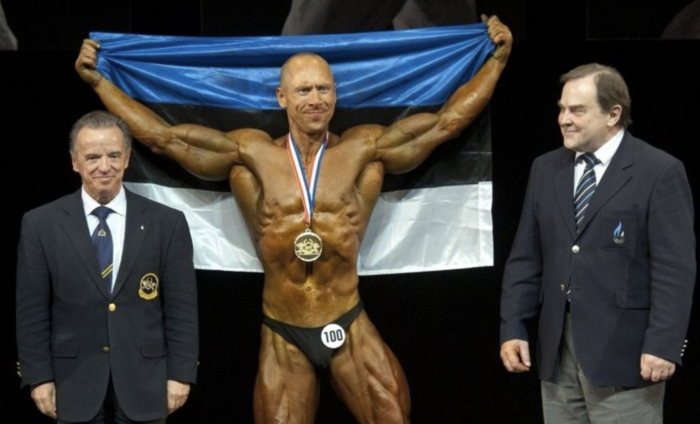
An illustrative glimpse into the future: Taavi Koovit, who became the classic bodybuilding world champion in 2011, in Tallinn
Source: Turg.Fitness.ee.
Come and train! ArtGym