Nutrients your body needs every day
The nutrients your body needs every day aren’t some complicated nutrition theory. When your plate has carbohydrates, protein, fats, vitamins, minerals and dietary fiber more or less covered, it’s easier for your body to train, recover and simply get through a normal day.
A simple truth: none of these nutrients works entirely on its own. Carbohydrate delivers quicker energy, fat holds a longer-lasting reserve, protein helps repair tissue, and vitamins and minerals keep many tiny processes running.
Why do nutrients matter for your body?
If you eat haphazardly day after day, your body lets you know fairly quickly. You can barely get through a workout, your head feels foggy, your digestion acts strangely, or sugar cravings hit in the evening like clockwork. Often the cause isn’t a single bad food but the fact that the core nutrients are out of balance.
Your body needs support from five main groups: carbohydrates, protein, fats, vitamins and minerals. Dietary fiber also holds an important place in your diet. It doesn’t provide energy directly in the way rice or oil does, but it’s a very practical helper for digestion.
That doesn’t mean you should weigh every bite. For most people it starts much more simply: does every meal include something that provides energy, something that helps you recover, and something plant-based that keeps your gut working?
How do nutrients work in food?
Carbohydrates
Carbohydrates are your body’s most handy fuel. Your body breaks them down into glucose, which powers everything from walking and pushing yourself in the gym to an ordinary workday. When you train, you quickly notice if you’ve eaten too few carbohydrates: your pace drops and your focus drifts.
Carbohydrates are found in fruit, bread, grains, rice, potatoes and spaghetti. Sweet cookies also provide carbohydrates, but for everyday staples it’s worth favoring heartier choices such as rice, potatoes, whole-grain products and vegetables. They keep you full for longer.
Fats
Fats are not the enemy. Your body uses them for energy, especially during longer, steadier effort. Your muscles use a mix of fat and glycogen, and that mix depends on the intensity and duration of the effort and on a person’s fitness level.
When you jog, for example, your body burns more glycogen than when you walk, but it also uses fat at the same time. A sprint is a different story: it’s a very short, maximal effort in which your body relies mainly on glycogen, because the process of using fat can’t get going fast enough.
Fats are found in butter, margarine, sunflower oil, other cooking oils, red meat, sauces, bacon, cheese and cream. In your everyday menu, it’s worth keeping the focus on better fat sources, such as olive oil and fish. The point from the original text about omega-3 and omega-6 fatty acids still stands: your body also needs fats that it can’t produce in sufficient amounts on its own.
Protein
Protein helps your body build cells, produce blood and repair tissue. This is especially important for anyone who trains, because strength training breaks down a small amount of muscle tissue, and during recovery the muscle becomes stronger.
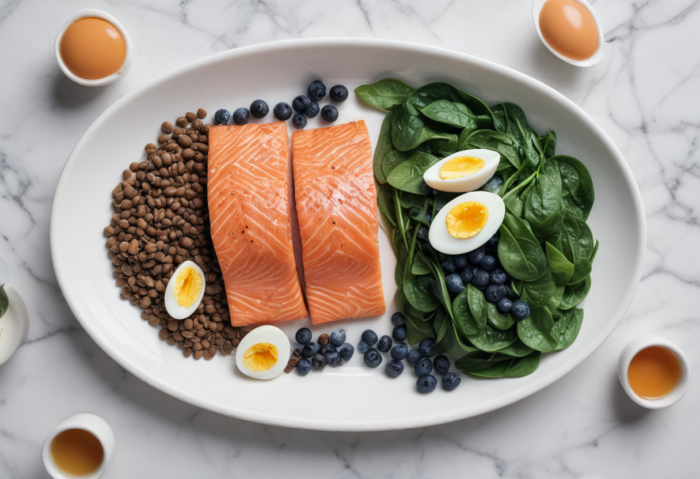
Good protein sources include meat, liver, chicken, eggs, fish, soybeans, peas and nuts. Your body can also use protein for energy, but it isn’t the first choice. Energy is usually drawn first from carbohydrates and fats.
Which nutrients tend to go missing from your menu?
Vitamins and minerals
Your body needs vitamins in small amounts, but their effect is anything but small. The liver can store vitamins A and D. Your body doesn’t keep vitamin C in reserve in the same way, so you need to get it from food regularly. Overdoing it with pills doesn’t automatically bring better health, because any excess may simply leave your body.
Minerals are just as important. Iron helps transport oxygen through the blood. Calcium is linked to bones, teeth and the ability of muscle to contract. If your menu is varied, an average person can get a large share of what they need from ordinary food. An athlete’s needs may be higher, but even then the first question should be: is the basic diet in order?
Dietary fiber
Dietary fiber is the part of plant foods that your body doesn’t fully break down. You get it from fruit and vegetables, coarse rye bread, bread and other grain products. The human body can’t break down cellulose, but that doesn’t make dietary fiber useless.
Quite the opposite. Dietary fiber gives the intestines bulk that the muscles of the digestive tract can move along. This helps prevent constipation. Dietary fiber also creates a feeling of fullness, which can help you avoid constant snacking.
How do you pick the right nutrients for your plate?
A practical plate doesn’t have to be perfect. If lunch includes potatoes or rice, fish or eggs, vegetables and a bit of a fat source, most of the work is already done. The same logic works for breakfast and dinner.
Look at your routine first, not at a single day. Do you eat something plant-based every day? Does protein show up at every main meal? Do your carbohydrates mostly come from real food, not just from sweets? These questions are worth more than one random jar of vitamins in the kitchen cupboard.
Honestly, the best menu is one you can actually stick to. If the food is too complicated, too expensive or doesn’t taste good, the plan falls apart quickly. Your body doesn’t need buzzwords. It needs good basic nutrients, consistently.
FAQ: nutrients and everyday nutrition
Why does the body need carbohydrates in the largest amount of all nutrients, apart from water?
Carbohydrates are a quick and convenient source of energy for the body. You notice this especially during movement and training, when your muscles need fuel right away, not later.
Should you be afraid of fat in your diet?
No. Fat is needed for energy, for hormones and for the functioning of your cells. It is worth keeping an eye on the amount, though, and choosing better sources of fat more often.
Is a vitamin supplement always necessary?
Not always. If your diet is varied, ordinary food can cover a large part of your needs. A supplement can make sense when there is a gap in your diet or your training load is high, but it doesn’t replace proper eating.
You’ll find more here: https://turg.fitness.ee/et
Author: Mikk-Alvar Olle
Source: WHO – physical activity.
Come and train! ArtGym