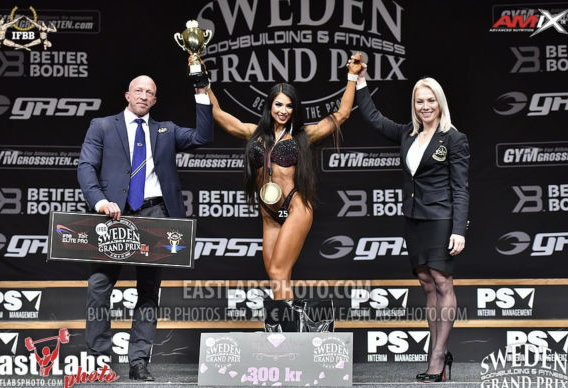
Estonian fitness athletes secured several strong placings at the 2019 IFBB Sweden Grand Prix, including a win and a pro card. The competition in Malmö made it clear that Estonia’s leading bodybuilding and fitness athletes compete abroad for more than experience: they are serious contenders for medals and places in the finals.
The 2019 IFBB Sweden Grand Prix took place in Malmö, Sweden, on Saturday, April 13. It was a busy day for the Estonian team: 13 athletes took to the stage, securing placings in men’s classic bodybuilding, men’s physique, bodyfitness and bikini fitness.
Why Estonia’s fitness athletes stood out in Sweden
The spring competition season is a distinctive part of the fitness calendar. Your physique needs to be stage-ready, but you cannot afford to look depleted and tired by the time you get there. The Estonian athletes’ results in Malmö were therefore encouraging: their preparation was timed well, and they were competing for the top spots in several categories from the outset.
The Sweden Grand Prix was no small local warm-up competition. Competing internationally brings a different level of nerves, tougher competition and razor-thin margins in the judges’ scores. Sometimes the placings come down to precise posing, sometimes to confidence on stage, and sometimes simply to whose conditioning looks sharper on the day.
The biggest news for Estonia was Agne Kiviselg’s victory in the bikini fitness up to 169 cm category. More significantly, she also won the overall bikini fitness title and earned a pro card. That is no small achievement. A pro card means an athlete has moved up from the amateur stage to the next level.
How the fitness athletes placed
Four Estonian men competed in Sweden. In classic bodybuilding up to 180 cm, Ramil Lipp placed sixth and Kristjan-Johannes Konsap seventh. Jürgen Laas finished fourth in classic bodybuilding over 180 cm. Rait Vahermets also took fourth place in men’s physique over 182 cm.
On paper, these placings may not sound as impressive as a gold medal, but being within reach of a place in the finals is a strong result against international competition. Fourth is a particularly tough place to finish: a medal is so close, yet remains out of reach this time. A result like that also makes it clear where improvements are needed during the next contest prep.
Estonia’s women had a particularly successful competition. Tatyana Pudovkina won silver in bodyfitness over 163 cm. Eliise Peterson placed sixth in the same height category. Bodyfitness demands muscle tone, symmetry and a composed stage presence. Conditioning that is too soft will not make the cut, but the heavily defined look of bodybuilding is not what this discipline is about either.
The athletes’ success in bikini fitness
Bikini fitness was Estonia’s most successful discipline in Malmö. In the up to 158 cm category, Kai Tammsaar placed third to claim bronze. Relika Merilai finished seventh in the same category. This category is often closely contested, as the visible differences between competitors are small and stage presentation can have a major influence on the final result.
Estonia secured a one-two finish in the up to 169 cm category: Agne Kiviselg won gold and Kady Pärnaku silver. The result demonstrated the high standard of Estonia’s bikini fitness athletes at this competition. When two athletes from the same country take the top two places in a category, it is no coincidence. Behind it lie years of work, nutrition, training, posing and stage experience.
Estonia also had a visible presence in the tallest bikini fitness category, over 169 cm. Kadri Tammoja placed fifth, Merli Oago eighth and Laura Johanna Derkun tenth. Estonian athletes also competed in the masters bikini fitness category, which is open to athletes aged 35 and older. Laura Johanna Derkun placed fourth and Relika Merilai sixth.
What comes next for the fitness athletes
The competition calendar gave the athletes little time to catch their breath. Several Estonians were due to compete again the following weekend at the Malta Diamond Cup and the Profeel Cup in Lithuania. That pace is demanding: you need to maintain your conditioning while allowing your body to recover. Frankly, this is where experience counts for a great deal.
Estonian fans also had the chance to see the athletes compete at home soon afterward. The Estonian Cup in bodybuilding and fitness took place on April 27 at the Salme Cultural Center in Tallinn. Returning to the home stage after an international competition gives fans a good opportunity to see the standard for themselves. A picture says more than a results table.
Share your impressions, leave a comment and view the gallery HERE!
FAQ: fitness athletes on stage in Sweden
Who secured Estonia’s biggest win in Sweden?
Agne Kiviselg achieved the standout result, winning the bikini fitness up to 169 cm category and the overall title, and earning a pro card.
How many Estonian athletes competed at the IFBB Sweden Grand Prix?
There were 13 Estonian athletes competing in Malmö. They entered bodybuilding, men’s physique, bodyfitness and bikini fitness categories.
Why was Agne Kiviselg’s pro card important?
A pro card shows that an athlete has progressed from amateur to professional level. It represented significant international recognition for Estonian fitness.
Author: EKFL
Come work out! ArtGym