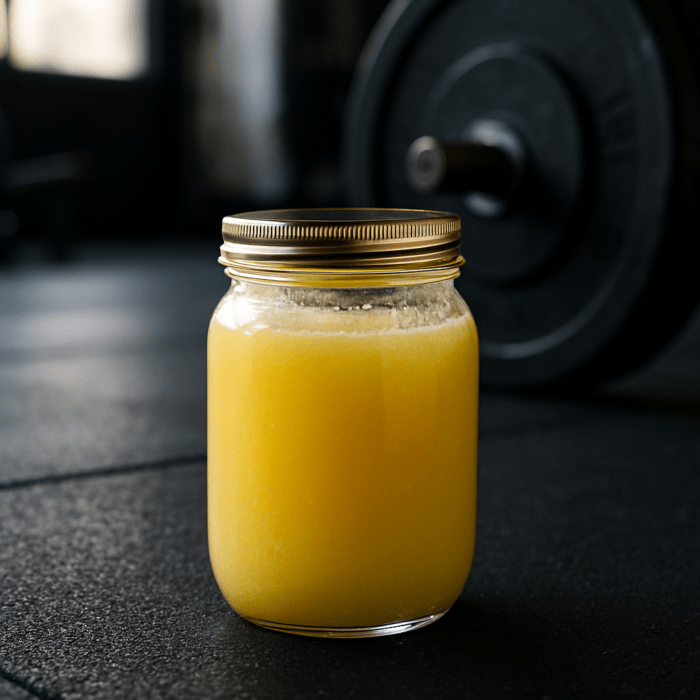
Benefits of ghee: clarified butter in the kitchen
The benefits of ghee come mainly from the fact that it is clarified butter: pure fat with the water and most of the milk solids removed. If you usually fry with regular butter or oil, ghee can be an easy way to add a nuttier flavor and improve heat tolerance.
Why the interest in ghee’s benefits?
Clarified butter is a cooking fat used mainly in India, but it is easy to see its appeal in Estonian kitchens too. There is nothing mysterious about the name ghee. It is clarified butter made by slowly heating unsalted butter.
As the butter heats, the water evaporates. Milk protein and caramelized milk sugar sink to the bottom. What remains is a golden, honey-like fat with a slightly sweet, delicately nutty flavor and aroma. That is what makes ghee so pleasant to cook with: it adds flavor to food but behaves a little differently from regular butter in the pan.
Honestly, clarified butter is at its best when used sensibly. It is neither a miracle remedy nor a guarantee of good health. It is fat. But a good fat, used in the right place, can make food tastier and easier to prepare.
The benefits of ghee in cooking and in your diet
- 1. Ghee keeps for a long time. Ghee does not spoil easily. It does not need to be frozen. You can keep the jar at room temperature, provided the storage spot is dry and clean and you do not introduce moisture with the spoon.
- 2. Lactose-free. According to various sources, clarified butter is either entirely lactose-free or contains only minimal amounts of lactose. Since ghee is usually eaten in small quantities, people with lactose intolerance may not experience problems after eating it. If you are very sensitive, however, you should start cautiously.
- 3. Ghee is an ideal fat for frying. According to the original text, clarified butter’s smoke point—the temperature at which the fat starts to break down and smoke—is -260 C. The underlying point remains the same: ghee tolerates heat better than regular butter because it contains fewer milk solids that quickly burn in the pan.
- 4. Rich in vitamins. Ghee contains fat-soluble vitamins such as A, D, E and K. These vitamins are linked to bone, brain and overall health. Still, you should not treat ghee as a vitamin supplement. Think of it as a cooking fat that can form part of a varied diet.
- 5. Clarified butter & cholesterol. The original text noted that studies have shown ghee to have an effect on levels of good, or HDL, cholesterol. The practical takeaway is simple: the quality of the fats you eat matters, but so does the amount. If your diet is already high in saturated fat, adding another source of fat will not automatically improve it.
- 6. Ghee – saturated fat. Like coconut oil, clarified butter contains medium- and short-chain fatty acids that your body can use to produce energy. Fats are needed in your diet as a source of energy and as building blocks for cells. They help you absorb fat-soluble vitamins and support normal body function.
- 7. Good for digestion. For many people, ghee is less likely to irritate the stomach than some other fatty foods. The original text mentioned that ghee stimulates gastric secretions, helps balance stomach acidity and supports the intestinal lining. Ghee also contains butyric acid, which is associated with gut health.
- 8. Ghee contains conjugated linoleic acid (CLA). CLA plays an important role in the body’s protein and carbohydrate metabolism. The original text noted that CLA may be linked to fat burning, heart health and slowing tumor development. Keep claims like these in perspective: a single food cannot do all the work.
- 9. For muscles and tendons. Traditionally, ghee is regarded as a fat that supports connective tissue. The original text described it as something that hydrates and lubricates tissues and helps prevent soreness in muscles, joints and tendons. If you train, though, the main message is simple: eat enough, recover and do not forget about fats altogether.
- 10. Ghee tastes delicious! This may be the most honest reason of all. Ghee gives eggs, vegetables, rice or porridge a nuttier, deeper flavor. When food tastes better, cooking at home becomes easier too.
How do you use ghee in practice?
Using ghee requires no special skills. Put a small amount in a pan, let it melt and fry as usual. It works well with eggs, vegetables, meat, fish and rice. It also gives roast potatoes a lovely flavor.
The simple truth: do not pour ghee over your food just because it sounds healthy. Use it where its flavor and heat tolerance make a real difference. If you are making a morning omelet or frying pieces of chicken, for example, a small spoonful is often enough.
If you are used to butter, you will quickly notice the difference. Regular butter can brown and burn in the pan because it contains more water and milk solids. Ghee is more stable in the pan. It still tastes buttery, but is slightly sweeter and nuttier.
What should you look out for with ghee?
First, check the ingredients. Good ghee should not have a long ingredient list. Essentially, it is clarified butter. If the jar contains added seasonings or other ingredients, it is a different product.
Next, consider the amount. Ghee is energy-dense, so a small spoonful provides a lot of calories. That is not a bad thing, especially if you train and need the energy, but it is worth watching your portions when trying to lose weight.
Then consider your tolerance. Although ghee may be a low-lactose or lactose-free option, that does not mean it suits everyone. If dairy products cause you severe symptoms, try it cautiously or consult a specialist.
For now, the most sensible approach is simply to look at the ingredients, storage conditions and taste. Good ghee does not need to make big promises. It needs to be pure, stable and convenient to use in the kitchen.
FAQ: the benefits and uses of ghee
Is ghee suitable if you have lactose intolerance?
It is suitable for many people because much of the milk solids are removed during production. If you are particularly sensitive to lactose, it is worth starting with a small amount.
Is ghee healthier than regular butter?
That depends on how you use it. Ghee handles heat better and has a more intense flavor, but it is still fat. Using a sensible amount and giving it an appropriate place in your diet is what makes it a healthy choice.
Where does ghee work best?
In the pan and in the oven. It works well for frying, with vegetables, in egg dishes and in simple hot meals where a buttery flavor is a bonus.
Author: Peep Reinart
Source: WHO – physical activity.
Come for a workout! ArtGym