
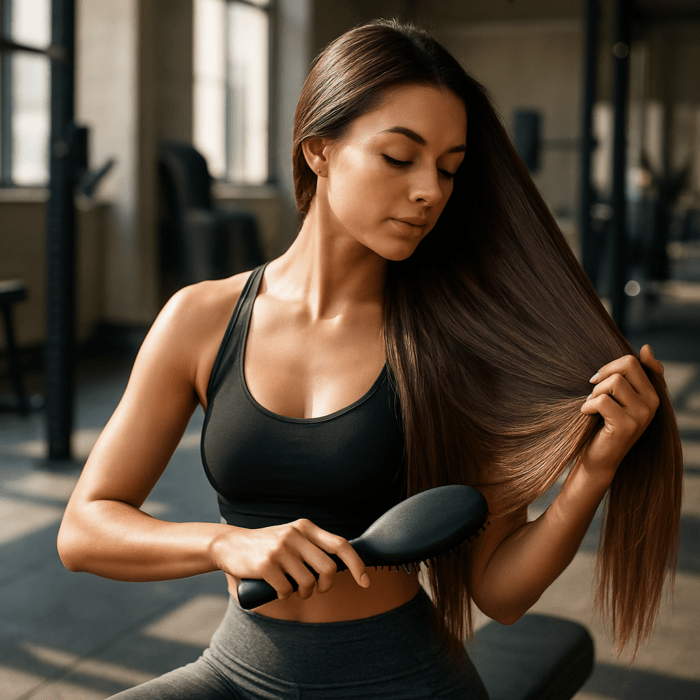
Your hair is quick to signal when sleep, nutrition or care has slipped. Here is a simple, honest overview of how to support your hair both in the bathroom and at the dinner table.
Why hair needs care from the inside and the outside
Beautiful hair doesn’t come from an expensive shampoo alone. What matters just as much is whether your body gets enough water, protein, good fats, vitamins and minerals. If your diet is haphazard for several weeks, it often shows in your hair: it gets dry, breaks more easily or loses its shine.
From the outside, you can protect your hair from excess heat, frequent washing and harsh products. From the inside, it is supported by ordinary things: proper food, fluids, fatty acids and, when needed, well-considered supplements. The simple truth is that your scalp is skin like any other. If your body is tired and dry, your hair can’t thrive on its own.
The Estonian winter makes things even trickier. Cold air outside, dry radiator heat indoors and wearing hats can make hair static, dry and fluffy more quickly. In summer, sun, swimming and sweating add to the load. So hair care doesn’t have to be complicated, but it does have to be consistent.
Hair and oils: what to actually do
An oil mask can be a good helper, especially if your ends are dry or breaking. Castor oil is thick and rich, which is why it is easier to mix with coconut or olive oil. That way the blend spreads better and is easier to wash out afterwards.
If your scalp is dry, you can massage a small amount of the oil blend into it as well. If your scalp gets oily quickly, leave the roots alone and apply the oil only to the lengths and ends. Keep the mask on for at least 30 minutes. If it suits you, you can leave it on longer, but don’t turn it into a competition. Hair doesn’t need overcare.
Coconut oil suits many people specifically for softening the ends. It can help reduce a rough feel and make hair easier to comb. That said, not every oil suits every person. If your hair ends up heavy, limp or sticky, use less or try the mask less often.
The same principle applies to washing: find your own rhythm. Some people wash every other day, others twice a week. Washing every day isn’t always bad if your scalp needs it, but strong shampoos and a hot hairdryer can dry your hair out. When blow-drying, choose a lower temperature and strong airflow. You don’t need to “bake” your hair with heat.
Your hair gets support from your plate, too
So what actually happens when your diet is too one-sided? The body has its own priorities. When energy and nutrients are in short supply, shiny hair is usually not the first thing the body spends its resources on. That’s why it’s worth checking the most basic points.
- Water. Drink regularly throughout the day. Don’t wait until you’re thirsty.
- Protein. Add eggs, fish, meat, dairy products, legumes or nuts to your menu.
- Good fats. Fatty fish, avocado, seeds, nuts and high-quality oils support your skin and scalp.
- Carbohydrates. Whole grains, potatoes, rice, porridge, fruit and vegetables provide energy and dietary fiber.
- Minerals. Iron, zinc and copper are linked to the normal condition of hair. They are found in meat, seafood, eggs, nuts, seeds and green vegetables, among other foods.
Vitamins get talked about a lot when it comes to hair. Vitamins A, C, E and the B group are all important in the body, but you don’t need to panic-buy them in a jar. Before starting any larger course, it’s worth having blood tests done or talking to your family doctor. This is especially sensible if hair loss is sudden, lasts a long time or comes together with fatigue, weight changes or skin problems.
Supplements can help if your diet has a real deficiency. For example, you get omega-3 fatty acids from fish, but not everyone eats fish several times a week. Many people use collagen to support their skin, joints and hair, but here too it’s worth remembering: one powder won’t fix poor sleep, stress and a poor diet.
A practical routine to keep your hair looking good
A good routine is one you can actually stick to. Do an oil mask or a moisturizing mask once a week. Trim split ends before they start breaking their way up the hair shaft. Comb gently, especially wet hair. Use heat protection if you straighten, curl or blow-dry often.
Honestly, your bathroom shelf doesn’t need to look like a beauty salon. It’s far more important to understand what your hair needs. If it’s fine, choose lighter products. If it’s thick and dry, richer, more nourishing masks suit it better. If your scalp itches or flakes, don’t simply cover it up with oil. Find the cause.
And one more thing: don’t judge the result by a single wash. Hair care is a slow business. Some changes show right away, such as softer ends. Others, such as a stronger overall look and a better environment for growth, take weeks.
FAQ: hair and everyday care
Can I do an oil mask every week?
Yes, if your hair and scalp tolerate it well. If your hair ends up heavy or your scalp gets oily, do the mask less often or apply the oil only to the ends.
Do I have to wash my hair every other day?
No, you don’t. The right washing rhythm depends on your scalp, your workouts, the season and your products. Wash when your scalp and hair need it.
When should I see a doctor about hair loss?
If hair loss is sudden, heavy or lasts for several months, it’s worth talking to your family doctor. The cause could be deficiencies, stress, hormonal changes or a health problem.
Author: Regina Krukovskaja
Come and train! ArtGym




