How much protein does a gym-goer need?
How much protein does a gym-goer really need? The short answer: 1.4–2.0 grams per kilogram of body weight per day if you’re building muscle mass. The longer answer depends on your goal, your body weight and how often you train. Below is a practical guide you can apply to your daily menu right away.
Why plenty of protein matters for muscle growth
Every barbell row or squat causes microdamage in muscle fibers. The body repairs it with amino acids from the protein you eat. If protein falls short, recovery slows down and the work you do in the gym may not translate well into muscle mass.
Protein also keeps your appetite in check. A higher-protein meal keeps you full longer than a sweet snack with the same calories – you’ll notice this especially when you’re on a diet.
How much protein per day, by goal
The simplest starting point is your body weight. Take your weight in kilograms and multiply it by the figures below, depending on what you’re currently working toward in the gym.
- Muscle building: 1.4–2.0 g/kg per day. A 75 kg trainee lands in the range of 105–150 g of protein per day. The lower end suits beginners, the upper end those who train four times a week or more.
- Staying in shape and general health: 1.0–1.4 g/kg per day. The same 75 kg person needs about 75–105 g. That’s enough if you’re not in peak form and not chasing personal records.
- Weight loss in a calorie deficit: 1.6–2.2 g/kg per day. In a deficit the body tends to break down muscle mass, and a higher protein intake helps preserve your muscles. A 75 kg trainee then aims for 120–165 g of protein per day.
Consistency matters more than the second decimal place. If you get close to 80% of your target amount every day, you’re already better off than most people who train at the gym.
How much protein per meal – does it matter?
The daily total matters more than the distribution, but distribution helps. A good rule of thumb: 3–5 meals, each with 25–45 g of protein. At that amount, muscle protein synthesis kicks in properly and the body gets a fresh supply of amino acids throughout the day.
One 200-gram chicken fillet provides about 45 g of protein, a pack of curd cheese (200 g, 5%) nearly 25 g, and four eggs about 25 g. If breakfast is often lacking – coffee and a bun don’t count – try adding an egg dish or some curd cheese. You’ll feel the difference within two weeks.
There’s no need to panic after training. If you eat a proper meal within 1–2 hours after the gym, the window is wide enough. The old talk of a “30-minute window” is outdated.
Practical tips for tracking your nutrition
The most honest picture comes from writing down a week of meals – on paper or in an app. Most trainees estimate their protein intake to be 20–30% higher than it actually is. One week is enough to see where you fall short.
In Estonia it’s easy to keep your protein on track with a perfectly ordinary grocery basket: chicken, turkey, salmon, eggs, curd cheese, skyr, cottage cheese, legumes. If your schedule is hectic and a meal gets skipped, a protein shake is a sensible backup – not a replacement, but a buffer.
So what actually happens if you eat too little? In the first week, nothing visible. Within a month you notice that the weights you lift are no longer going up, recovery is slow and you have less energy in the gym. That’s usually the first sign that it’s worth adding more protein.
Frequently asked questions
Is more than 2 g/kg of protein dangerous for your health?
In healthy adults, 2.2–2.5 g/kg of protein per day has not been shown to cause harm over a reasonable period of time. The problem arises if you already have a diagnosed kidney disease – then it’s worth discussing the amount with your doctor.
Is it harder to reach your target with plant-based protein?
Slightly more of a hassle, yes, but absolutely possible. Legumes, tofu, tempeh, seitan, oat flakes and whole grains, combined across the whole day, give the same result. A vegan trainee should aim for the upper end instead – 1.8–2.2 g/kg.
What should you do if you don’t feel like eating in the morning?
Start small. A glass of milk, a spoonful of curd cheese, one boiled egg – most people can manage that. After a couple of weeks your appetite grows naturally and you can bring the meal up to a proper size.
Edited by: Arnold Tokko
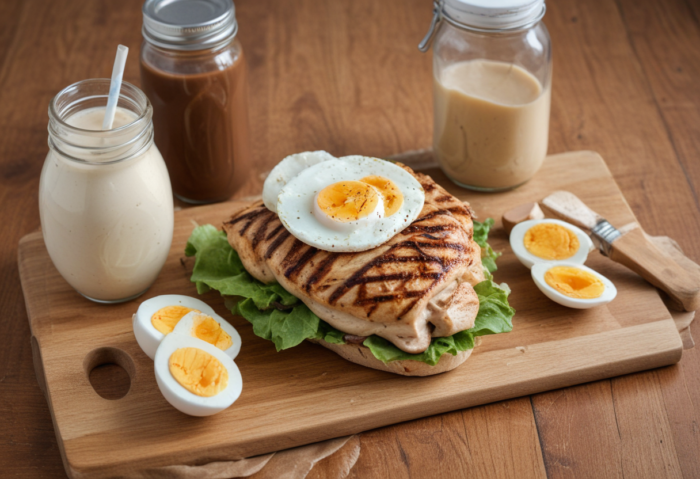
Illustrative photo: Ahti Läheb
Come and train! ArtGym