
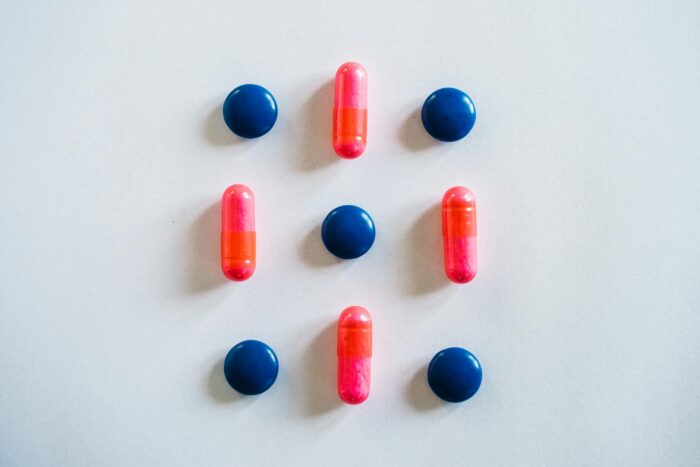
Placebos: what the research really shows
Placebos sound almost magical: a pill contains no active ingredient, yet you may still feel better after taking it. Here, we take a measured look at what a review by Danish researchers found and why it matters for supplement advertising, too.
Why do placebos matter?
Many people have heard the claim that simply believing in a treatment can relieve symptoms. The idea is straightforward: when a patient receives a pill, an injection or another “treatment”, their expectations may make them feel that their condition is improving. This is called the placebo effect.
But there is an important distinction here. Feeling less pain or being in a better mood is one thing. Whether the illness itself is improving is another. The Danish researchers specifically challenged the widespread belief that placebos, or pills with no active ingredient, relieve a wide range of symptoms.
University of Copenhagen researchers Asbjorn Hrobjartsson and Peter Gotzsche wrote in the May 24 issue of the New England Journal of Medicine that placebo treatments have little or no effect. In their assessment, the main effect worth noting was pain relief.
This does not mean that your experience is trivial. Pain is real. Expectations, attention and a doctor’s caring communication can change how you feel. The simple truth is that a placebo is not the same as a medicine whose active ingredient has a measurable effect in the body.
What do studies show about placebos?
The Danish researchers examined 114 previous studies involving about 8500 people in total. A review like this looks beyond a single small trial to explore the bigger picture: do different studies point in the same direction, or are the results random and inconsistent?
They confirmed at least a small positive placebo effect in 82 studies. At first glance, that sounds compelling. But an important detail lay in the size of the studies. The effect was more apparent in smaller studies. The larger the study, the less effect placebo treatments appeared to have.
So what is actually happening? Results can fluctuate more easily in small studies. Some participants feel better, others feel worse, and the average shifts quickly. Results may also be interpreted too optimistically. The Danish researchers concluded that the authors of small studies may have presented their analyses with a slight bias.
This is a useful reminder in the world of training and nutrition, too. If a substance, powder or capsule appears to work in a single small trial, that does not yet mean its effect is large, reliable or reproducible for everyone. Advertising loves simple statements. Science loves better questions.
Placebos and supplements: what should you look for?
The original point was a sharp one: by that logic, supplement studies comparing a substance with a placebo should not be taken at face value either. This does not mean that all supplements are useless. It means that study design matters a great deal.
When a product advert says that “results were better than with a placebo”, it is worth asking a couple of level-headed questions. How large was the study? How long did it last? Did it actually measure strength, muscle mass or recovery, or just how people felt? Was the difference large or merely statistically detectable?
The influence of expectations is especially familiar in the gym. A new program, a new tub, a new promise. In the first week, motivation is high and you may indeed feel better. But if your sleep duration, food intake and training load stay the same, you cannot credit a capsule for every better workout.
Honestly, this is very human. Once you have spent money and are hoping for results, you are more likely to notice positive signs. The placebo effect is not a sign of stupidity. It is part of how the brain connects expectations, attention and how you feel.
A practical check: placebos are no substitute for evidence
The most practical takeaway is a measured one: do not judge a claim solely on whether someone “felt a difference”. How you feel matters, but it is not the whole body of evidence. This is especially true when it comes to symptoms of illness, depression, heart disease or an expensive supplement.
- Check whether the study included a proper comparison with a placebo.
- Give preference to larger studies over small trials.
- Pay attention to whether the study measured a symptom, a feeling or a clear outcome.
- Be wary of advertising that turns a single study into a big promise.
Some earlier studies have shown that placebo treatments, even sugar pills, relieve symptoms in people with all kinds of illnesses, from heart disease to depression. The Danish review put the brakes on that claim. An effect may exist, but it does not appear to be as broad or as strong as is often assumed.
If you take away one point, let it be this: a placebo can influence how you feel, especially when it comes to pain, but this should not be confused with a therapeutic effect. The same reasoning can help you assess sports and nutrition claims more objectively.
FAQ: placebos
Can a placebo really reduce pain?
Yes, the Danish researchers’ review found a notable effect specifically on pain relief. This does not mean the underlying cause disappears, but that a person’s experience of pain can change.
Do placebos cure diseases?
The review does not support that claim. Placebo treatments had little or no effect, particularly when looking at larger studies.
Why are placebos used in supplement studies?
The placebo effect provides a basis for comparing whether the substance being studied has an effect beyond that of expectation and belief. Without it, it is difficult to know whether a change came from the substance, training, nutrition or simply positive expectations.
Reference
The review by Danish researchers Asbjorn Hrobjartsson and Peter Gotzsche cited in this article appeared in the May 24 issue of the New England Journal of Medicine.
Author: Mikk-Alvar Olle ref. Inimene.ee
Source: WHO – physical activity.
Come and work out! ArtGym




