
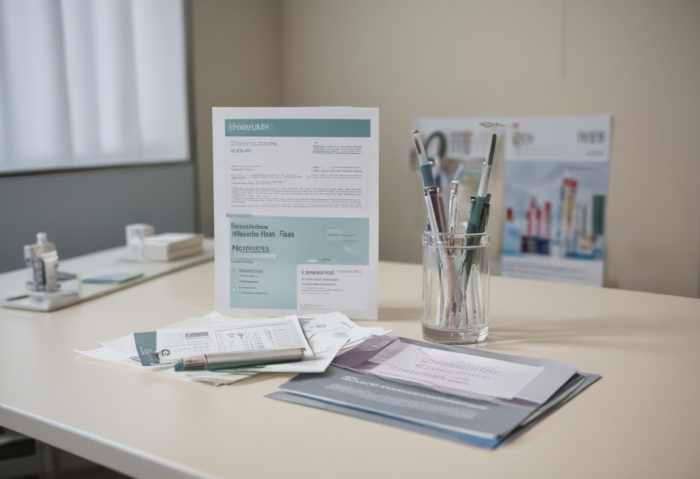
Sexual health: when should you get tested?
For many men, sexual health goes unchecked even when training, sleep and nutrition are in pretty good order. Here is a simple overview of when to consider an STI test, how home testing works and what to do if the result is positive.
Why sexual health so often takes a back seat for men
The typical Fitness.ee reader thinks in fairly practical terms: what to eat, how to recover, whether you did enough in the gym today. But one part of health often stays silent. Sexual health doesn’t seem urgent until a suspicion, a discomfort or a new relationship comes along.
Men face several common brakes on getting checked. The examination feels unpleasant. The doctor is far away. There’s the thought that if you have no symptoms, there’s no reason to go. Sometimes people even assume that sexual health questions are mainly a women’s issue.
The plain truth: a person without symptoms can still pass on an infection. According to the statistics cited in the original article, over a lifetime men have intercourse with half again as many people as women do, yet 85% of STIs are detected in women. That doesn’t mean men don’t have problems. Rather, it means men get checked less often.
Many STIs go unnoticed at first. There’s no pain, no visible change, no feeling that anything is wrong. That is exactly why testing isn’t only necessary when “you can already feel something”.
How sexual health and home testing fit together
In the past, STI testing for men was often associated with an unpleasant swab taken from the tip of the penis. The idea behind the Testikodus.ee service described in the original article was to make things easier: men could be diagnosed for certain STIs from a morning urine sample, without leaving home.
According to the article, over 70% of the service’s users were men. That’s a telling number. When getting checked becomes discreet and practical, men find it easier to take that step.
You could test for the presence or absence of, for example, chlamydiosis (chlamydia), gonorrhea, trichomoniasis, the herpes viruses HSV1 and HSV2, and mycoplasmosis (Mycoplasma genitalium). According to the article, chlamydiosis, gonorrhea and trichomoniasis were the 3 most common STIs in Estonia. Their symptoms can overlap, which is why a triple test was often recommended.
The ordering logic was simple: you chose what you wanted to be tested for and had a sampling kit with instructions sent by post or courier to a place that suited you. It was important to state your sex, because the sampling box for men and for women was different. The white box was supposed to arrive within five working days.
When to get tested and what to do with the result
Testing makes sense when you’ve become sexually active and simply want peace of mind. It also makes sense when you or your partner have several sexual partners, your partner has been diagnosed with an STI, or you’ve had unprotected intercourse with a new or casual partner.
It’s also worth getting checked before starting a new sexual relationship. This isn’t a sign of distrust. Rather, it’s an honest, grown-up way to put both sides at ease.
When planning a pregnancy and in early pregnancy, testing is especially important. STIs can pass from mother to child during pregnancy or birth. The consequences can include miscarriage or illness in the newborn, along with complications.
If you suspect you have an STI, or you’ve developed symptoms that point to one, don’t wait. A positive test is not the end of the story. The original article’s message was clear: the STIs it describes are treatable. With a positive result, you need to see a doctor, who will prescribe treatment suited to the infection.
The sample was sent to the Quattromed HTI molecular diagnostics laboratory. There, DNA was extracted for diagnosis and analyzed, and within a few working days of the sample arriving, you could see the results by logging into the online portal. At the doctor’s appointment, a printout of the test results served as the basis for making a diagnosis and prescribing treatment.
Sexual health: practical things before the test
The men’s box contained instructions, a urine cup and a security sticker for sending it back. The man had to take the sample from first-morning, first-stream urine. The women’s box contained instructions, a dry cotton swab and a security sticker for sending it back. The woman had to take the sample from the vagina.
For the herpes virus test, a separate box with a dry cotton swab was sent for taking a sample from a blister. The customer had 7 working days to take the sample and send it back to the lab. The price list for the service was set by the Estonian Health Insurance Fund.
As for anonymity, only the minimum data needed to deliver the kit was requested when ordering the test. Once the sample reached the lab, the personal data linked to it was to be deleted from the system, leaving only the sample’s anonymous code.
Quattromed HTI was described as Estonia’s largest diagnostics laboratory, in operation for 16 years and performing nearly 2 million tests every year. That background mattered, because testing isn’t simply “a box in the mail”. Behind it there has to be a proper lab and clear handling of results.
Sexual health: FAQ
Is it worth getting tested even if you have no symptoms?
Yes. Many STIs can be symptom-free. If you’ve had unprotected intercourse, a new partner or several partners, getting checked makes sense even without symptoms.
What should you do if the result is positive?
See a doctor. A positive result calls for a treatment decision and sometimes also for notifying or testing your partner. Don’t start treatment on your own.
Does a home test replace the doctor?
Not entirely. A home test can help detect an infection, but treatment is prescribed by a doctor. If you have severe symptoms, pain or other worrying signs, go straight to a healthcare professional.
Author: Gerly Kedelauk
Source:Turg.Fitness.ee
Come and train! ArtGym




