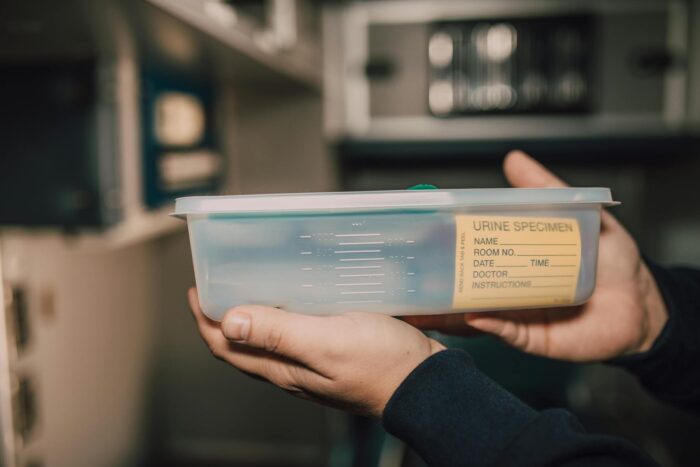
Urine pH: what it tells you if you train
Your pH level gives a simple hint about whether your body is leaning more acidic or more alkaline. It’s no miracle cure, but it can help you notice how food, stress and recovery all run into each other.
The old advice to eat more root vegetables and fruit wasn’t pulled out of thin air. When your menu includes 6-10 fruits or root vegetables a day, your body gets more of the nutrients that support overall balance, digestion and recovery from training.
Urine pH and body acidity
Put simply, pH shows how acidic or alkaline an environment is. In the body this matters because different systems work best within a fairly narrow range. Blood is kept under very tight control. Urine fluctuates more, because the kidneys help remove excess acidity.
That’s exactly why people often talk about measuring body pH. It’s easier to track at home than blood pH. Blood drawn from a vein gives a more accurate picture, but honestly, most people don’t want to start their morning with a needle.
The original idea is still the same, though: food affects your body chemistry. Sugar tends to push the balance toward acidity. A bodybuilder’s typical menu often contains a lot of animal protein, such as chicken, beef and pork. These aren’t automatically bad foods, but building your menu around them alone isn’t smart.
Fruit, root vegetables and other vegetables shift the picture more toward alkalinity. This can support feeling better, appetite control and recovery. Grapes, tomatoes and citrus fruits do taste acidic, but their effect on your body’s pH isn’t the same as the taste on your tongue.
How do you measure urine pH?
At home, you can measure acidity with litmus paper. It’s sold at pharmacies and is simple to use: the strip comes into contact with urine, and the color change is compared with the scale on the packaging. It won’t turn you into a doctor, but repeated measurements give you a sense of direction.
The best time to measure is first thing in the morning, or at least an hour after eating. One measurement doesn’t tell you much. It’s better to look at the pattern over several days, because sleep, stress, illness, training load and what you ate the day before can all change the result.
If your urine pH is consistently at one extreme, it’s worth reviewing your menu and daily rhythm. If you feel poorly, recovery drags on or health problems keep coming back, you shouldn’t try to solve it with litmus paper alone. In that case, it makes sense to talk to your family doctor.
What affects pH levels in people who train?
pH levels in people who train can fluctuate for several reasons. A heavy strength workout, too little sleep and mental tension all put stress on the body. So does a very one-sided menu, where the plate is mostly meat, white bread and sugary drinks, with little fresh food.
A simple truth: recovery doesn’t depend only on protein powder or rep count. Your body needs water, minerals, dietary fiber and a calm nervous system. If these are out of whack, even a solid training plan can start running on empty.
The original article also mentioned body signals that people have linked to pH: metal jewelry may change color, clothes made of leather or natural materials may wear out faster, and recurring fungal infections may signal that your body’s balance needs attention. These signs don’t prove anything on their own. Treat them as a hint, not a diagnosis.
If mosquitoes don’t like you, that doesn’t automatically mean your pH is off. Sometimes the reasons are much simpler: scent, sweat composition, clothing, weather or just the spot where you happen to be standing.
Keeping your urine pH balanced
Start with your plate. Add something plant-based to every larger meal: salad, carrots, cabbage, beets, an apple, berries or soup. In autumn and winter, the fresh selection in Estonia is sometimes narrower, but sauerkraut, frozen berries and root vegetables work well.
Drink water. If your day consists of coffee, a sugary drink and dry food, it’s no wonder you start to feel heavy. Water alone won’t work miracles, but without it even a good menu doesn’t work as well.
Keep stress under control. Yoga, meditation, easy walking and deep breathing can help your body come out of a state of tension. It doesn’t have to be a fancy ritual. Sometimes it’s enough to put your phone away and walk for 20 minutes at a calm pace.
The sodium bicarbonate mentioned in the original can also be linked to the pH topic, but you shouldn’t overdo it on your own. If you have problems with blood pressure, kidneys or digestion, ask a doctor or pharmacist for advice first.
FAQ: urine pH and training
Does urine pH show exactly how healthy your body is?
No, not exactly. Urine pH is one simple metric that can give you a direction, but it’s affected by food, timing, fluid intake and training load. Assessing health takes a broader picture.
How often should you measure your pH level?
If you want to see a pattern, measure on several mornings in a row, or at least under similar conditions. A single random result after a big meal doesn’t make for a good comparison.
Does looking after your pH help muscle growth?
Indirectly, it can, because a better menu, enough water and less stress support recovery. Still, the foundation of muscle growth is training, sleep and eating enough. The pH topic is one part of the whole, not the whole game.
Author: Mikk-Alvar Olle, based on FLEX
Source: WHO – physical activity.
Come and train! ArtGym