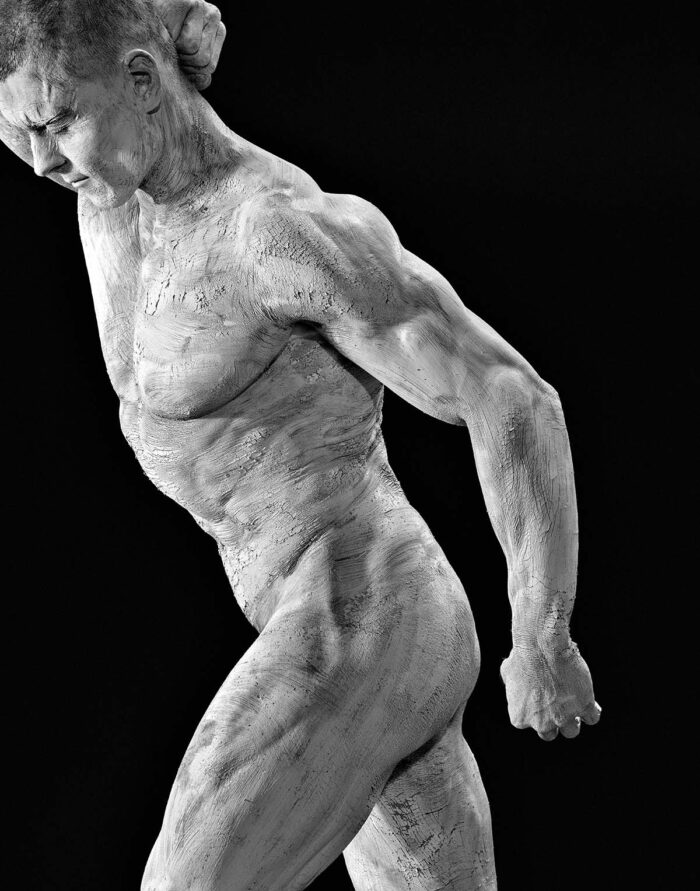
Vince Gironda saw the human body as a sculpture, not as a sum of muscle mass measured in kilos. Vince’s approach differed from that of every other trainer of the time — muscles were developed for the sake of symmetry and illusion, not simply for size. Let’s look at what Vince actually taught and what of it can be carried over into today’s training.
Why Vince Gironda thought differently
Over the years Vince has been mocked a lot — especially for views on how a proper bodybuilder’s physique should look. But in the approach to training, Vince was like Michelangelo. Where other trainers saw only the weight on the end of the bar, Vince saw proportions and shapes.
Vince looked at students with an artist’s eye. Vince analyzed their builds, noticed what made each person unique, and then prescribed specific exercises to shape a masterpiece out of them. Michelangelo used a hammer and chisel to coax David out of stone. Vince used the barbell and dumbbells to create a sculpture out of muscle.
This attitude — the body as an aesthetic whole, not the sum total of muscles — set Vince apart from most colleagues. While other trainers and gym owners talked only about how to get bigger, Vince taught how a smaller man with the right proportions can look gigantic in a photo.
How Vince Gironda shaped the body
A man with a fragile ego found such advice hard to accept. An insecure bodybuilder builds muscle to cover up their weakness. Being told that a certain muscle group actually needs to be reduced for the sake of balance sounded like sacrilege. But Vince had a clear vision, which the students understood only once the work was finished.
When you look at photos of the classic bodybuilders of the past, you’re captivated. The lighting and background create the definition of the body; it’s an optical trick, all deliberately planned. When the body itself has been shaped in the right proportions, it is displayed like a work of art — from the right angle, in the right light.
Vince’s own weight averaged 79 kilos. In photos, the effect was of a much bigger physique. That was no accident — Vince was a master at creating the illusion of looking twice as massive as the real thing.
The body’s focal points according to Vince Gironda
The key to the illusion of bigger muscle is to develop the body so that attention goes to the right places. Vince defined these focal points quite precisely:
- the shape and height of the pectoral muscles
- the relationship between the quadriceps and the knee
- the width and vitality of the lats
- the rounded shape of the deltoid muscles
- the peak shape of the biceps
- the separation of the forearm
- the shape and proportion of the abdominal muscles
- the size and shape of the calf muscles
None of these body parts develops on its own. People who simply “lift weights” neglect half of the list — mainly because these areas aren’t easy to develop and results come slowly. The artist-bodybuilder, on the other hand, works deliberately on the focal points, even if that means separate short workouts for the calves or forearms.
What Vince Gironda’s teaching offers in the gym today
Honestly, most of today’s training programs are quite far from Gironda’s way of thinking. On Instagram, mass and the number on the scale count, not symmetry. But some things in this approach still work very well today.
First: look at yourself honestly in the mirror. Which muscle group lags behind the others? If your shoulders look skinny next to your chest, another chest workout won’t help — targeted work on the delts will. Second: take photos now and then. A photo lies less than a mirror. Third: don’t chase only the weight on the end of the bar — proportion always beats a picture of mass.
Vince Gironda’s gym in Studio City operated for decades, and a good number of Hollywood actors and Mr. Olympia-level bodybuilders passed through it. The reason was simple: if you wanted to look like a sculpture rather than a sack of potatoes, you went to Vince.
FAQ about the Vince Gironda method
Is Vince Gironda’s training suitable for a beginner?
The principles, yes — that is, the idea of symmetry, developing focal points and training weak links separately. Some specific exercises (such as Vince’s famous 8×8 system), however, already require good technique and experience, so start with simpler basic exercises.
Why was Vince Gironda against squatting?
In Vince’s view, the classic barbell squat built up the glutes and hips too much, ruining the symmetry of the whole body. Vince preferred the hack squat and the sissy squat, which load the front of the thigh more. From the standpoint of modern training science this is debatable, but the logic is consistent with Vince’s aesthetic philosophy.
Does the illusion principle work for women too?
Just as well. Rounded shoulders and a narrower waist create an hourglass silhouette in the same way that a wide back and narrow waist create a V-shape in men. The principle is identical: develop the areas that frame the whole picture.
Develop the body’s focal points and create a masterpiece. Create the illusion.
Source: Daryl Conant
Come and train! ArtGym